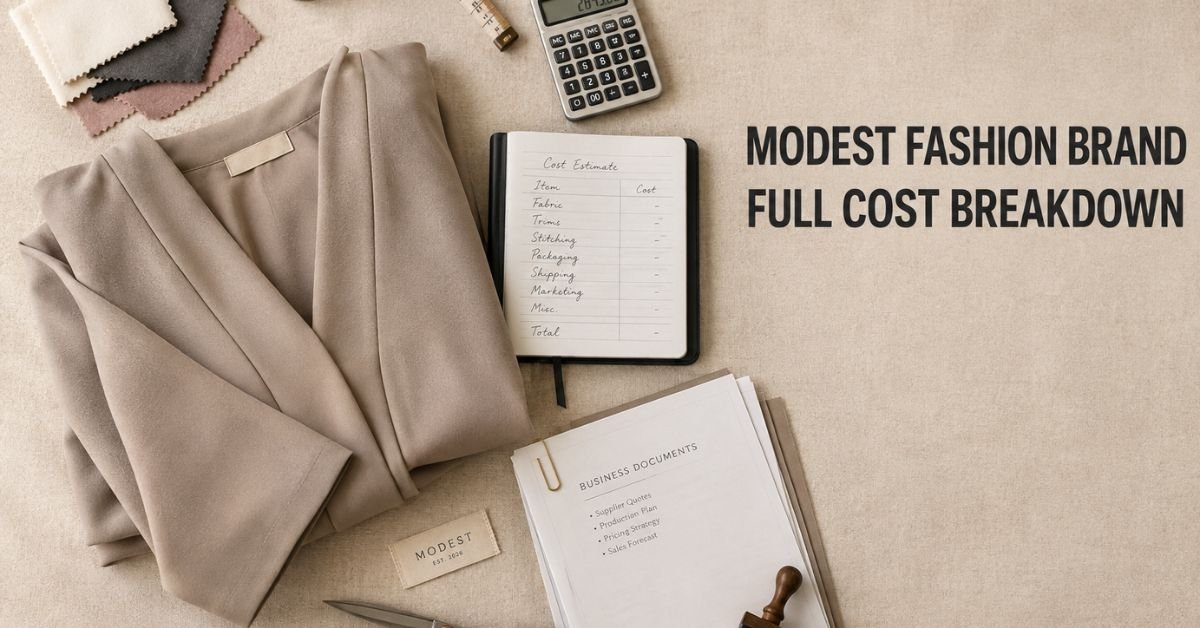
How To Launch A Modest Fashion Brand: Full Cost Breakdown
Plan for somewhere between $2,500 and $9,000 for a genuinely small first drop. That is the working answer to how to launch a modest fashion brand, and it sits noticeably above what most general clothing-startup advice suggests, for one structural reason: a floor-length garment is not a t-shirt, and it never costs like one.
Quick answer: Launching a modest fashion brand takes nine moves — set your modesty standard, cost your fabric, write proper tech packs, sample until the drape works, place a small production run, register and protect the brand, build the store, fund three months of marketing, and confirm your unit economics. A lean one-style launch realistically needs $2,500 to $9,000.
How To Launch A Modest Fashion Brand: Where The Money Actually Goes
Before opening any single line, here is the overall shape of the spend.
| Cost block | Lean launch (1–2 styles) | Standard launch (3–6 styles) |
|---|---|---|
| Tech packs | $0–$400 | $1,200–$4,000 |
| Sampling | $300–$1,200 | $1,500–$5,000 |
| First production run | $800–$3,000 | $4,000–$18,000 |
| Labels, tags, packaging | $150–$400 | $600–$2,000 |
| Registration and trademark | $50–$600 | $400–$2,500 |
| Store, domain, theme | $300–$900 | $900–$3,000 |
| Photography | $0–$400 | $800–$3,000 |
| First 90 days of marketing | $600–$2,000 | $3,000–$9,000 |
| Total | $2,200–$8,900 | $12,400–$46,500 |
Treat those bands as planning ranges rather than promises. A founder producing in South Asia, Turkey or Southeast Asia will sit near the bottom of most rows; one producing in Western Europe, North America or the Gulf will sit near the top, sometimes above it. What stays constant everywhere is the ratio between the lines — and modest garments push the fabric line harder than any other category of everyday womenswear.
Decide What Modest Actually Means For Your Brand
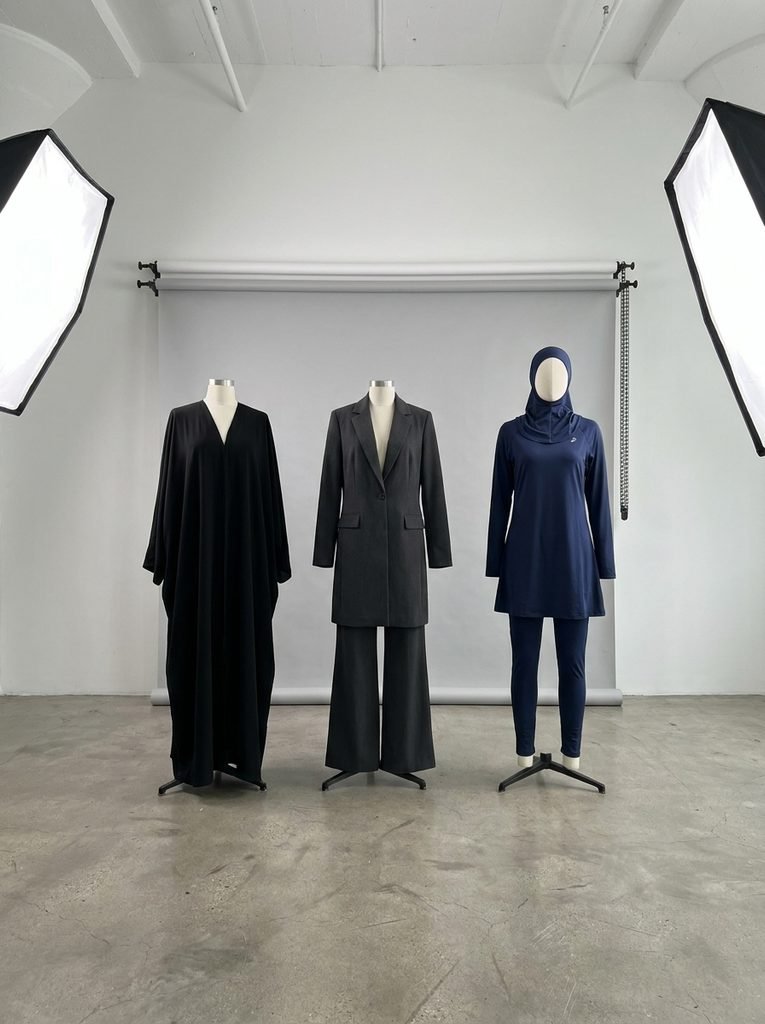
This costs nothing and quietly sets the price of everything else. A label built on flowing abayas, one built on modest office tailoring, and one built on sport hijabs share a customer value but almost no supply chain.
Commit three specifications to paper and treat them as non-negotiable: minimum sleeve length, minimum hem length, and your opacity standard. Opacity is the one first-time founders forget. A fabric that looks rich in daylight and turns translucent under a camera flash will generate returns your first run cannot absorb.
Worth remembering that this audience is not confined to one country or one community. Women dress modestly for faith, for climate, for professional norms, for comfort after pregnancy, and simply because they prefer coverage — and that mix looks different in Jakarta, Casablanca, Berlin, Dubai, Lagos and Toronto. Decide which of those readers you are actually designing for, because “modest” alone is not a positioning.
Spend the optional $300 buying five competitor garments. Wear them. Note every failure. That is your product brief, and it is the cheapest research you will ever do.
Price The Fabric Before You Fall In Love With The Design
A mainstream midi dress consumes roughly 2.3–2.7 metres. A full-length abaya with generous sleeves consumes closer to 3.7–5 metres. A lined two-piece can pass 5.5.
| Garment | Estimated fabric | Extra vs. mainstream equivalent |
|---|---|---|
| Full-length abaya | 3.7–5.0 m (4.0–5.5 yd) | +60–90% |
| Long-sleeve modest maxi dress | 3.2–4.1 m (3.5–4.5 yd) | +40–60% |
| Modest tunic and wide trouser set | 4.1–5.5 m (4.5–6.0 yd) | +50–80% |
| Lined modest skirt | 2.7–3.7 m (3.0–4.0 yd) | +45% |
| Jersey hijab, 70 × 180 cm | 0.7–0.9 m (0.8–1.0 yd) | baseline |
At $5.50 per metre for a mid-weight crepe, the gap between a mainstream dress and an abaya is roughly $10–$15 per unit before a single stitch is sewn. Across 150 units that is $1,500–$2,250 that was never in the plan.
Two decisions claw much of it back. Choose wider fabric — 145–150 cm rather than 110 — because long panels waste far less on a wide roll. And decide early whether lining is built in or sold separately as a slip, since integrating it can add a third again to your material cost.
Build Tech Packs That Handle Length And Drape
A tech pack is the specification a factory manufactures from. Skip it and you pay for the misunderstanding in extra sampling rounds, which is always the more expensive way to learn.
The price range is genuinely wide. A freelance drafter working from your sketches may charge under $200. A trained technical designer producing a complete, factory-ready document sits far higher, and is usually worth it if you are producing more than one style.
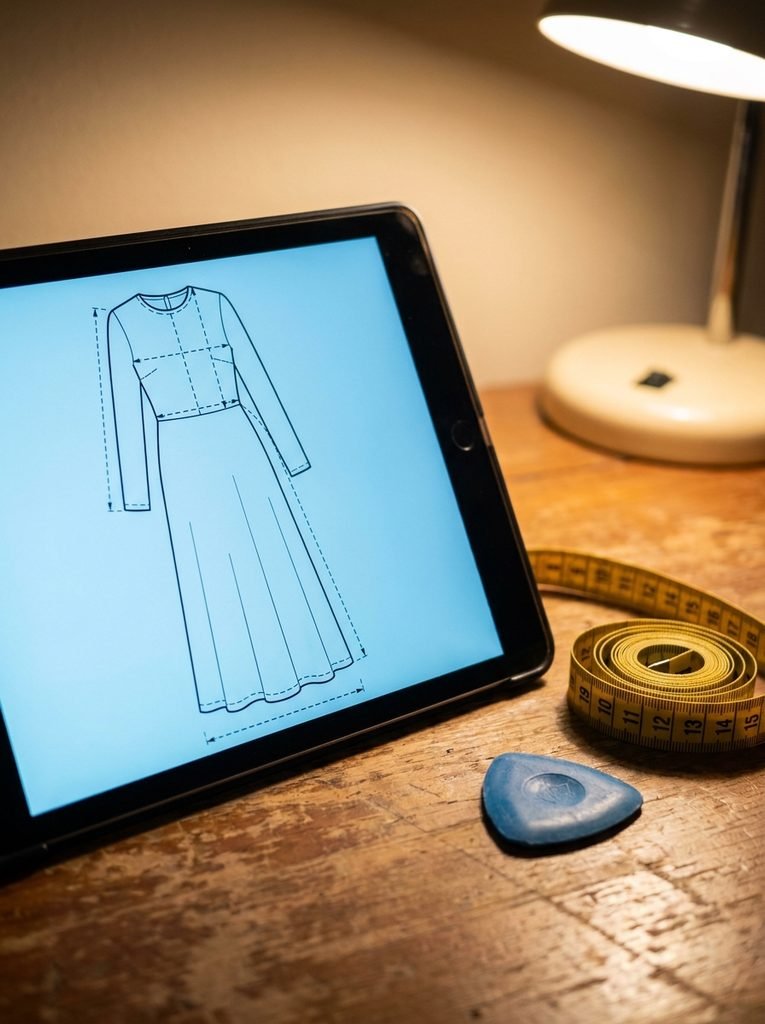
For modest garments, three things must appear in the document or they will be guessed at. First, a graded hem length across the size range, so length scales with the body rather than staying fixed. Second, sleeve width measured at both bicep and wrist. Third, a stated opacity requirement with an explicit lining instruction. Generic templates handle none of these, because they were built for short, close-fitting garments.
Sample Until The Drape Is Right
Expect two to three rounds per style. Modest silhouettes usually need the upper end of that, because drape problems only reveal themselves in motion, never on a hanger.
Photograph every sample on a moving body. Sit down. Reach overhead. Climb stairs. A sleeve that rides up when the arm lifts is a fit failure no product photo will show and every customer will find within a week.
Approve nothing from a screen. Fabric weight, hand and opacity cannot be judged from an image, and this is the last inexpensive moment at which you can say no.
Choose Your Minimum Order And Place The First Run
Minimum order quantity is where risk actually lives. Larger export factories typically want somewhere between 50 and 300 pieces per style per colourway. Smaller studios and local workrooms will often go far lower — sometimes 20 or 30 pieces — but charge a meaningful premium per unit for the privilege.
Time is the other cost. From approved sample to finished goods, plan on roughly four to six months domestically and longer if you are importing, once shipping and customs are included. If your commercial peak is Ramadan and Eid, or a regional festival season, that means committing cash six to nine months before the revenue arrives.
The discipline that protects first-time founders is simple: one style, one colourway, the full size range. A second colourway doubles your commitment and halves the speed at which you learn what actually sells.
Register The Business And Protect The Name
Company registration costs vary enormously by country. In many places a sole trader or small private company can be registered for well under $100; in others, professional fees and mandatory filings push it several hundred higher. Look up the actual figure for your jurisdiction before budgeting, because guessing here produces the widest errors in the whole plan.
Trademark protection is separate, and it is worth understanding clearly: registering a company does not protect the brand name. They are different systems, filed with different offices, and one does not imply the other. Trademarks are also territorial — a registration in one country gives you nothing in another, which matters if you intend to ship internationally from day one.
Platform costs are the predictable part of the budget. A hosted e-commerce subscription generally runs somewhere between $25 and $80 a month at entry level, with annual billing usually cheaper than monthly. A domain is around $15 a year. Premium themes are a one-off purchase in the low hundreds, and add-on apps quietly become a recurring $30–$150 a month once you install reviews, email and a currency switcher.
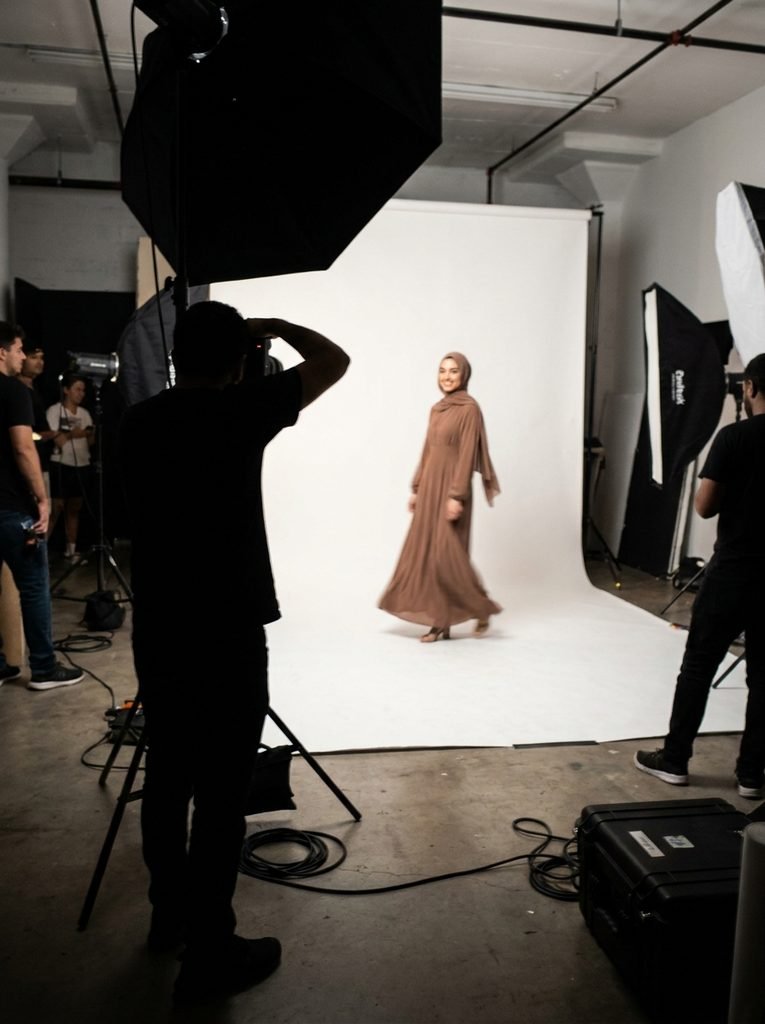
Photography is where modest brands are genuinely won or lost. A flat-lay cannot communicate a garment whose entire value lies in how it hangs and moves. Budget for on-body movement imagery. A half-day with a photographer and one model is a mid-hundreds expense in most markets, and careful phone video on a bright overcast day is a completely legitimate starting point at zero.
Fund The First Ninety Days Of Marketing
This is the line most cost guides omit entirely, and it is the one that determines whether the inventory in Step 5 becomes money or becomes storage.
Acquiring a customer through paid social in the apparel category typically costs somewhere in the region of $25 to $45, and that figure has trended upward rather than down as auctions have grown more crowded. Read it not as a marketing statistic but as a pricing constraint: if a customer costs $35 to acquire, a $45 dress cannot fund its own advertising, no matter how good the creative is.
Owned reach is the cheaper lever and the one founders underuse. Email and messaging lists cost a fraction of paid acquisition per customer, and they compound. A waitlist assembled during your sampling months is worth more at launch than the same money burned on ads with no audience behind it.
Content works unusually well in this category too. Styling, length, fabric behaviour and layering are subjects modest customers actively search for, and answering those questions honestly builds an audience that paid traffic cannot buy.
Lock Your Unit Economics Before You Take An Order
Work one garment through end to end, using your own quotes rather than these illustrative figures.
| Line | Example abaya |
|---|---|
| Fabric (4.2 m at $5.50) | $23.10 |
| Cut and sew | $8.50 |
| Lining, trims, labels | $3.20 |
| Freight and duty (allocated) | $3.80 |
| Landed cost | $38.60 |
| Packaging and outbound shipping | $6.50 |
| Payment processing (~3%) | $3.30 |
| Blended customer acquisition | $30.00 |
| Total cost to deliver one sale | $78.40 |
At $109 retail, that leaves roughly $30 of contribution. Thin, but survivable — and it improves sharply on repeat customers, who cost almost nothing to reach again. At $79 retail, the same garment loses money on every paid sale while appearing to be “selling well.”
That is the entire argument for pricing modest fashion at a premium. The fabric burden is structural, not a mistake you can optimise away, so the retail price has to carry it. [internal link: how to price small-batch clothing]
Before you move on: if contribution per unit is under $20, change the price or change the garment.
The Costs Nobody Puts In The Spreadsheet
- Length returns. Modest customers return for hem length far more than for size. Allow 12–18% of units.
- The extra sampling round you swore you would not need. Add 20% to that budget.
- Import duty and customs handling on an overseas run, which can add a tenth or more to goods value.
- Dead stock in your slowest size. Order to a realistic size curve, not an even split.
- The cash gap. You pay the factory months before revenue arrives, and that timing gap sinks more small labels than bad design ever has.
- Currency movement, if you buy in one currency and sell in another.
Key Takeaways
- A lean, single-style modest launch realistically needs $2,500–$9,000, not the few hundred dollars social media implies.
- Fabric is the defining premium: 40–90% more material than the mainstream equivalent garment.
- Production is the biggest line item, but marketing is the most commonly forgotten one.
- With apparel acquisition costs where they are, retail prices under $80 rarely survive paid traffic.
- Launch one style in one colourway across the full size range, and let the data decide the second drop.
Bottom line: Modest fashion is one of the few clothing categories with genuinely global, genuinely underserved demand and strong repeat behaviour, but its cost structure punishes anyone who budgets as though they were making t-shirts. Fund a single style properly — real sampling, honest opacity, a price that respects the fabric — and the category will carry you further than a wide, thin, underfunded launch ever will. Start small, price for the material you actually use, and save the ambition for collection two.
Frequently Asked Questions
Can I launch a modest fashion brand with no inventory?
Yes, through pre-orders or print-on-demand, with real limits. Pre-orders let customers fund production before you pay the factory, which removes the cash gap entirely, though some buyers will not wait three to six months. Print-on-demand suits hijabs and printed tunics, not structured or lined garments.
Do I need a trademark before my first drop?
Not necessarily, but you do need a name search. Filing can wait until the brand proves itself; discovering a conflict after branding your packaging and labels cannot be undone cheaply.
What profit margin should a modest clothing brand target?
Aim to keep landed cost at roughly a quarter to a third of retail price. That sounds generous until acquisition cost, returns and payment fees come out of the difference.
How long does it take to go from idea to first sale?
Four to six months when everything runs smoothly, longer with imported production or extra sampling. Spend that waiting period building an audience rather than sitting idle.