
Wudu Friendly Makeup And Treatments: What Actually Lasts
For most of the last century this was a private calculation. You knew what came off before prayer, you built your day around it, and you did not expect a beauty counter to have an opinion.
That has changed quickly. The phrase now appears on packaging, in salon menus and in the descriptions of treatments that did not exist a decade ago. Some of those claims describe a real physical property. Others describe a marketing department’s understanding of one. The two look identical on a label, which is precisely why so many women end up buying something, wearing it, and quietly worrying about it for a week.
So the useful question has moved on. Wudu friendly makeup is not only about what is permitted — it is about what is still on your face, your hands and your lashes at the last prayer of the day, after you have washed four times already. Permissibility and durability are different questions, and answering only the first one leaves you with a shelf of products you do not actually use.
The Short Answer On Wudu Friendly Makeup
Wudu friendly makeup is any product that does not seal the skin or nails under a water-blocking layer. Colour that soaks in and stains is widely treated as acceptable; anything that cures into a film on the surface has to come off before washing. Treatments that alter your own hair last longest, because they leave no layer behind at all.
The Two Categories, Side By Side
Every product and treatment discussed below belongs to one of two families. Once you can sort things into the right column, you can judge a product you have never heard of, in any shop, in any country.
| Column A — Permeable And Stain-Based | Column B — Film-Forming And Long-Wear | |
|---|---|---|
| What it does | Sinks in, tints, or restructures your own hair | Sets on top as a continuous sealed sheet |
| Typical members | Mineral powder, water-based skin tint, lip and cheek stain, brow and lash tint, lash lift, brow lamination, henna stain, buffed nails | Waterproof mascara, silicone long-wear base, transfer-proof lip colour, film-forming setting spray, conventional polish, gel, acrylic, press-on nails |
| Holds up in wudu? | Yes — stains completely, powders partly | No — the sheet is the obstacle, not the colour |
| Removal before washing | Generally not required | Required, every time |
| Realistic lifespan | A few hours to about two months | Until the moment you take it off |
| How the cost falls | One salon fee, then nothing daily | Low shelf price, high daily time cost |
| Where views differ | Mostly settled, with caution about thickness | Broadly agreed it must be removed |
Column A is where the answer to “what actually lasts” lives. Column B has its place, and that place is an evening, not an ordinary working week.
Barrier Or Stain — The Test That Decides Everything
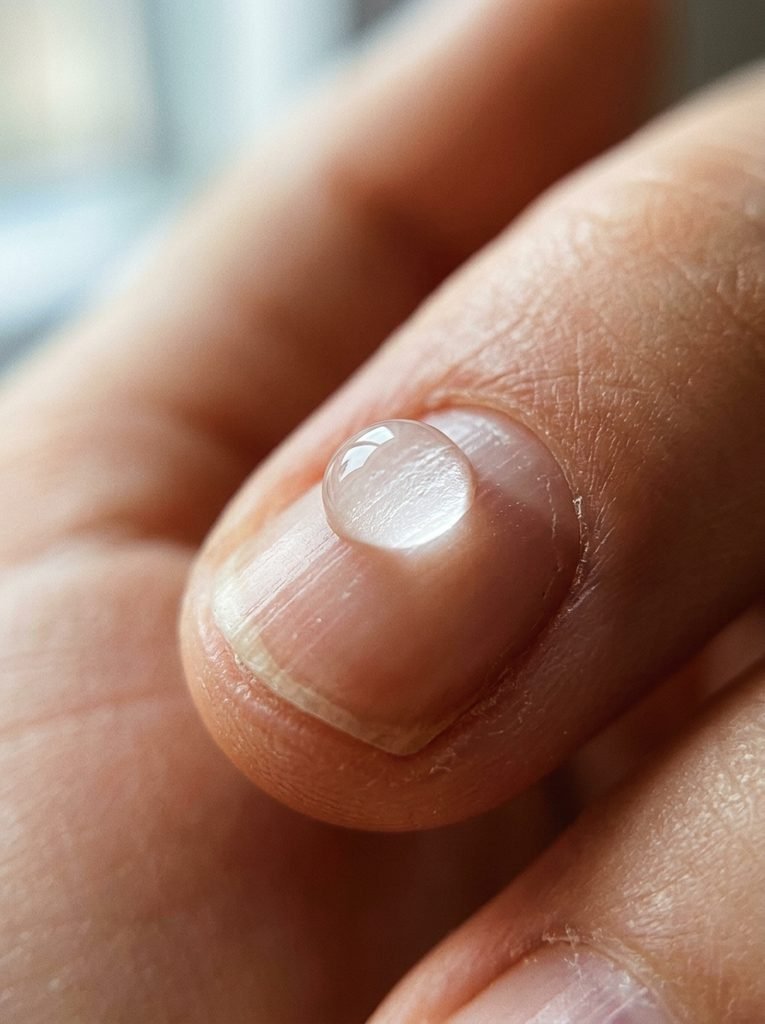
The underlying requirement has never really shifted. Water has to make contact with the face, the arms up to the elbows and the feet up to the ankles. Contact, not the suggestion of contact. Anything that prevents water from meeting the surface beneath it is the difficulty. The colour of a product has nothing to do with it.
From that, a two-second shelf test follows.
Does this thing dye, or does it coat?
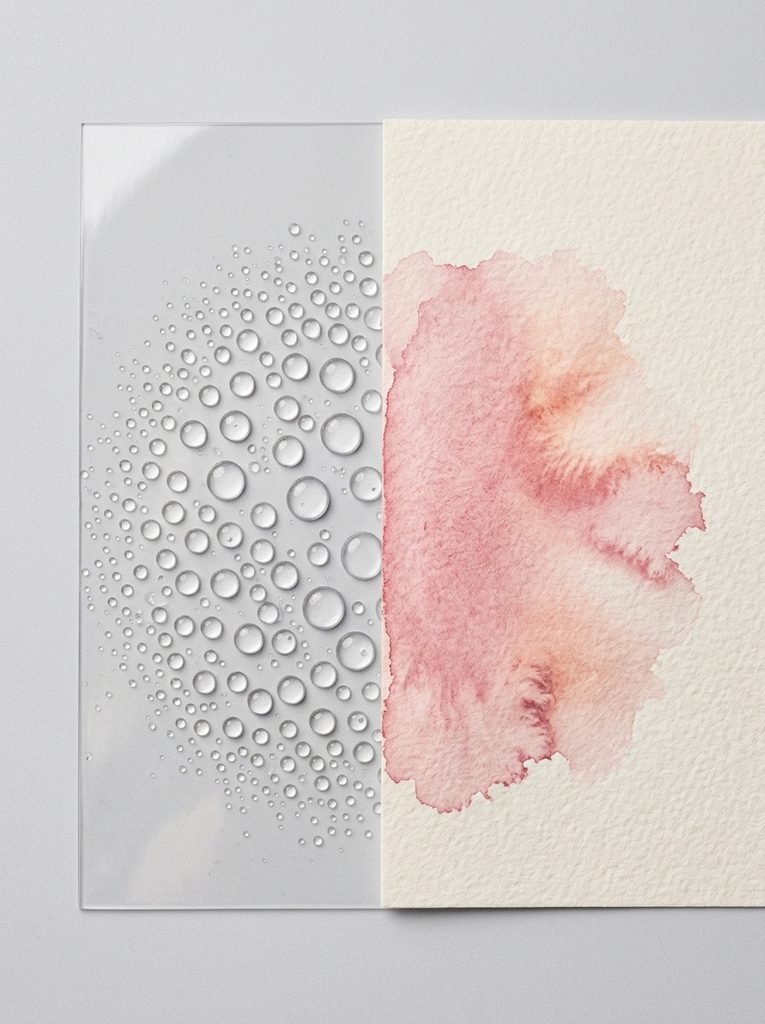
A dye has bonded with keratin or with the outer layer of skin. The colour has become part of the surface, so there is nothing sitting in between. A coating has cured into a continuous, flexible sheet. The colour rests on the surface, and water slides across it rather than through it. Every product marketed as waterproof, budge-proof, smudge-proof or sixteen-hour has been formulated at real expense to behave exactly like that sheet. That behaviour is the feature you are paying for.
This is also why two claims that sound like twins are not. One describes what a product is made of — the ingredient question people usually mean when they say halal nail polish or halal cosmetics. The other describes how the dried product physically behaves on skin. A lip colour can be immaculate on ingredients and still form a waxy seal across the lips. Both claims matter to different people for different reasons, but only the second one decides whether water reaches you.
Longevity — What Survives Repeated Washing
Here is the honest ranking by how much of each option is left at the end of a full day. This is where the comparison genuinely resolves, and it is the part most articles skip.
Treatments that change your own hair: six to eight weeks, unaffected by water. A lash lift reshapes the natural lash from the base. A brow lamination resets the direction the brow hair grows in. A tint deposits pigment inside the hair itself. Water does nothing to any of these, because there is no layer for it to be stopped by — you are simply washing hair you have altered. Nothing to reapply, nothing to strip off, no daily decision. Against the title of this article, this category wins comfortably.
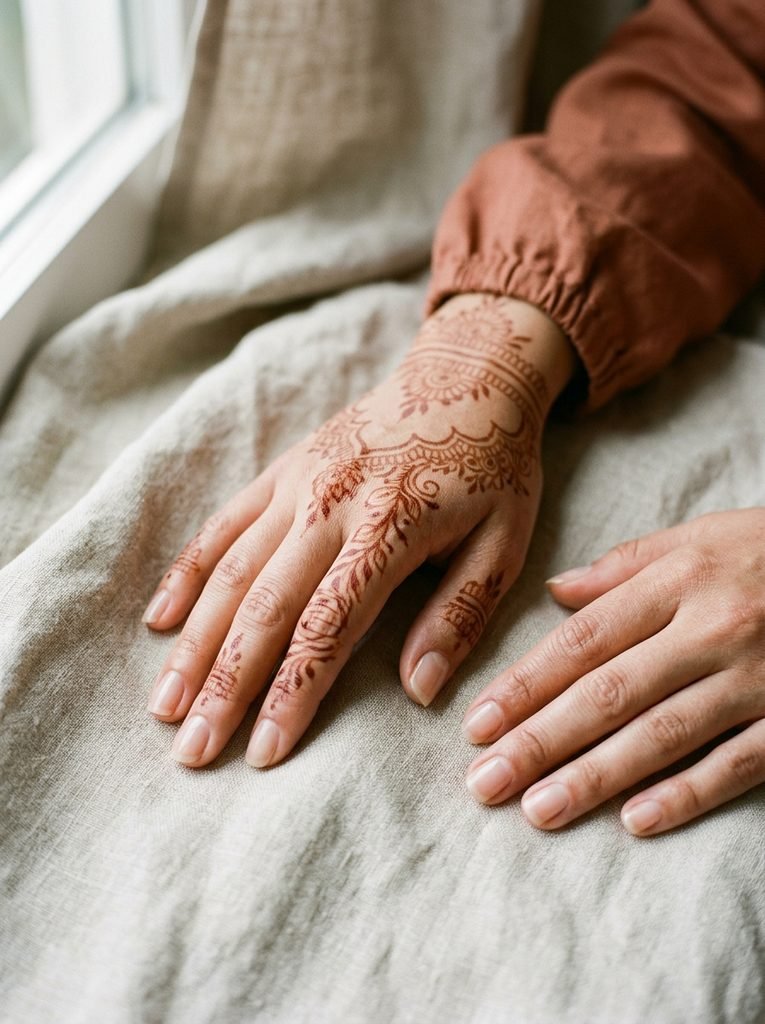
Skin stains: several days to a couple of weeks. Henna is the oldest answer available and still one of the most dependable. Once the paste has been removed, what remains is colour that has worked into the uppermost layer of skin. The same principle applies to henna-style brow shading, which reads as a soft powdered brow for one to two weeks.
Water-based tints: one wash, occasionally two. Lip and cheek tints lose intensity each time you wash, but they fade rather than disappear, because part of the pigment has already bonded. Expect to surrender roughly a third of the colour per wash. Applied in the morning, a good tint is usually still visible by early afternoon.
Mineral and powder makeup: partial survival. Loose and pressed powders are the most forgiving surface products. They are not built to resist water, which is exactly why they work here. The trade-off is that washing takes most of them away, so you will be topping up. That is not a problem — reapplying does not undo anything.
Long-wear liquid base, waterproof mascara, transfer-proof lip colour: nothing. These belong in Column B by design. They survive washing only in the sense that they interfere with it. Remove first, and then, of course, nothing is left.
There is a pattern here worth stating bluntly, because the industry has no incentive to: the longer a surface product lasts, the less compatible it is with washing. Cosmetic longevity is achieved by engineering a better film, and a better film is a better barrier. No amount of shopping solves that at the surface level. The only way out of the trade-off is to stop working on the surface and work on your own hair instead.
The Face, Product By Product
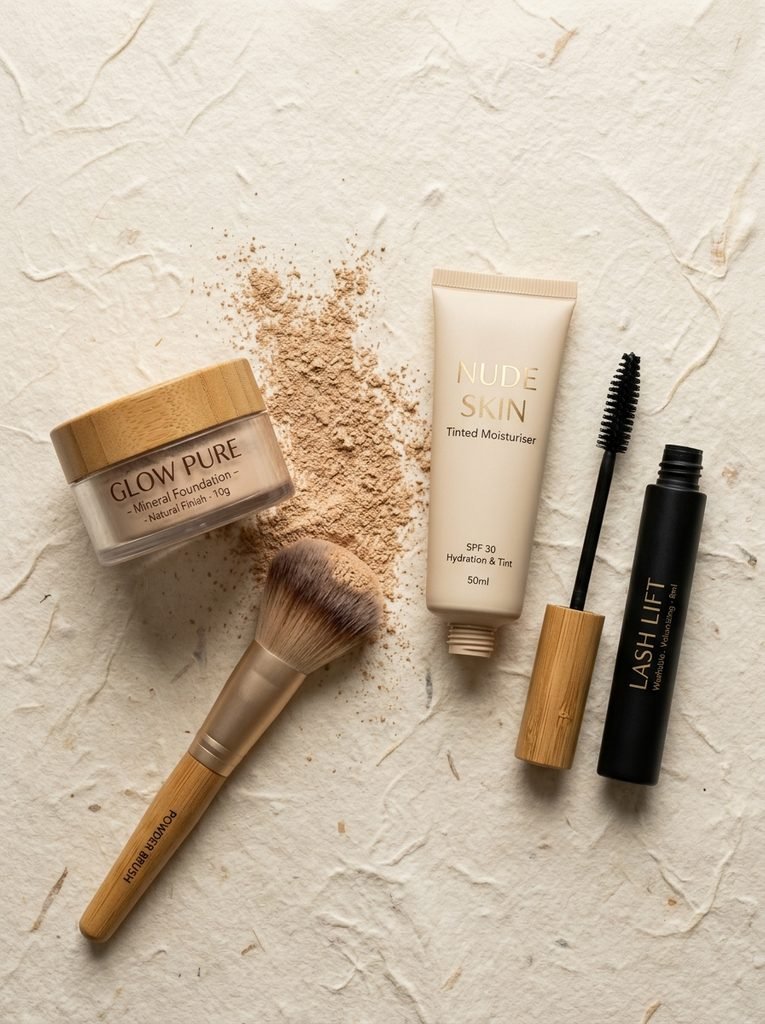
Base. A wudu friendly foundation is water-based or mineral, low in heavy silicones, and never labelled waterproof. Skin tints, light tinted moisturisers and loose mineral powders are the practical choices. Coverage will be light to medium, and that ceiling is structural — dense, unmoving coverage and permeability are opposite goals.
Mascara. Ordinary washable mascara is the answer. It softens and loosens under water, which is the property you want rather than a flaw. Anything sold as waterproof or tubing has been built to resist water and should come off beforehand. Many women simply drop daily mascara altogether once they have had a lash lift, since the curl is already there.
Brows. Pencil and powder are effortless to remove and rebuild. The awkward products are brow glue and stiff setting pomades, both of which are designed to lock hard and stay. A tinted brow gel sits somewhere in between, and a tinted or laminated brow removes the daily question entirely.
Lips. Stains and sheer balms behave well. Heavy matte liquid colours cure into a sealed coat. Since the lips are part of the face, this category deserves more attention than it usually gets.
Setting spray. The most frequently missed item in the whole discussion. A large share of setting sprays contain polymers whose entire purpose is to lock a film over everything underneath. Building a careful permeable routine and then sealing it in the final step undoes the routine.
Nails — And Why Breathable Nail Polish Is Still The Hardest Call
This is where honest writing is hardest to find, so here is the position as clearly as I can put it.
Conventional polish, gel, acrylic, dip systems and press-on nails all form a hard, continuous shell across the nail plate. There is broad agreement that these need to be removed before washing. A clear coat behaves no differently from a coloured one, because the film is the issue and the pigment is not.
Then there is the breathable category, sold on the promise of a porous structure that lets water through to the nail. The disagreement here runs in two directions at once, and it is important to separate them.
On the scholarly side, the principle is not really contested. A colour with no independent layer does not obstruct washing; a layer does. Dampness underneath is not considered equivalent to water actually reaching the surface. So the argument is not about the rule — it is about a factual claim regarding one specific class of products.
On the technical side, the factual claim is genuinely difficult to establish. “Breathable” in cosmetic chemistry originally referred to the exchange of air and moisture vapour, which is a nail-health idea. Liquid water flowing through a cured film to reach the nail plate is a much stronger claim, and the two get marketed as though they were the same thing. A consumer standing in a shop has no way to test the difference, and the informal home tests that circulate — water droplets, a rinse and a look — cannot distinguish between a film that passed water and a film that simply got wet.
That leaves three coherent options. Choose one deliberately rather than drifting between them.
The first is to treat nails the way hands have been treated for centuries: henna, or a careful buff with cuticle oil doing the work polish usually gets credit for. A well-buffed nail looks intentional rather than bare, costs almost nothing, and raises no question whatsoever.
The second is to use ordinary polish but schedule it — for a single evening, or during days when prayer is not required, with full removal afterwards. A great many women already live this way, and it is entirely consistent.
The third is to use a breathable formula while understanding that you are accepting a manufacturer’s claim about a physical property that is hard to verify independently. Some scholars accept these products on the principle described above; others hold that where certainty of water contact cannot be established, caution applies. If you take this route, treat a certification as the start of your enquiry rather than the end of it, and ask someone qualified whose judgement you trust.
Feet belong in this section too and are constantly forgotten. They are washed to the ankles. Whatever rule you apply to a manicure applies identically to a pedicure.
Wudu Friendly Beauty Treatments With Two Separate Debates
Some salon treatments raise a second question that has nothing to do with water. Blending the two debates together is where most advice on this subject becomes muddled.
Lash lift, brow lamination, lash and brow tint. One question only, and it is largely settled: nothing is left sitting on the surface, so washing is not obstructed. The secondary considerations are ingredient sourcing and, for brows, whether hair is removed during the service — brow shaping carries its own long-standing discussion that is entirely separate from ablution. Six to eight weeks of results with no daily upkeep. This is the sweet spot of the whole article.
Lash extensions. Two questions. The water question concerns adhesive along the lash line and whether a heavily built set prevents water reaching the skin and the natural lashes, which depends substantially on technique and density. The older, separate question concerns attaching hair that is not your own, which some scholars extend to lashes and others do not. Six to eight weeks with regular infills, but you are engaging two independent disagreements rather than one.
Semi permanent makeup and pigment work. Two questions again, and the second carries more weight. Pigment placed under the skin does not sit on top of it, so the barrier objection largely falls away and water reaches the skin normally. However, the widely held position treats implanting pigment under the skin as falling within the prohibition on tattooing, with a minority differing on the grounds that the result eventually fades. The longevity is the greatest of any option here, and so is the need to consult properly before booking.
Hair smoothing and coating treatments. Not a wudu question, since the head is wiped rather than washed. It becomes relevant for a full bath, where water must reach the scalp and hair, so it is worth asking about specifically on those terms rather than assuming the daily rule covers it.
Upkeep And Cost Over Three Months
Column A looks expensive and Column B looks cheap, right up until you count what removal costs you.
A lash lift with a tint is one appointment that carries you through roughly two months with no daily step at all. Brow lamination works the same way. Henna costs very little anywhere in the world. Against that, a Column B routine has a low purchase price and a recurring charge paid in minutes: remover before each wash, reapplication afterwards, several times a day, plus the irritation that comes from stripping and re-coating the same skin over and over. Across three months, the treatment route usually costs less overall and vastly less in friction.
There is a subtler cost as well. A routine that has to be taken apart before every prayer slowly teaches you to experience prayer as an interruption to your day. A routine built to survive it does the opposite, and that is worth more than any product claim on a box.
Which Should You Choose
If you pray through a full working or studying day away from home: Commit almost entirely to Column A. A lash lift, tinted brows, mineral powder, a lip stain and bare or buffed nails. Nothing to carry, nothing to remove, no negotiation with a shared bathroom.
If you are mostly at home: You have far more flexibility. Conventional polish and long-wear face products are workable provided you build removal into the routine honestly, rather than persuading yourself that a thin film does not count as a film.
If you have an event — a wedding, a celebration, a photo shoot: This is the legitimate home of Column B. Full long-wear makeup for the occasion, removed for prayer. Plan the day around the prayer times instead of against them, and do the treatment work beforehand: lifted lashes and laminated brows underneath event makeup mean far less to rebuild afterwards.
If you want maximum longevity from the least disputed corner of this subject: A lash lift with tint plus brow lamination with tint. Around two months, no barrier, one appointment.
If your uncertainty is specifically about nails: Default to henna or a buff until you have asked someone qualified. Nails are the one category here where the factual claim underneath the product has not been settled to everyone’s satisfaction.
Key Takeaways
- Wudu friendly makeup is defined by how a product physically behaves once dry, not by its ingredient list. A product can pass one test and fail the other.
- The shelf test for anything: does it dye, or does it coat? Dyes stay on; coatings come off.
- Surface longevity is achieved by building a better film, and a better film is a better barrier, so the two goals work against each other by design.
- The genuinely long-lasting answers are treatments that change your own hair, because they leave nothing on the surface.
- Breathable nail polish depends on a factual claim that is difficult to verify as a consumer; scholars who differ on it are usually differing about the facts rather than the principle.
- Lash extensions and pigment work carry a second, separate discussion beyond the water question. One answer does not cover both.
- Film-forming setting spray quietly undoes an otherwise careful routine.
The Three Month Reality Check
| Option | Lasts | Survives washing | Daily effort | Status of the debate |
|---|---|---|---|---|
| Lash lift with tint | 6–8 weeks | Fully | None | Broadly accepted |
| Brow lamination with tint | 4–6 weeks | Fully | None | Broadly accepted; brow removal is a separate issue |
| Henna on hands or brows | 1–2 weeks | Fully | None | Long established |
| Mineral and powder makeup | Hours | Partly | Top up after washing | Accepted when not film-forming |
| Lip and cheek stain | 4–8 hours | Fades, does not block | Light top up | Accepted |
| Breathable nail polish | 5–10 days | Disputed | None if accepted | Unsettled on the facts |
| Conventional polish, gel, acrylic | 1–3 weeks | No | Full removal each time | Agreed: remove first |
| Waterproof and long-wear face makeup | All day | No | Full removal each time | Agreed: remove first |
| Lash extensions | 6–8 weeks with infills | Disputed | None | Two separate debates |
| Semi permanent pigment | 1–3 years | Does not block water | None | Majority position against |
A Note On Where To Verify
Everything above is a description of how products behave and a summary of the positions people hold about them. It is not a ruling and should not be read as one. Two matters in particular are genuinely open rather than merely under-explained: whether any breathable polish on sale today truly permits water contact, and how the extension and pigment questions ought to be weighed. On both, the right next step is a qualified scholar you can actually speak to, ideally one who follows the same school you do and who will look at the specific product with you rather than at the category in the abstract. A certification is information, not a verdict. Patch test anything new, ask a technician for the full ingredient list before you book, and be a little wary of any brand that answers a religious question inside its own marketing copy.
FAQ
Does Makeup Break Wudu?
No. Nothing you apply afterwards undoes a wudu you have already completed, and touching up during the day changes nothing. The real question is whether a product interferes with the next wash. If it forms a water-resistant film, water cannot reach the skin underneath and it should come off first. Light, permeable formulas are generally treated as acceptable to keep on.
Should I Apply Makeup Before Or After Washing?
After, in almost every case. Performing the wash first and applying makeup afterwards is the simplest arrangement available, and it works with products from either column. It is also the reason long-wear products cause so much trouble later in the day: the problem is never the first prayer, it is the fourth.
Is Breathable Nail Polish Genuinely Accepted?
Views differ, and the difference is mostly about facts rather than principle. Everyone agrees that colour with no separate layer does not obstruct washing while a layer does. What is unresolved is whether these particular formulas let liquid water pass through to the nail. If you choose to wear one, do so with that uncertainty acknowledged rather than assumed away.
Do Eyelash Extensions Interfere With Washing?
It depends on how heavily the set is applied and how much adhesive sits along the lash line, which varies enormously between technicians. There is also a completely separate discussion about attaching hair that is not your own. Both questions need their own answer, and a yes to one is not a yes to the other.
Can I Wash With Henna Stain On My Hands?
Once the paste has been removed and only the stain remains, the colour has settled into the outer layer of skin rather than resting on top of it, so water reaches the skin normally. Wet paste or dried crust still clinging to the hands is a different situation and should be washed away first.