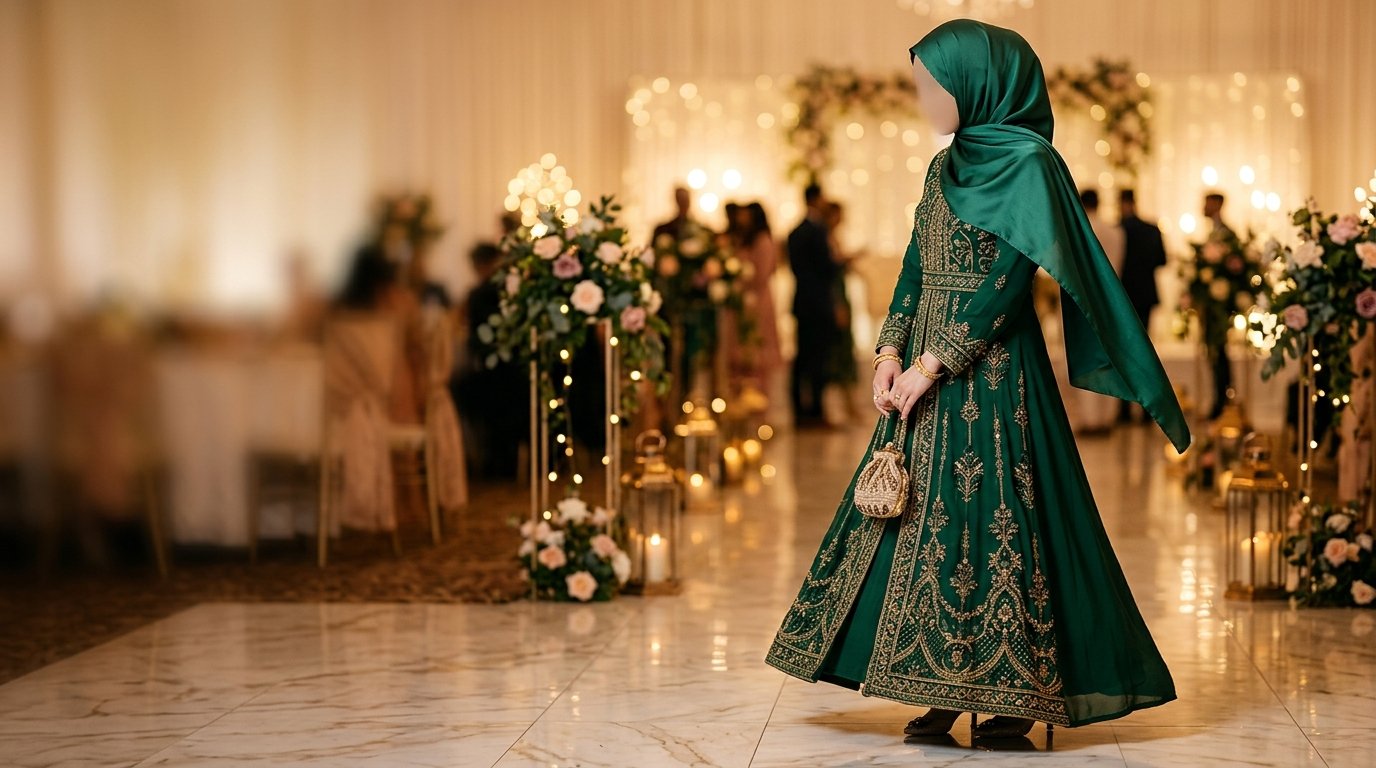
Modest Wedding Guest Outfit Ideas for Autumn & Winter 2026: Nikah to Walima
Wedding season is almost here, and if you dress modestly, the challenge is always the same: how do you look elegant and festive while keeping full coverage — and without ever overshadowing the bride? The good news is that 2026 is one of the best years yet for modest occasion wear. Flowing maxi silhouettes, embellished abayas, jewel tones and rich winter fabrics are exactly what’s in style, so covered-up and glamorous now go hand in hand.
This guide breaks it all down: what to wear to each wedding event from the nikah to the walima, the autumn/winter colours and fabrics to reach for, how to choose looks that flatter your body shape, and the etiquette rules worth knowing before you get dressed.
Quick answer: For a modest wedding guest look in 2026, choose a floor-length embroidered abaya, kaftan, anarkali or a wide-leg trouser suit in a rich jewel tone, with sleeves and a higher neckline. Add a satin hijab, gold or pearl jewellery and metallic heels. Avoid white, bridal shades, and anything tight, sheer or above the knee.
First, the golden rules of guest dressing
Before the fun part, a few etiquette basics that apply to almost every wedding:
- Never upstage the bride. Skip anything that reads as bridal, and keep your look elegant rather than attention-grabbing.
- Avoid white and heavy bridal colours. White is usually reserved for the bride in many cultures, and in South Asian weddings, heavy bridal reds and maroons are best left to her too.
- Cover thoughtfully. Aim for covered arms and legs, a higher neckline, and loose, non-clingy silhouettes.
- Check the invitation. If there’s a dress code or a colour theme, follow it. When in doubt, ask the family what’s expected for each event.
- Mind the setting. A mosque nikah calls for more coverage and a head covering; a hotel reception allows more glamour.
What to wear to each wedding event
South Asian and Muslim weddings often span several events, and each has its own mood. Here’s how to dress modestly for the main ones.
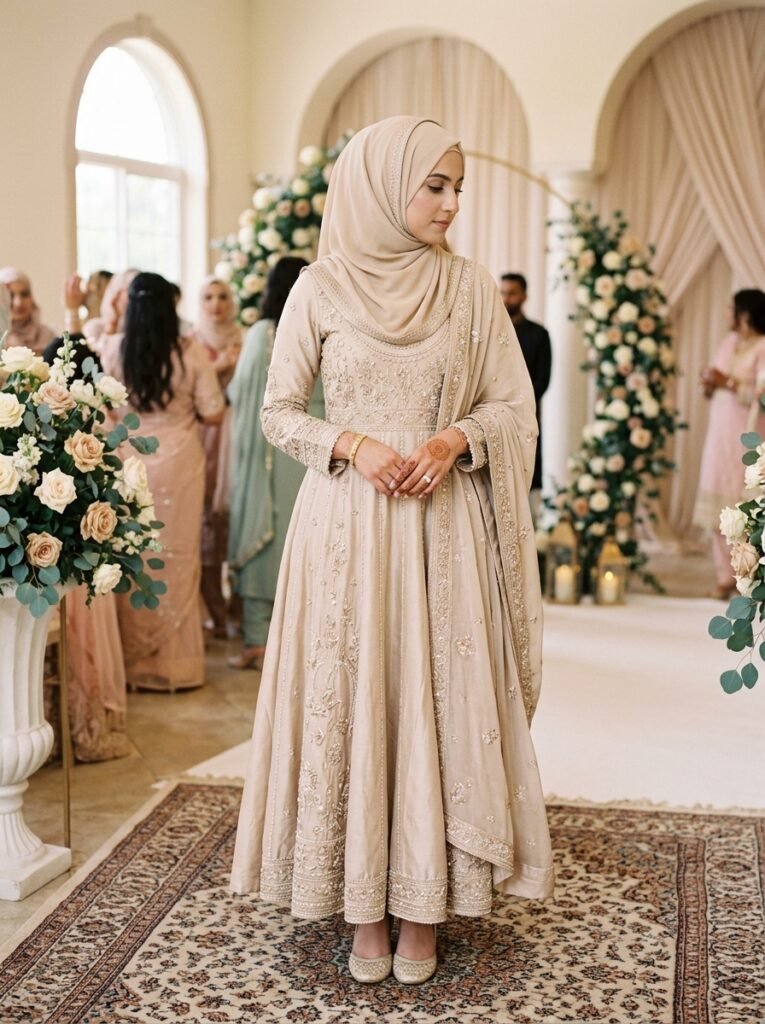
The Nikah (the ceremony). This is the most sacred part and calls for the most refined, understated dressing. Think a beautifully embroidered floor-length abaya in a soft or jewel tone, an elegant anarkali, or a kurta with a maxi skirt or wide-leg trousers. Keep embellishment subtle and coverage generous, and have a coordinating hijab or shawl ready for the prayer portion.
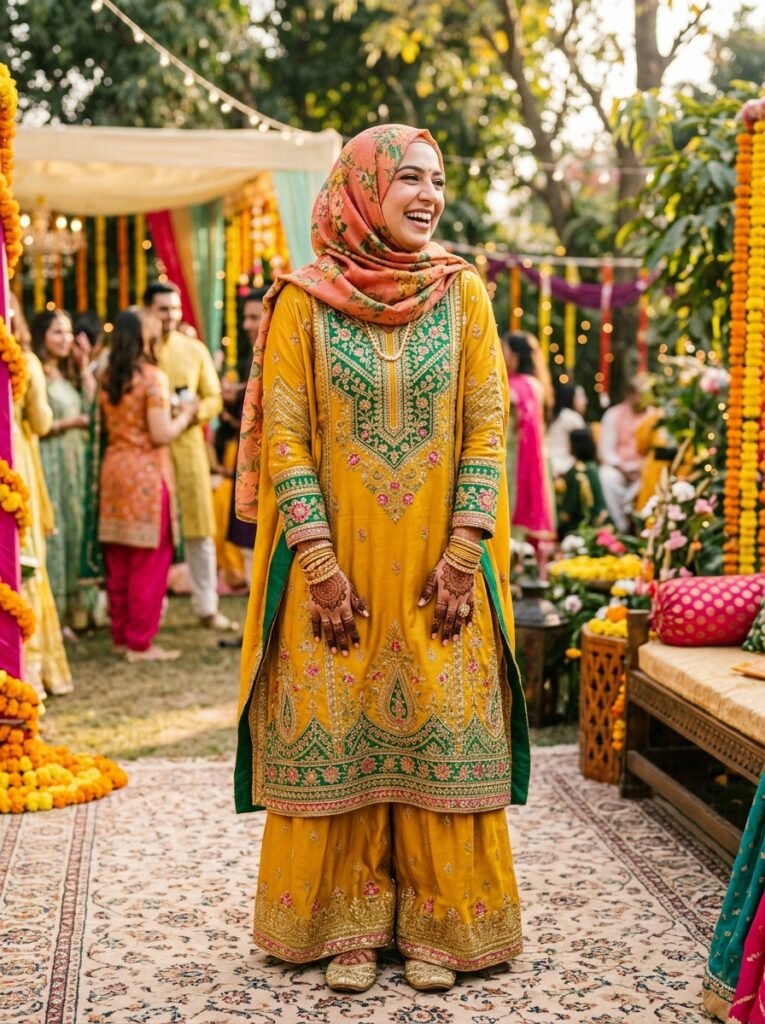
The Mehndi or Mayoun (the festive pre-wedding). This is your chance to embrace colour and fun. Traditional yellows, greens and bright florals shine here. A vibrant kaftan, a modest sharara or gharara set, or an anarkali with playful embroidery all work beautifully. Because these events are lively, choose fabrics you can move and dance in comfortably.
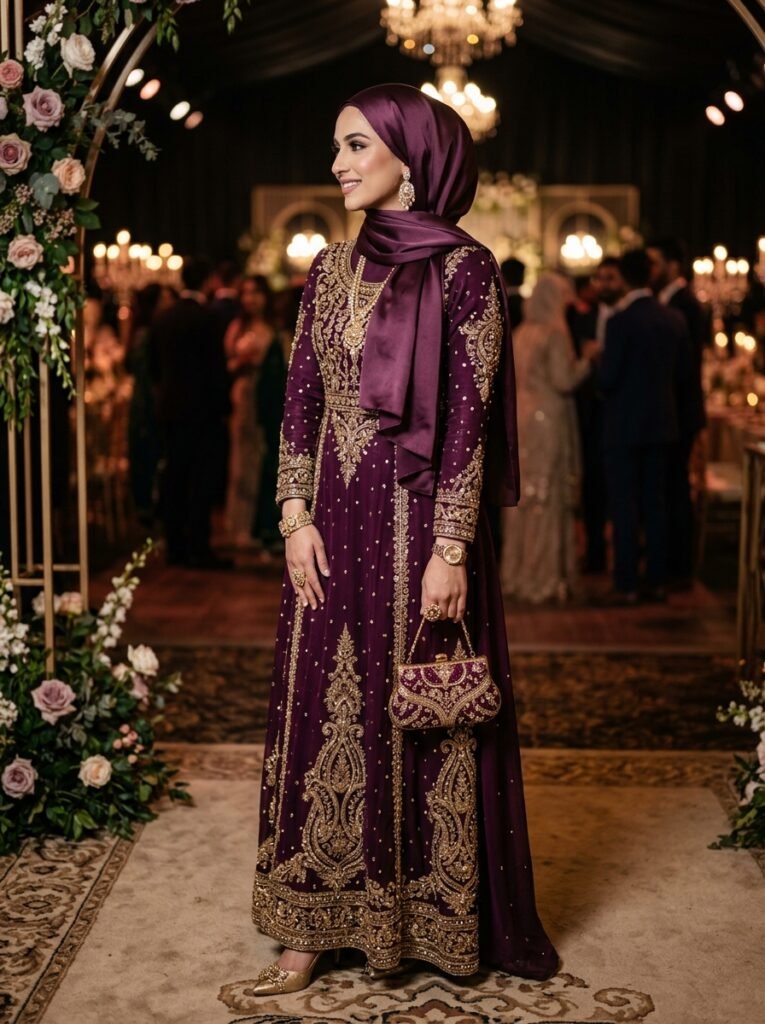
The Walima or Reception (the glamour). The reception is where you bring the drama — modestly, of course. An embellished or beaded abaya, a flowing gown with sleeves, a modestly draped saree, or a luxe wide-leg jumpsuit in satin or velvet all make a statement. This is the event for rich jewel tones and a little sparkle.
The colours and fabrics defining 2026
This season’s occasion trends are practically made for modest dressing.
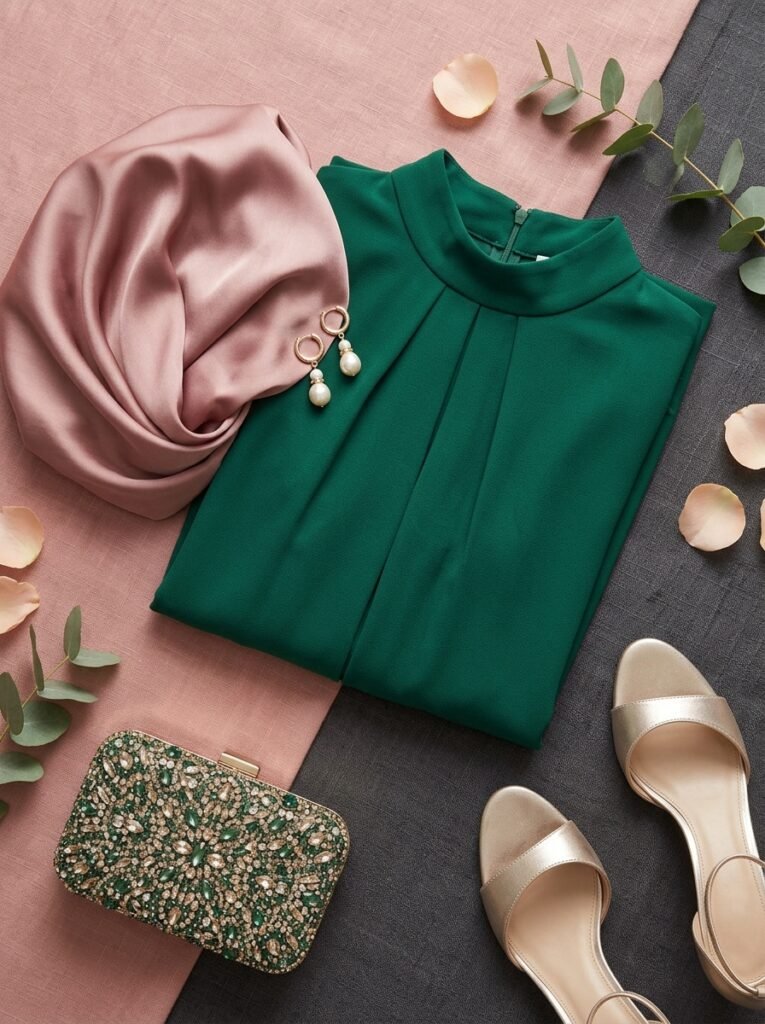
Jewel tones lead the way. Emerald, sapphire, ruby, deep plum and cobalt blue look regal and photograph beautifully in warm wedding lighting — and they feel especially right for autumn and winter celebrations.
Rich fabrics for cold-weather weddings. Velvet, brocade and jacquard are having a strong moment and add instant luxury. A velvet abaya or a brocade wide-leg suit feels seasonal and elevated without any extra effort.
Embellishment is back. Beaded, embroidered and intricately detailed pieces are trending across occasion wear this year. For a modest guest, that’s perfect — the detail does the work while the silhouette stays covered. Keep embellishment concentrated in one zone (a neckline, a hem) so the look stays elegant rather than overwhelming.
Soft neutrals for daytime. For daytime or smart-casual events, dusty rose, sage, warm camel and champagne remain effortlessly chic and pair well with gold accessories.
Modest silhouettes that always work
If you’re unsure where to start, these covered-up silhouettes are reliably elegant:
- The embroidered abaya — timeless, respectful and endlessly variable by fabric and detail.
- The kaftan — loose, flowing, and comfortable for long celebrations; dress it up in silk or velvet.
- The anarkali — a fitted-to-flared floor-length silhouette that flatters and covers.
- The wide-leg trouser suit — a modern, polished alternative to a dress, especially in brocade or crepe.
- The modest saree drape — style it with a full-sleeve or high-neck blouse and a shawl for coverage.
- The luxe jumpsuit — a wide-leg satin or velvet jumpsuit reads elegant and celebratory for receptions.
Choose the right look for your body shape
The most flattering outfit is the one that works with your shape, so use these pointers:
- Pear (fuller hips): draw the eye up with an embellished neckline, statement earrings or a jewel-tone hijab, and let skirts fall in a soft A-line.
- Apple (fuller midsection): a flowing anarkali or a longline open abaya skims the middle beautifully; avoid anything that cinches tightly at the waist.
- Hourglass: define your waist gently — a softly belted abaya or a fitted-then-flared anarkali celebrates your balance.
- Rectangle (straighter frame): create shape with a peplum detail, gentle waist definition, or layered draping.
- Petite: keep proportions streamlined and hems intentional; a monochrome column (dress plus matching hijab) elongates the frame.
- Tall: you can carry dramatic floor-length gowns, full anarkalis and long flowing kaftans with ease.
Hijab styling and accessories
With occasion wear, your hijab and accessories tie the whole look together:
- Hijab: a satin or silk hijab in a shade that coordinates (or gently contrasts) with your outfit adds polish. For heavily embroidered outfits, keep the hijab simple; for plainer outfits, a textured or subtly shimmering hijab lifts the look.
- Jewellery: gold and pearls flatter jewel tones and warm fabrics. Keep it elegant — statement earrings or a single cuff rather than everything at once.
- Shoes and bag: metallic or nude heels and a small jewelled or satin clutch finish the ensemble without competing.
- One focal point: let either your outfit, your jewellery or your hijab be the star — not all three.
What not to wear as a modest guest
A quick checklist of what to leave in the wardrobe:
- White or bridal shades — reserved for the bride.
- Heavy bridal reds/maroons at South Asian weddings — also the bride’s territory.
- Anything tight, sheer, sleeveless or above the knee — it works against modest coverage.
- All-black, if the culture associates it with mourning — check first; in many modern settings a chic all-black look is fine, but when unsure, choose colour.
- Overly flashy or costume-like pieces that pull focus from the couple.
When in doubt, err on the side of elegant and understated. You’ll always look right.
Key Takeaways
- Modest wedding guest outfits for 2026 favour flowing maxis, embellished abayas, kaftans, anarkalis and wide-leg suits — covered yet glamorous.
- Dress for the event: refined and subtle for the nikah, colourful and festive for the mehndi, glamorous jewel tones for the walima.
- Lean into 2026’s trends — jewel tones, velvet, brocade and one-zone embellishment — especially for autumn and winter.
- Choose silhouettes that flatter your body shape, and let one element (outfit, hijab or jewellery) lead.
- Avoid white, bridal shades and anything tight or revealing, and always check the invitation for a dress code.
FAQ
Q1. What should a modest guest wear to a wedding in 2026? A floor-length embroidered abaya, kaftan, anarkali or a wide-leg trouser suit in a rich jewel tone, with sleeves and a higher neckline. Finish with a satin hijab, gold or pearl jewellery and metallic heels. Velvet and brocade suit autumn and winter weddings especially well.
Q2. What do you wear to a nikah versus a walima? For a nikah, dress most modestly and subtly — an elegant embroidered abaya, anarkali or kurta with a maxi skirt, plus a head covering for the ceremony. For a walima or reception, you can bring glamour with an embellished abaya, a sleeved gown or a luxe jumpsuit in jewel tones.
Q3. What colours should you avoid as a wedding guest? Avoid white and other bridal shades, which are reserved for the bride, and steer clear of heavy bridal reds or maroons at South Asian weddings. Check whether all-black is culturally appropriate, and when unsure, choose an elegant jewel tone instead.