
MINOXIDIL FOR WOMAN: COST, RESULT AND SIDE EFFECTS
Something has shifted in how women deal with thinning hair. Unbranded versions have pulled the price down in most parts of the world. Foam has largely replaced the fiddly dropper bottle. And a treatment once whispered about is now discussed openly, in salons and waiting rooms alike.
What has not shifted is the part nobody prints on the box. Minoxidil is not a purchase you make once. It is a routine you take on, and any useful discussion of it has to start with the money, the waiting, and the trade-offs.
Quick answer: Minoxidil for women is the most widely used topical treatment for hereditary hair thinning, sold in most countries as a lower-strength liquid applied twice daily or a stronger foam applied once daily. Expect a modest monthly cost, a fair verdict at around six months, and continued use to keep whatever you gain
WHAT EXACTLY IS MINOXIDIL FOR WOMEN, AND WHY DOES IT GROW HAIR
Minoxidil arrived as a treatment for high blood pressure. Patients taking it began growing hair they had not asked for, and a hair product was born out of an inconvenience.
Worked into the scalp, it widens the tiny vessels supplying each follicle and appears to hold the follicle in its active growing stage for longer. A hair that would have loosened and dropped early instead stays anchored and keeps lengthening. Multiply that across thousands of follicles over several months and the result reads, on the scalp, as density.
There is a genetic lottery inside the chemistry. The drug arrives inactive and has to be converted into its working form by an enzyme inside the follicle itself. Women whose follicles are rich in that enzyme convert more of it and tend to see more. Women with less of it may see very little, no matter how faithfully they apply it.
No shop tests for this. You learn which group you belong to by using the product properly for six months and then looking honestly in the mirror.
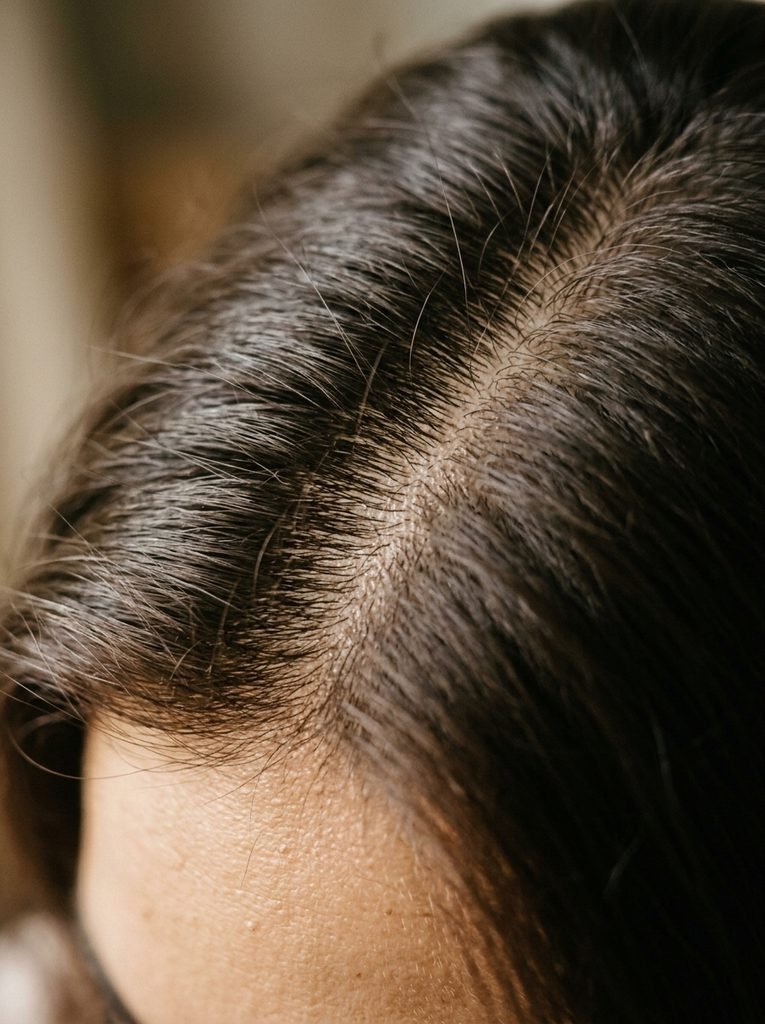
WHICH STRENGTH IS RIGHT FOR WOMEN 2% OR 5%
Both are legitimate. The real difference is tolerance and habit, not raw power.
The lower 2% concentration is the older option and is applied twice a day. The 5% foam came later, designed around a single daily application. In practice the two end up close together, because a once-daily foam is something a busy woman will still be doing in year three.
Stronger is not automatically better here, which surprises people. Higher concentrations used twice daily raise the odds of an irritated scalp and of fine hair turning up on the temples, cheeks or forehead — the side effect women mind most.
The practical read:
- 2% liquid — cheapest, longest history of use, but the alcohol base leaves some scalps dry and itchy
- 5% foam — once daily, dries fast, leaves no film, and is by far the easier habit to sustain
- 5% liquid twice daily — best treated as a clinician’s decision rather than a self-started experiment
If you are choosing without guidance, choose the version you will still be using in six months. Consistency is the treatment.
WHAT DOES MINOXIDIL FOR WOMEN ACTUALLY COST PER MONTH
Prices differ by country, pack size, tax and whether the product sits on an open shelf or behind a pharmacy counter. The bands below are broad monthly equivalents, expressed loosely in US dollars for comparison.
| Option | Rough monthly band | Where it usually sits | Worth knowing |
|---|---|---|---|
| Unbranded generic topical | $5–$15 | Supermarkets, pharmacy chains, online sellers | Same active ingredient at the same strength; only the carrier formula differs |
| Branded topical foam | $15–$30 | Pharmacy shelf, brand stores | You are paying for the vehicle, the applicator and the name |
| Online subscription service | $15–$35 | Telehealth providers | Convenience, repeat delivery, sometimes bundled with other actives |
| Prescription tablets, off-label | Tablets cheap; consultation is the real cost | Prescription only, where local rules permit | The medicine costs little; the medical supervision is what you are buying |
The figure nobody advertises: at fifteen dollars a month, a decade of continuous use lands somewhere near eighteen hundred. That is not a scare tactic. It is simply the honest way to price a treatment that only works while you keep using it.
Assume you are paying out of pocket. In most healthcare systems hair thinning is classed as cosmetic, so reimbursement is rare. Availability varies too an open shelf in one country, a pharmacist’s hand in another, a prescription in a third. Check your own rules before ordering across a border.

WHY DOES MORE HAIR FALL OUT IN THE FIRST FEW WEEKS?
Because the treatment is working, and it feels like the opposite.
To restart a sleeping follicle, the old resting hair sitting in it has to be released first. Minoxidil nudges a large batch of dormant follicles into a new cycle at roughly the same time, so a wave of old hairs leaves together. You see it in the shower, on the brush, on the pillow, and your confidence takes the hit.
This phase is the single biggest reason women give up in month one. Knowing it is coming removes most of its power.
What it should look like: a temporary increase in even, all-over shedding that peaks and then eases, with no pain and no visible change to the skin.
What deserves an appointment instead: shedding still accelerating after two months, hair leaving in defined patches rather than evenly, or a scalp that is sore, scaly, red or tender. Those patterns point somewhere else entirely, and this treatment is not the answer to them.

HOW LONG UNTIL YOU SEE RESULTS, AND WHAT DO THEY LOOK LIKE?
Slowly, then all at once. Here is the sequence most women live through.
THE REALISTIC MINOXIDIL TIMELINE
- Weeks 0–2 — nothing visible; the scalp is simply learning to tolerate a daily product
- Weeks 2–8 — shedding rises and then settles; this is the drop-out zone
- Month 3 — the first new growth appears, and it is deliberately unimpressive: short, fine, pale, easy to miss unless you look at the parting in daylight
- Month 6 — the fair assessment point, and the moment to talk to a doctor if there is genuinely nothing
- Months 8–12 — those fine hairs thicken and pick up your natural colour, which is when other people start noticing
- Year 1 onward — growth plateaus and the goal quietly changes from regrowth to holding ground
Measure against the right benchmark. For most women the realistic outcome is a fuller mid-scalp and a narrower parting, not the hair they had at twenty-two. Slowing further loss counts as success, even though it photographs terribly.
WHAT HAPPENS IF YOU STOP USING IT
This treatment does not repair the cause of hereditary thinning. It holds follicles in a growth phase they could not sustain alone. Withdraw the support and those follicles resume the shrinking they were already heading toward and the newest, finest hairs go first.
Women often describe this as a sudden crash. It is not really sudden. It is several months of paused decline arriving at once.
Which is why the cost question and the results question are the same question. Deciding whether the product is worth fifteen dollars a month really means deciding whether it is worth fifteen dollars a month for as long as you want the hair. Plenty of women answer yes without hesitation. Others conclude that permanent maintenance is not for them, and that is a reasonable adult decision, not a failure of discipline.
If you do intend to stop, raise it with a clinician first rather than simply letting the bottle run out.
WHAT ARE THE SIDE EFFECTS OF MINOXIDIL FOR WOMEN
Common and usually minor:
- Itching, dryness, flaking or redness across the scalp
- Irritation at the application site, more often with alcohol-based liquids than with foam
- The temporary shedding phase described above
- Fine unwanted hair on the temples, forehead or cheeks almost always where product has drifted, dripped or been carried by hand
Less common, and worth a call the same week:
- Dizziness or light-headedness
- A racing or irregular heartbeat
- Swelling around the ankles, hands or eyes
- Unexplained, rapid weight gain
Those four suggest more of the drug is entering the bloodstream than intended, and they are not symptoms to wait out.
How to lower the risk in practice: apply only to a dry scalp, never exceed the labelled amount, keep it off the hairline edges, wash your hands straight afterwards, and leave several hours of drying time before bed so nothing transfers to a pillow and then to your face overnight.
IS THE ORAL TABLET SAFER OR RISKIER THAN THE TOPICAL VERSION
Taken as a very small daily dose far below what was once used for blood pressure the tablet removes the two most common complaints about the topical version: an irritated scalp and the daily nuisance of applying liquid to hair you have just styled. Adherence improves sharply, which matters enormously for a treatment that only works while you use it.
The trade-off is that the drug now circulates through the whole body rather than sitting on one patch of skin. Unwanted hair growth elsewhere becomes considerably more likely than with topical use, and women notice it more than men do. Puffiness around the eyes, mild fluid retention, light-headedness and a faster resting pulse are all recognised possibilities, generally mild and generally related to dose.
Serious cardiac problems are uncommon at these small doses, but they are precisely why the tablet is prescription-only. A clinician will normally check blood pressure and heart history before starting and review you within the first few months.
It is a sensible route for women who could not tolerate the topical form. It is not a way around a consultation.

WHO SHOULD NOT USE MINOXIDIL
Do not use it during pregnancy or while breastfeeding. This applies to both the topical and the oral forms without exception, and it is the most important sentence in this article.
Not for children or teenagers. These products are made for adults, and hair loss in a young person needs a diagnosis, not a bottle.
Get a diagnosis first if the loss is sudden, patchy, or comes with scalp symptoms. Thyroid problems, low iron, post-illness shedding, severe stress, crash dieting, certain medications and scarring conditions all present as thinning hair. None of them is solved by this treatment, and some of them quietly worsen while you spend six months hoping.
Speak to a doctor first if you have a heart condition, low blood pressure, kidney disease, or take cardiovascular medication. This matters for the topical form and matters considerably more for the tablet.
HOW SHOULD YOU APPLY IT SO IT ACTUALLY WORKS
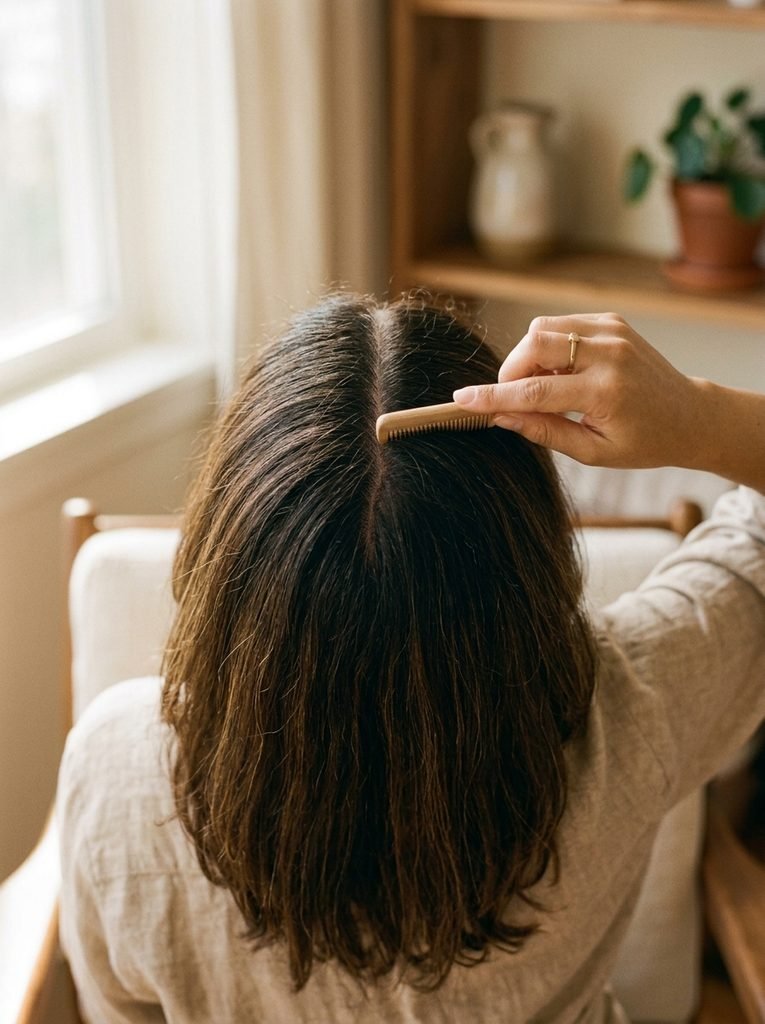
The medicine has to reach skin. Hair is not the target; the scalp is. Begin with dry hair, part it down the centre of the thinning area, then make two or three more partings on each side so the product lands where it can be absorbed rather than sitting on the mid-lengths.
The rules that make the difference:
- Dry scalp only damp hair spreads the dose to places it is wasted
- Use the labelled amount and no more; excess raises absorption without raising benefit
- Work it in with fingertips for a few seconds, then wash your hands properly
- Allow full drying time before styling products, hats, scarves or a pillow
- Same slot every day in a treatment measured in months, rhythm beats intensity
WHAT IF YOU ARE ONE OF THE WOMEN IT DOES NOT WORK FOR
Return to the enzyme problem. How much of the drug becomes active varies from person to person, which means identical products, identical technique and identical patience can still produce different outcomes. A realistic spread looks roughly like this: most women get a measurable benefit, a minority get a striking one, and a real proportion see very little change.
Six months of correct daily use is the fair test. Six weeks is not. Neither is six months of using it three times a week because the routine kept slipping.
If you reach that point with nothing to show, a clinician still has options: change the formulation, adjust the concentration, investigate an untreated underlying cause, add a second approach, or consider the supervised oral route. Not responding to one delivery method does not mean not responding to anything.
KEY TAKEAWAYS
- Minoxidil for women is the most widely used topical treatment for hereditary thinning, as a twice-daily lower-strength liquid or a once-daily 5% foam.
- Budget a modest monthly amount, and remember that generic and branded versions carry the same active ingredient.
- Judge results at six months, not six weeks.
- Early shedding is expected and usually settles within two months.
- Stopping reverses the gains, so treat it as an ongoing cost rather than a course of treatment.
- Topical side effects are mostly local; the tablet carries a higher chance of unwanted hair elsewhere.
- Pregnancy and breastfeeding are absolute exclusions.
THE HONEST LIMITS OF WHAT THIS ARTICLE CAN TELL YOU
First, nobody can predict your individual response in advance, because the thing that decides it is not something a shop counter can measure. Second, the price bands here are broad international estimates, and pack sizes, taxes and availability differ enough between countries that your real cost may land outside them. Third, and most importantly, thinning hair is a symptom with many possible causes, and this treatment addresses only one of them.
FAQ
CAN A WOMAN USE MEN’S 5% MINOXIDIL?
The active ingredient is identical; the directions are not. Products aimed at women are built around once-daily use, while men’s regimens are usually twice daily. Doubling up raises the chance of irritation and of fine hair appearing on the face. Follow the instructions written for women.
WILL IT WORK ON A RECEDING FRONT HAIRLINE?
It performs best on even thinning through the parting and crown, which is the typical female pattern. Loss caused by scarring conditions or years of tight styling generally will not respond, because those follicles are damaged rather than dormant. Identify the pattern before buying anything.
DOES IT HELP WITH HAIR LOSS AFTER PREGNANCY OR ILLNESS?
That kind of shedding is usually a temporary disruption of the hair cycle that resolves on its own over several months, and treatment is not advised while breastfeeding. Wait, look after your general health, and see a doctor if it has not settled after about a year.