How To Launch A Modest Fashion Brand: Full Cost Breakdown
A realistic budget to launch a modest fashion brand sits somewhere between $3,000 and $12,000 for a first drop that can actually stand on a shelf and if that sounds higher than the clothing-brand budgets you have been comparing, there is a straightforward reason. Those budgets are built around a t-shirt.
Coverage costs money. Not in a vague, philosophical way in yards.
A short-sleeved tee uses roughly a yard and a half of fabric. A floor-length, lined abaya with a full sleeve can swallow four and a half. Identical factory, identical labour rate, identical everything else, and your cost per garment has already doubled before the first panel is cut.
What follows is the version of this breakdown that accounts for that, written for founders anywhere in the world, step by step.
Quick Answer: What Does A Modest Fashion Brand Actually Cost?
Launching a modest fashion brand generally costs $3,000–$12,000 for a small run of one or two styles, and $20,000–$40,000 for a full collection. Fabric volume, compulsory lining and height-based length grading push modest garments roughly 30–60% above standard apparel per unit, so plan for fewer pieces at a higher cost each.
By The Numbers: What You Are Walking Into
- Two to three times — how much more fabric a long, sleeved, lined garment needs compared with a basic top. This single ratio governs your entire budget.
- 300 to 500 units — a common minimum order quantity per style, per colour and sometimes per size at larger factories. Smaller workshops will go far lower, at a higher price per piece.
- Roughly one in five to one in three — the share of online clothing orders that come back as returns across the industry. Garments whose fit depends on the wearer’s height sit at the unhappy end of that range.
- Six to seven months — a normal timeline from first sketch to first sale once sampling rounds and shipping are counted honestly.
Choose One Hero Garment And Lock The Modesty Spec — $0 To $150
Before any money moves, decide what you are making. Not a “modest line.” One garment.
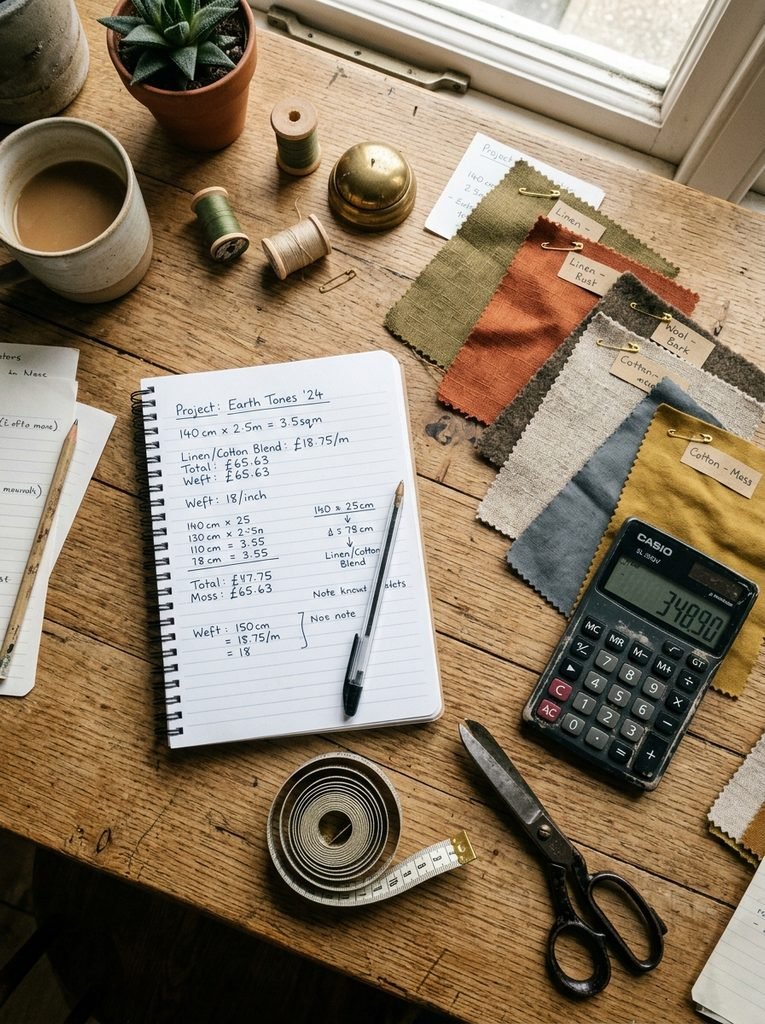
This is where the category diverges from general fashion advice most sharply. A modest garment carries a technical specification, not only an aesthetic: where the hem falls relative to the wearer’s height, how wide the sleeve sits at the wrist, how high the neckline closes, and the one that catches everybody how opaque the cloth stays in real light. A fabric that looks rich indoors and turns translucent in afternoon sun is a refund with extra steps.
Write the specification in plain sentences. Target length. Lining, yes or no. Sleeve construction. Fabric weight. Do it yourself for nothing, or pay a freelance technical designer $100–$150 for a couple of hours to translate your description into the vocabulary a factory reads.
Price It Backwards Before You Spend Anything — $0
Most first-time founders design first and discover their margin later. Invert that.
Start with the price you believe your customer will pay. Halve it, roughly, to find a wholesale figure. Then aim for your total cost of goods to land near a quarter of the retail price that is the cushion that survives discounting, returns, payment fees and the units that come back damaged.
Put concrete numbers on it today. If the garment you have in mind needs four yards of a good crepe plus lining plus a longer sewing time, and your target cost of goods is $24, you will find out now instead of after a deposit has cleared.
| Line item | Jersey hijab | Lined maxi dress | Full abaya, wide sleeve |
|---|---|---|---|
| Fabric yardage | 0.8 yd | 3.2 yd | 4.5 yd |
| Fabric cost | $2.50 | $11.00 | $16.00 |
| Lining | — | $3.50 | $5.00 |
| Trims, labels, care tag | $0.60 | $1.80 | $2.20 |
| Cut-and-sew labour | $1.50 | $9.00 | $13.00 |
| Packaging | $0.50 | $1.20 | $1.20 |
| Estimated cost of goods | $5.10 | $26.50 | $37.40 |
| Suggested retail (3×) | $15 | $79 | $112 |
Look at the first column. Low fabric, simple construction, generous multiple which is exactly why a scarf or accessory piece deserves a place in your opening drop rather than a footnote in year two.
Register The Business And Protect The Name — $50 To $600
Dull, unavoidable, and cheap relative to everything that follows.
Registration costs vary enormously by country a simple company filing is close to free in some places and runs into four figures in others, particularly where a trade licence is bundled with the registration. Budget the low end if you are filing a sole proprietorship yourself, the higher end if you want a limited company set up through an agent.
Then check the name properly. Modest fashion has an unusually crowded naming pool. Words meaning light, grace, modesty, moonlight and dawn, drawn from Arabic, Urdu, Turkish and Persian, have been used and reused across hundreds of labels. A preliminary search costs nothing. A trademark filing costs a few hundred dollars and is worth completing before you commit to woven labels, packaging or a domain-matched social handle.
Build The Tech Pack And Pattern — $150 To $1,200
A tech pack is the manual your factory builds from: every measurement at every size, construction notes, seam and stitch types, fabric and trim specifications, and a clear sketch.
Freelance technical design work sits broadly between $150 and $1,200 depending on complexity, and modest garments land in the upper half of any comparable category. The reason is grading.
A conventional dress grades across bust, waist and hip. A modest garment must also grade across height. A woman of five foot two and a woman of five foot nine both want the hem at the ankle, and size labels alone will never deliver that you need separate length blocks, or at minimum a regular and a tall option. Founders who skip this learn about it through a stack of returns marked “too short.”
If your design is not built on an existing block, pattern making adds another $200–$800 per style.
Sample Until The Drape Is Right — $150 To $900 Per Style
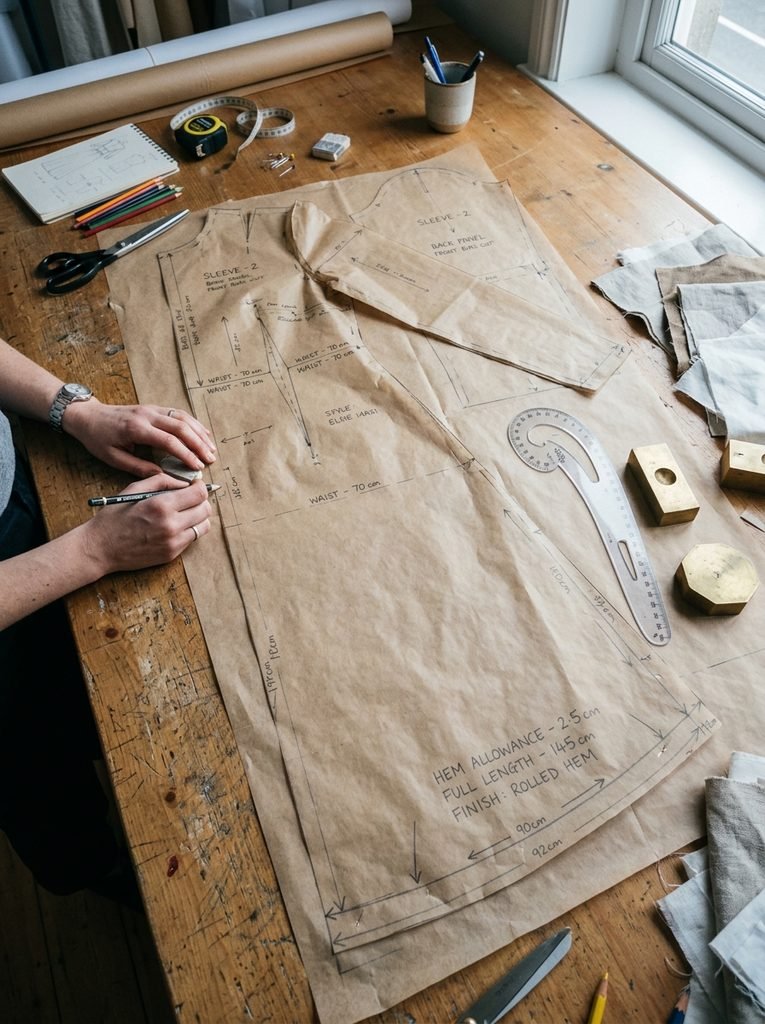
Individual samples generally cost between $50 and $200 depending on complexity, and you will need more than one. Budget for two or three rounds per style. Founders who plan for a single round and need three are the ones who run short at exactly the wrong moment.
For modest wear, sampling does a job it simply does not do for basics. It tests movement. A flat photograph will never tell you whether a sleeve rides up when an arm lifts, whether a skirt panel clings across the hip when the wearer walks, or whether the weave goes sheer under a bright shop light.
So test it worn, not hung. Full day, indoors and outdoors, and photographed from behind as well as from the front. Back views expose more fit problems than front views ever do.
One practical negotiation: ask whether sampling costs can be credited against your first production order. Many workshops agree, and almost none volunteer it.
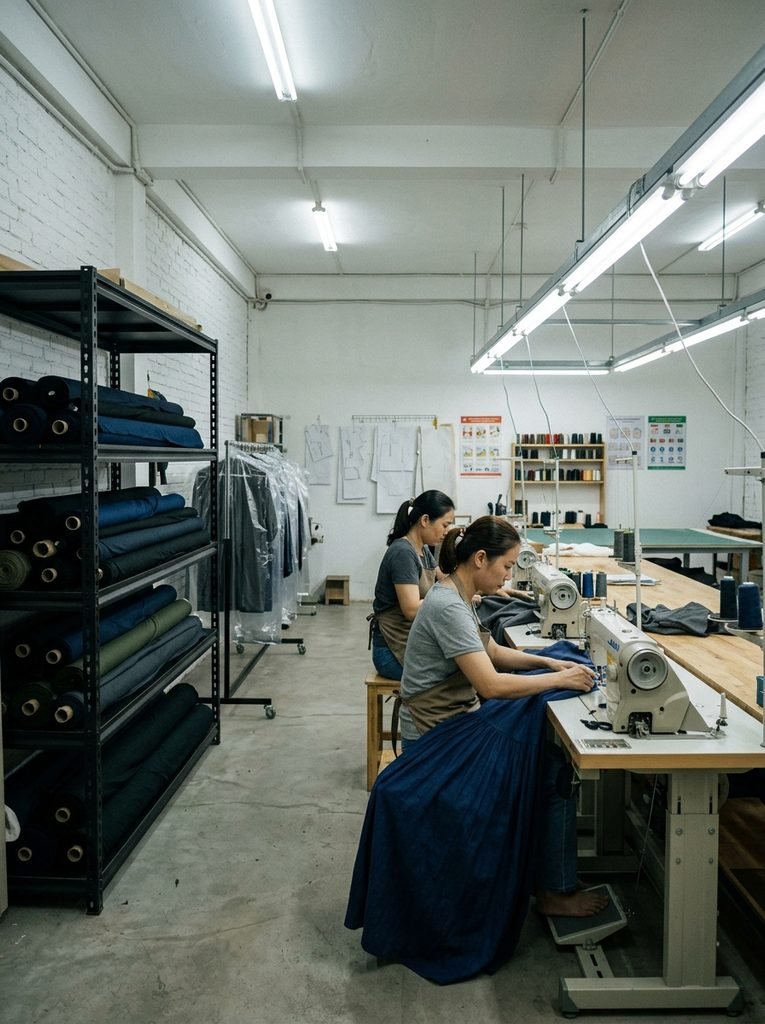
Choose Your Factory And Place The First Run — $1,500 To $10,000
This is the biggest single line item, and minimum order quantity is the lever that moves your whole budget.
Large factories often want several hundred units per style, per colour, and occasionally per size. That can tie up five figures in stock before a single customer has confirmed the design works. Smaller workshops and studio manufacturers will accept runs in the dozens, charging noticeably more per garment for the privilege and for a first collection, that trade is usually worth making.
Broadly, three sourcing routes serve this category:
| Route | Typical MOQ | Strengths | Watch for |
|---|---|---|---|
| Local small-batch studio | 25–100 per style | Fast turnaround, easy quality control, no import duties | Highest price per unit; may lack modest-wear experience |
| Regional specialist hubs | 100–300 per style | Genuine expertise in abayas, tunics and long garments; strong fabric access | Mid-tier pricing, longer communication loops |
| Large-volume export factories | 300–500+ per style | Lowest cost per unit, excellent embroidery and embellishment | Heavy capital lock-up, freight, duties, slow feedback |
A workable first run is 50 to 100 units across one or two styles in one or two colourways. Use a simple benchmark: the run should sell through within two to three months. If it does, reorder and scale. If it does not, the problem is the design, the price or the marketing and reordering will only multiply it.
One cost that specifically ambushes this category is weight. A folded abaya can weigh three times what a t-shirt weighs, which raises both your inbound freight and every parcel you post. Model that before you set a retail price, not after.
Brand, Packaging And The Store — $400 To $3,000
A capable freelance designer will build a usable identity for $150–$800. Woven labels, care labels and hang tags for a hundred-unit run come in around $150–$400. Mailers, tissue and a thank-you card add $100–$500.
A hosted storefront costs roughly $30–$120 a month depending on the platform and tier, plus a domain and any paid theme. Self-hosted options cost less in licence fees and considerably more in your own hours.
Be restrained here. In this category, customers judge the hem, the weight of the cloth and whether it arrived at the length promised. Nobody has ever reordered because of the tissue paper.
Photography, Launch And Marketing — $1,000 To $6,000
Photography is the one line where modest brands genuinely need to outspend the generic advice.
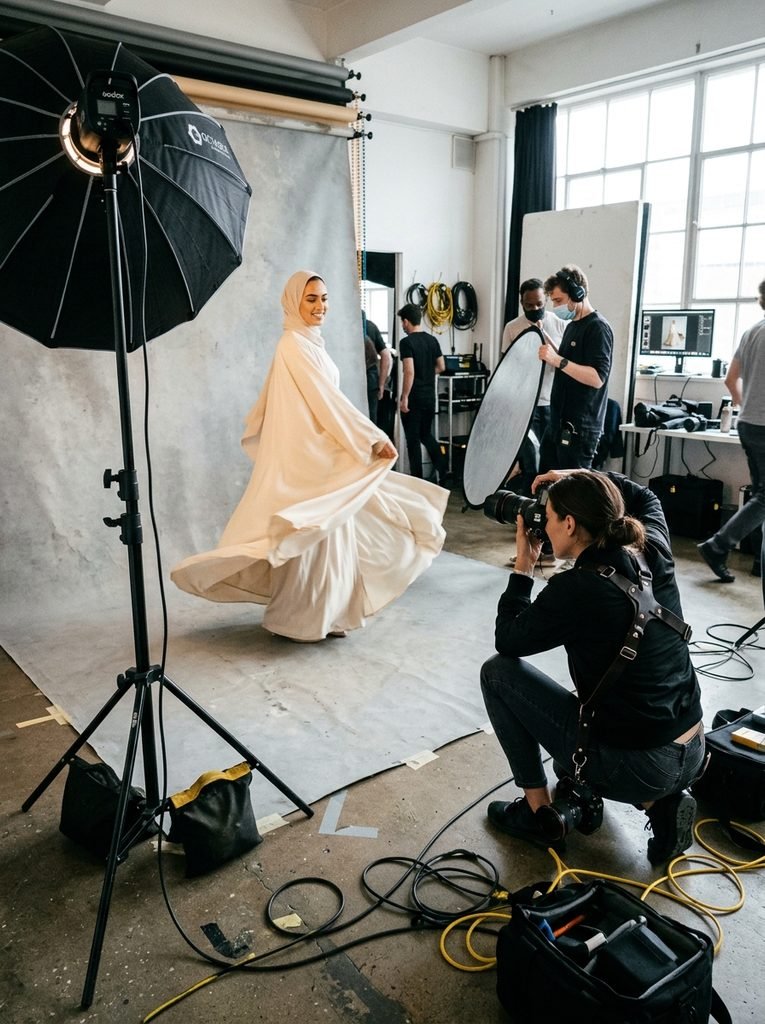
You are not photographing a flat product. You are photographing drape, length and movement, on a model who covers which means casting appropriately, working with someone who understands how a scarf is actually wrapped, and shooting more frames per garment than a basics brand would ever need. Budget $600–$2,500 for a first shoot covering two styles across several looks, and treat walking shots as essential rather than decorative.
On marketing, the sensible planning rule is to set aside a fifth to a third of your total launch budget, and to spend the first slice on organic content before touching paid advertising. Organic tells you what your audience responds to; paid simply amplifies whatever you already had, including the mistakes.
One scheduling decision outweighs every ad in this niche: the calendar. Demand concentrates hard around Ramadan and the two Eids, with secondary peaks around wedding seasons in many regions. Production lead times plus shipping mean the order for a festive drop is placed four to five months ahead. Miss that window and you are financing stock that sits for the better part of a year.
The Full Budget In One Table
| Cost category | Lean start | Serious small-batch | Full collection |
|---|---|---|---|
| Spec and tech pack | $0–$150 | $300–$800 | $1,000–$3,000 |
| Pattern making | — | $200–$800 | $1,000–$3,000 |
| Sampling (2–3 rounds) | $150–$400 | $500–$1,500 | $2,000–$5,000 |
| Production | $800–$2,000 (30–50 units) | $3,000–$8,000 (100–200 units) | $12,000–$30,000 |
| Labels, trims, packaging | $150–$400 | $400–$1,000 | $1,500–$3,000 |
| Brand identity | $0–$200 | $300–$1,000 | $1,500–$4,000 |
| Website (first year) | $500–$900 | $900–$2,000 | $2,000–$5,000 |
| Photography | $200–$600 | $600–$2,500 | $2,500–$6,000 |
| Marketing (first 3–6 months) | $500–$1,500 | $2,000–$5,000 | $5,000–$15,000 |
| Registration and legal | $50–$300 | $300–$700 | $700–$2,000 |
| Contingency (15%) | $350–$1,000 | $1,200–$3,000 | $4,000–$11,000 |
| Total | $2,700–$7,450 | $9,700–$26,300 | $33,200–$87,000 |
Treat the columns as behaviour rather than tiers. The lean column is an experiment. The middle column is a business. The third is a business with a marketing runway attached.
Concept To First Sale
- Weeks 1–3 — specification, pricing maths, registration
- Weeks 3–6 — tech pack and pattern
- Weeks 6–14 — sampling, two to three rounds
- Weeks 12–16 — factory selection, deposit, fabric booking
- Weeks 16–26 — production and shipping
- Weeks 20–26 — brand identity, storefront, audience building
- Weeks 26–28 — photography and content
- Week 28 onward — launch
Six to seven months is the honest figure. Anyone promising six weeks is either describing print-on-demand or has quietly deleted the sampling rounds.
The Costs That Ambush Modest Brands Specifically
Lining nobody budgeted for. Usually discovered at sampling, when daylight passes through the first prototype. Adds a few dollars of material and a meaningful slice of sewing time to every unit.
Length returns. Solved almost entirely by publishing the model’s height alongside the garment length on every product page, and offering a genuine tall option. Costs nothing. Saves thousands.
Shipping weight. Long garments cost more to move in both directions, and return postage is the invisible half of that bill. Build it into the retail price.
Fabric minimums. Mills frequently require a minimum yardage per colour. On a fabric-hungry garment that is easy to absorb; on a cautious first test it can leave you holding cloth you cannot use.
Transaction and platform fees. Payment processing, app subscriptions and currency conversion together take a steady percentage off every order. It is small per sale and substantial per year.
Defects. A small share of any production run will come through with flaws that make it unsellable at full price. Assume it and price it in.
Key Takeaways
- A credible modest launch starts near $3,000 and becomes comfortable near $10,000.
- Fabric volume is the defining difference. Cost the garment by the yard, not by the category.
- Minimum order quantity controls your budget more than any other single decision. Start at 50–100 units.
- Modest-specific money goes into lining, length grading and movement photography — the three things generic guides omit.
- Hold a 15% contingency, and treat the first run as a paid experiment rather than a launch.
Frequently Asked Questions
Can I start a modest fashion brand with $1,000?
You can start something at that level — a print-on-demand or curated reseller operation — and it is a legitimate way to test whether your taste attracts buyers. What you cannot do for $1,000 is produce a lined, correctly graded modest garment, because the fabric alone rules it out. Treat the first thousand as research money and reinvest what it teaches you.
What is the cheapest modest garment to produce first?
Accessories, comfortably. Jersey hijabs, underscarves and scarf sets use under a yard of cloth, need simple finishing and carry strong margins. Many brands launch on an accessory to build an audience and a cash cushion, then introduce garments once demand is proven rather than assumed.
Do I need a fashion design background?
No. What the work actually demands is a precise specification, the ability to communicate it through a tech pack, and a real understanding of how your customer dresses day to day. Lived familiarity with modest dressing is worth more here than a qualification, because the technical details are exactly what outsiders get wrong.
How many pieces should be in my first collection?
One or two. Spreading the same budget across five styles produces five compromised garments, five sets of sampling costs and no clear bestseller. A single garment done properly gives you better product, better photography and a much cleaner reading of what your customer wants next.
Should I manufacture locally or overseas?
Below roughly three hundred units per style, the cost advantage of distant manufacturing narrows sharply once freight, duties, quality-control risk and slow feedback loops are counted. Above five hundred, specialist export factories become meaningfully cheaper — and several regions with long histories of making long, covered garments bring expertise you will not find close to home.