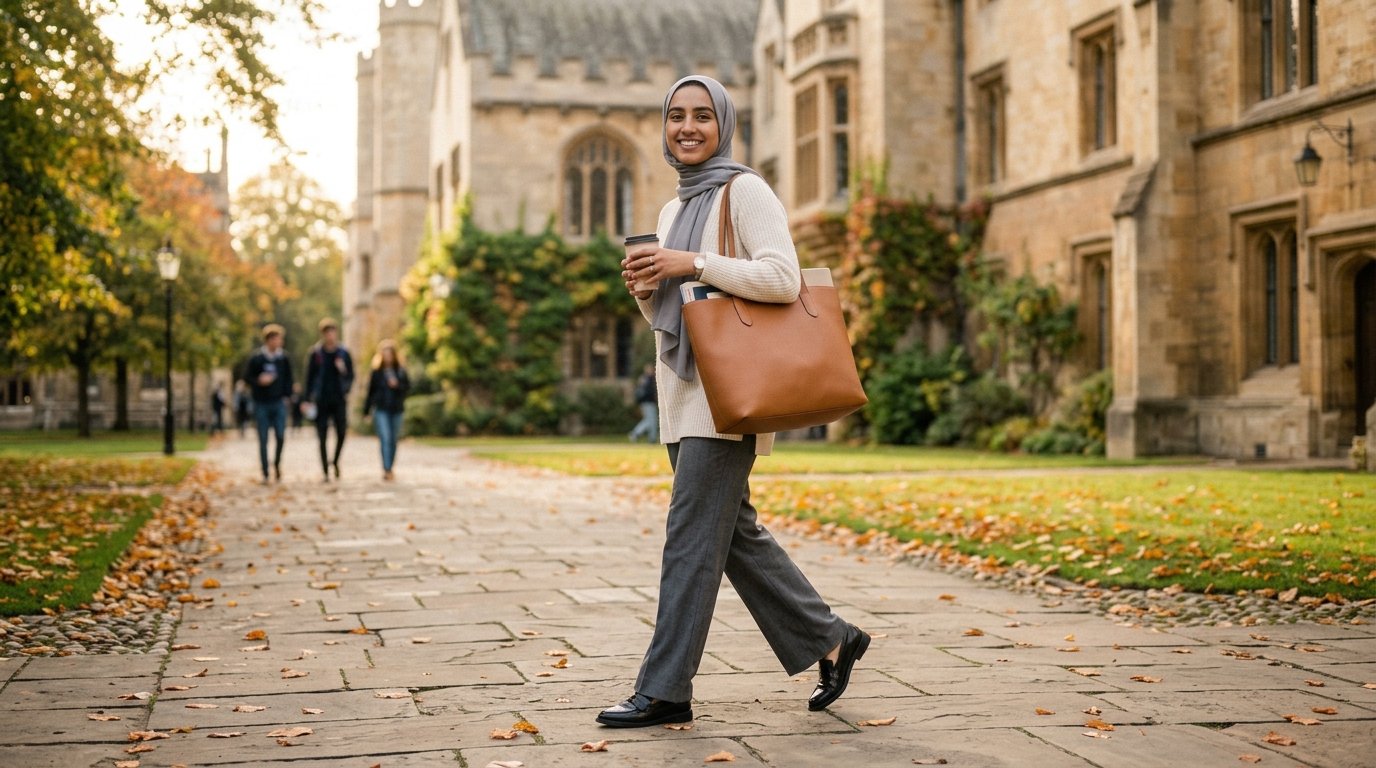
Your Hijab Isn’t Causing Hair Loss — But Three Habits Underneath It Might Be
Let’s clear up the thing that makes this topic frightening: covering your hair does not, by itself, cause hair loss. What causes damage is mechanical — tension, friction and trapped moisture — and all three come from how the hijab is worn rather than from wearing it.
That distinction matters, because tension damage responds to changes you can make this week. Published dermatology guidance on headwear-associated hair loss is unusually specific about what those changes are, and almost none of it has made it into the styling advice circulating online.
The short answer: The hijab itself does not cause hair loss. The three mechanical causes are constant tension from tight styling, friction from fabric against the hairline, and moisture trapped by covering damp hair. Dermatology guidance recommends non-slip fabrics such as jersey or cotton, adjustable tie-back undercaps, and varying where you tie your hair.
What the research actually says
A review published in the National Library of Medicine’s PMC archive addresses headwear-associated alopecia across religious communities and sets out specific mitigation for hijab wearers. Four recommendations stand out, and I have reordered them by how much difference they make in practice:
- Choose hijab fabrics less likely to slip — jersey or cotton are named directly.
- Choose undercaps that tie at the back or adjust for size, rather than one-size, tube-style caps.
- If hair is tied in a knot or ponytail, vary where it sits rather than using the same spot daily.
- Understand that traction alopecia can be irreversible when chronic — which is precisely why prevention beats treatment here.
Separate dermatology commentary makes the same point from the clinical side. A 2023 study summarised by dermatology writers found that consistent tight wrapping around the head and hair produces continuous pull on the roots and a higher traction alopecia risk. Dermatologists quoted in beauty press have flagged clips used to hold a scarf in place as a specific culprit for localised loss.
On the scalp side, one Jakarta study cited by modest-wear publications reported scalp itch in around 59% of hijab-wearing participants and dandruff in around 56%, with hair loss reported by roughly 6% — and scalp microbiome research has found differences in bacterial and fungal populations between women who cover and those who do not. Treat those figures as indicative rather than universal; they describe one population in one climate. The direction of travel, though, is consistent: the scalp under coverage is a warmer, damper environment, and it needs managing rather than ignoring.
Cause one: tension
This is the big one, and it is almost always invisible while it is happening.
A high, tight bun pulls the hairline. Worn every day, in the same position, for years, that pull is constant tension on the same follicles. The visible early sign is thinning at the front edge and around the temples — often with short, fine hairs still present along the very front.
What to change:
- Tie at the nape, not the crown. Lower position, less drag on the hairline.
- Keep tension loose enough that you can slide a finger under the elastic without effort.
- Move the position — this is the recommendation that costs nothing and gets ignored most. A knot two centimetres left of yesterday’s knot spreads the load.
- Swap thin elastics for satin or silk scrunchies. Thin bands concentrate force at one point, which is where breakage shows up.
- Be careful with clips and pins used to hold the scarf itself. If a pin is taking the weight of the fabric by anchoring into hair, that is tension you did not intend to apply.
Cause two: friction
Friction is the quieter problem. Fabric moving against the hairline all day, every day, abrades the hair shaft — you see it as breakage, frizz at the front, and hair that never seems to grow past a certain length at the temples.
Smooth fabrics move against hair with less grab than textured ones. That is the whole logic behind satin and silk linings, and it is sound.
What to change:
- Use a satin- or silk-lined undercap, or a smooth cap under a textured scarf.
- Avoid coarse, scratchy scarves directly against the hairline — put a smooth layer between.
- Look at your actual friction point. For most people it is the front hairline and the nape, not the crown. That is where the smooth layer has to reach.
Cause three: trapped moisture
Do not cover damp hair. This is the single rule with the least ambiguity attached to it.
Wrapping hair that is still wet creates a warm, humid, enclosed environment for hours — conditions that encourage microbial growth and scalp irritation, and hair that is mechanically weakest while wet. Damp hair tied tightly is the worst combination of all three causes at once.
What to change:
- Wash on a schedule that lets hair dry completely before you need to cover it. For most people that means evening washes, not morning.
- Give your scalp uncovered airflow at home — first thing in the morning and last thing at night is the easiest habit to build.
- After sport or a hot day, let the scalp cool and dry before re-wrapping rather than covering damp hair straight away.
The undercap upgrade nobody talks about
If you change one object, change this.
The dermatology guidance is specific: prefer undercaps that tie at the back or adjust for size over one-size, tube-style caps. The reasoning is simple once you see it. A tube cap that is slightly too small applies even, constant compression around the whole head — including the hairline — and you cannot dial it down. A tie-back cap lets you set the tension yourself, and lets you set it looser.
Most people buy tube caps because they are cheap and they grip. Which brings us to the insight that reframes this whole article.
Why fabric choice is really a tension decision
Here is the connection almost every hijab hair-care article misses.
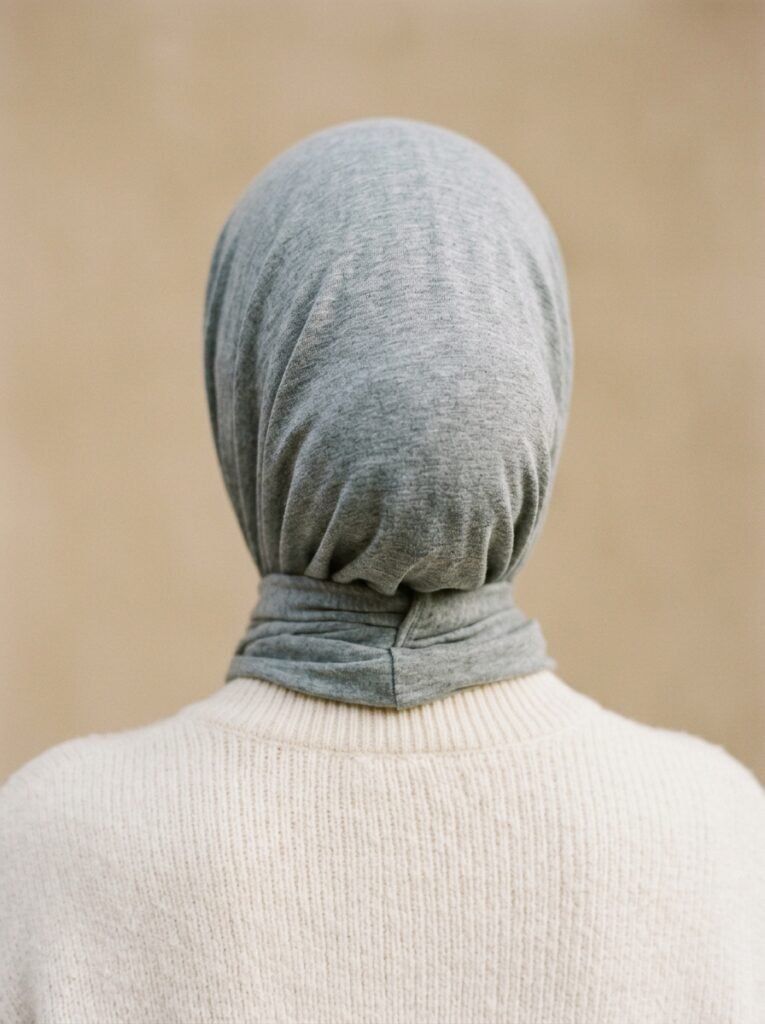
The reason people over-tighten is that the scarf slips. A slippery fabric — a fine chiffon, a satin outer scarf — needs more pins, more tucking, and a firmer undercap to stay put. Every one of those compensations adds tension.
So when dermatology guidance recommends fabrics that are less likely to slip, such as jersey or cotton, it is not a comfort suggestion. It is a tension intervention. Choose a fabric that stays where you put it, and you stop needing to pull it tight.
That is the practical hierarchy: grip on the outside, smoothness against the hairline. A jersey or cotton outer scarf that holds itself in place, over a satin-lined tie-back cap that protects the hair underneath.
Autumn fabric guide
The seasonal shift changes the calculation, so here is how the common options actually behave.
| Fabric | Grip | Warmth | Breathability | Hair-friendliness |
|---|---|---|---|---|
| Jersey | Excellent — stays put with minimal pinning | Good | Moderate | Good; named in dermatology guidance as non-slip |
| Cotton | Very good | Moderate | Excellent | Good; breathable, low static |
| Modal / viscose | Good | Moderate | Good | Good; soft against the hairline |
| Chiffon | Poor — needs pins and tension | Low | Good | Risky, because of what you do to keep it on |
| Satin (outer) | Poor | Low | Low | Smooth on hair, but slips, so pair carefully |
| Satin (as cap lining) | n/a | n/a | n/a | Best in class for reducing friction |
| Wool / pashmina | Good | Excellent | Low | Use over a smooth cap, never directly on the hairline |
Two autumn-specific notes.
Static. Indoor heating plus synthetic fabric produces static, flyaways and the frizz halo at the hairline that everyone blames on their hair. A light leave-in on the ends and a natural-fibre or modal layer against the head reduce it more effectively than any amount of smoothing.
Weight. Heavier winter scarves mean more friction and more perceived need to anchor them. That is exactly when the smooth-cap-underneath rule earns its place.
A realistic weekly routine
Not a fourteen-step ritual. Five habits, in rough order of return.
- Wash regularly enough that the scalp is clean. Under coverage, oil and sweat accumulate. General haircare guidance for hijab wearers commonly lands around two to three washes a week, adjusted for your hair type — oily scalps need more, very dry or textured hair needs fewer with more conditioning.
- Treat the scalp as skin. It is skin. A gentle shampoo worked into the scalp rather than piled on the ends, and a few minutes of massage while washing, does more than any product claim.
- Condition the ends, not the roots. A lightweight leave-in or a small amount of oil on the lengths and ends — the part that takes the friction — without weighing down the scalp.
- Air-dry fully, then cover. Non-negotiable, per the section above.
- Rotate your styling position across the week so no single set of follicles takes the tension every day.
How to hold a hijab without pulling
The styling fixes that reduce tension while actually staying on.
- Grippy cap, grippy scarf. Friction between the two layers does the holding work that pins would otherwise do.
- Pin fabric to fabric, never into hair. If a pin has to catch something, let it catch the cap.
- Anchor low. Weight distributed at the nape pulls less than weight anchored at the crown.
- Tuck rather than tension. Excess fabric tucked into the cap holds better than the same fabric pulled taut.
- Check the mirror at the hairline, not the drape. If the skin at your temples is being lifted, it is too tight — however good the drape looks.
When to stop reading articles and see a doctor
This is a styling guide, not medical advice, and there is a line where the two separate. Book an appointment with a doctor or dermatologist if you notice:
- Hair loss that is sudden, patchy, or rapidly worsening
- Redness, small bumps, or persistent flaking on the scalp
- Itching that does not settle with a change of routine
- A hairline that is visibly receding despite loosened styling
- Loss accompanied by any other change in your general health
Two reasons not to wait. First, traction damage is described in the literature as potentially irreversible when it becomes chronic, so early is genuinely better. Second, hair loss has many causes that have nothing to do with headwear — thyroid function, iron levels, postpartum changes, medication, stress, genetics — and a styling fix cannot address any of them.
If seeing a female clinician matters to you, ask when you book. Published guidance on culturally competent care explicitly notes that Muslim women may prefer a female physician and that practices should accommodate it. That is a reasonable request, not an inconvenience.
Key Takeaways
- The hijab does not cause hair loss. Tension, friction and trapped moisture do — all three are habits, not the garment.
- Dermatology guidance recommends non-slip fabrics such as jersey or cotton, tie-back or adjustable undercaps over one-size tube caps, and varying where you tie your hair.
- Traction alopecia can be irreversible when chronic, which makes prevention the whole game.
- Fabric choice is a tension decision: a scarf that grips is a scarf you stop over-tightening.
- Never cover damp hair, and give your scalp uncovered airflow daily.
- Best structure: grip on the outside, smooth satin against the hairline.
- See a doctor for sudden, patchy or worsening loss, or for redness, bumps or persistent flaking.
FAQ
Does wearing a hijab cause hair loss?
Not by itself. Hair loss associated with headwear comes from mechanical causes — constant tension from tight styling, friction from fabric against the hairline, and moisture trapped by covering damp hair. Change the mechanics and you remove the risk.
How many pieces do I need for a modest campus capsule?
Twelve garments plus two pairs of shoes and one coat will cover a full term. Four bottoms, four tops, an oversized blazer, a removable cardigan, an outer coat and a structured tote recombine into roughly forty outfits.