Gold Jwellery As A Investment: Real Return Analysis
Ask ten people why they own gold jewellery and at least half will say it doubles as savings. That belief is common in a Mumbai bazaar, a Dubai souk, a Lahore market or a high-street jeweller in Birmingham or Toronto. It isn’t wrong, exactly. Gold rarely becomes worthless.
The mistake comes earlier, at the moment of purchase. Buyers look at the day’s gold rate, look at the price tag, decide the two are close enough, and walk out believing they hold that much gold in value. In practice, a large part of what they paid has already gone, and it won’t come back when they sell.
This article sets out how large that part is and how long gold’s growth takes to earn it back, using one purchase followed from the counter to year ten.
📌 Quick Answer
Gold jewellery is a weak pure investment. Making charges, local sales tax and dealer buy-back cuts usually take 15–35% off its value the day you buy it, so gold prices have to rise roughly 18–58% before you break even. Plain bars and coins keep far more of every dollar.
Key Takeaways
- Only the gold content has resale value. Craftsmanship, brand, design and gemstones almost never earn money back.
- In our model, a plain 22K chain needs about 2.8 years of steady gold growth to break even where there’s no sales tax, and about 6 years where tax is 20%.
- Over ten years the same chain returns about 4.3% a year untaxed and 2.4% taxed. Bullion bought with the same money returns about 5.4%.
- A 20% fall in gold prices can leave jewellery worth 32–49% less than its purchase price.
- Jewellery earns its place when you wear it for years and treat its gold as a safety net rather than a profit plan.
Right Now, At The Counter: What You Are Actually Paying For
Every piece of gold jewellery is priced in layers. Understanding the layers explains almost everything that follows.
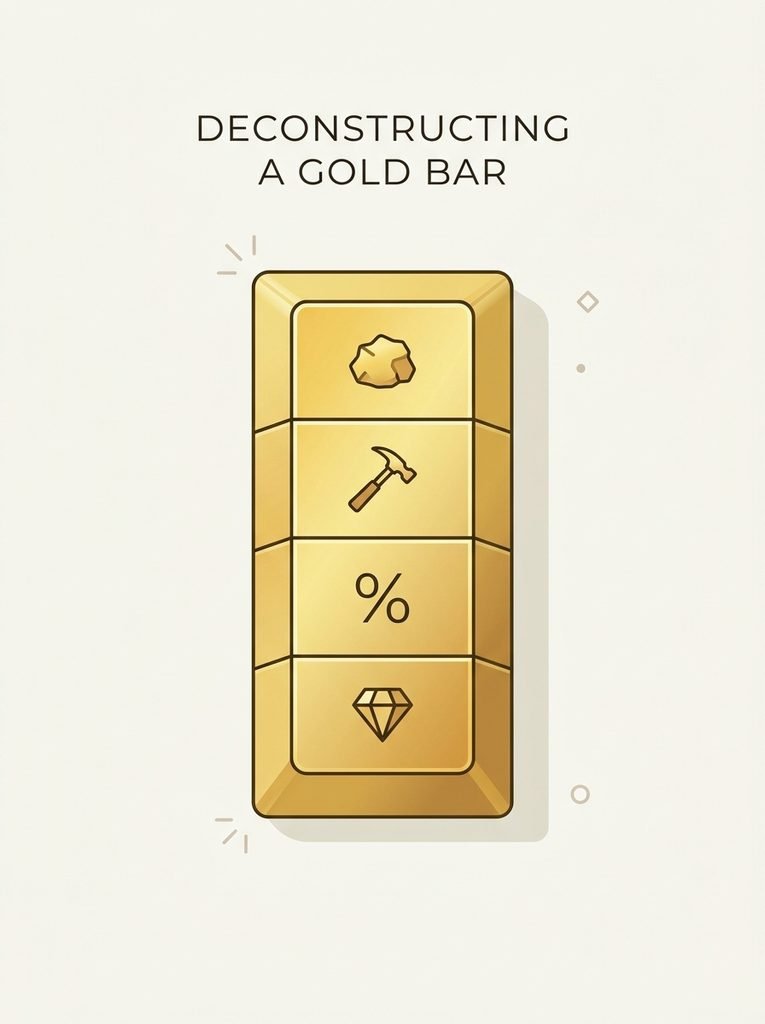
The Four Layers Of A Jewellery Price
- The Metal. This is weight × purity × the day’s gold rate. 24K is essentially pure, 22K is about 91.7% gold, 18K is 75% and 14K is about 58.5%. The metal is the only layer a future buyer pays for.
- Making Or Labour Charges. This is what it costs to turn raw gold into a bracelet or necklace. On plain, machine-made pieces it may be a small single-digit percentage. On intricate handwork, bridal sets or famous brands it can reach a quarter of the metal value or more, and designer pieces can cost several times their gold content.
- Tax. This varies widely. Some countries charge little or nothing on jewellery, some add a modest goods and services tax, and others apply full VAT of 20% or more. Many tax systems also treat investment bars and coins more kindly than worn jewellery.
- Stones, Enamel And Wastage. Gemstones, beads and enamel add weight and price but no gold. Some jewellers also add a wastage charge for metal lost during manufacture.
Run The Numbers On Gold Jewellery As An Investment
A single example makes this concrete. The numbers below come from a simple model rather than a live market quote, so treat them as a way to understand the costs, not as a price guide.
The Assumptions:
- Gold is priced at a round $4,300 per troy ounce. That’s about $138/g for 24K and $127/g for 22K.
- The purchase is a 20-gram 22K chain with a metal value of about $2,535.
- The making charge is 12%, about $304.
- A dealer buys jewellery back at 95% of melt value and bullion at 98%.
- Bullion is bought at a 4% premium over the gold price.
- Gold grows 6% a year on average. This is an assumption for illustration, not a prediction.
Break-Even Table: How Far Gold Must Climb Before You Recover Your Money
| Scenario | You Pay | Sell-Back Value Next Day | Instant Loss | Gold Must Rise | Years To Break Even (6%/Yr) |
|---|---|---|---|---|---|
| 22K chain, 12% making, no tax | $2,839 | $2,408 | $431 (15.2%) | 17.9% | ~2.8 |
| 22K chain, 12% making, 20% tax | $3,407 | $2,408 | $999 (29.3%) | 41.5% | ~6.0 |
| 18K piece, 25% making, no tax | $2,592 | $1,970 | $622 (24.0%) | 31.6% | ~4.7 |
| 18K piece, 25% making, 20% tax | $3,111 | $1,970 | $1,141 (36.7%) | 57.9% | ~7.8 |
| Same gold as bullion (4% premium, 2% spread) | $2,636 | $2,484 | $152 (5.8%) | 6.1% | ~1.0 |
The most important column is the last one. The bullion buyer is back to even in about a year. The buyer of an ornate 18K piece in a high-tax country could wait nearly eight years, and that assumes gold rises steadily every one of those years, which it won’t.
Compare Gold Jewellery Vs Gold Bullion Before You Commit
If you haven’t paid yet, take a few days to compare formats. The gold inside is identical. What differs is how much it costs to get into gold and how much you lose getting out.
| Format | Cost Above Gold Price | What Resale Is Based On | Best Suited To |
|---|---|---|---|
| Plain high-karat jewellery (chains, bangles, bands) | Making charge plus local tax | Melt value minus a deduction | Everyday wear, with value held in reserve |
| Designer or stone-set jewellery | High, sometimes above the metal value | Metal weight only, stones removed | Gifting and enjoyment, not returns |
| Gold coins | Small premium, often lighter tax treatment | Close to the gold price | Small, flexible holdings |
| Gold bars | Lowest premium per gram | Close to the gold price | Maximising gold per dollar |
| Gold funds or digital gold | Small ongoing fees | Market price | Investors who don’t want to store metal |
A simple rule works in almost every market: the plainer the piece, the more it behaves like an investment. A machine-made 22K chain with a low labour charge sits much closer to a coin than a hand-set bridal necklace does.
Over The Next Two To Five Years: The Break-Even Clock Is Running
Once the receipt is printed, the clock starts. Every rise in gold’s price has to pay back the making charge, the tax and the dealer’s cut before it adds anything to your wealth.
Short holding periods are where jewellery hurts most. Suppose you buy our 22K chain and gold then rises a healthy 6% over the next twelve months. You might expect to be ahead. The chain’s resale value would be about $2,552, against $2,839 paid in a tax-free market and $3,407 in a 20% tax market. Gold went up, and you still lost money.
Gold also doesn’t move smoothly. It can rise for three years and then fall back in a few months. A break-even date based on an average is a rough guide, not a date you can count on
Ten Years Out: What Real Returns Look Like
Now take the long view. At 6% a year for a decade, gold would grow by about 79%. Here is what each purchase would be worth when sold, and what that means as a yearly return:
| Purchase | Paid | Resale After 10 Years | Real Annual Return |
|---|---|---|---|
| Bullion (same gold) | $2,636 | ~$4,448 | ~5.4% per year |
| 22K chain, no tax | $2,839 | ~$4,312 | ~4.3% per year |
| 22K chain, 20% tax | $3,407 | ~$4,312 | ~2.4% per year |
| 18K ornate piece, 20% tax | $3,111 | ~$3,528 | ~1.3% per year |
Here the common saying that gold jewellery holds its value turns out to be only half true. The jewellery does make money over ten years. But in the worst case, gold’s own 6% growth shrinks to barely more than 1% a year. In many countries, 1–2% is below inflation, so the buyer ends up with less purchasing power even though the amount of money went up
When Prices Drop: A Simple Stress Test
Gold is often called a safe haven, and over long periods it has protected wealth well. Over shorter periods it can fall hard. Drops of 15–25% from a peak have happened many times, and buyers who purchase near a high feel them most.
Run a 20% fall through our model:
- The 22K chain would resell for about $1,926. That’s 32% below its tax-free purchase price and 43.5% below the taxed price.
- The 18K ornate piece would resell for about $1,576. That’s 39–49% below what was paid.
Bullion falls too, of course, by roughly the same 20% as the metal. The difference is that jewellery takes the market loss and then adds its fixed costs on top. You pay twice.
Before You Sell: Protect Your Gold Jewellery Resale Value
When it’s time to sell, these habits can save several percent:
- Keep Your Original Invoice. It proves weight and purity, and the shop that sold you the piece may offer better buy-back or exchange terms than a stranger will.
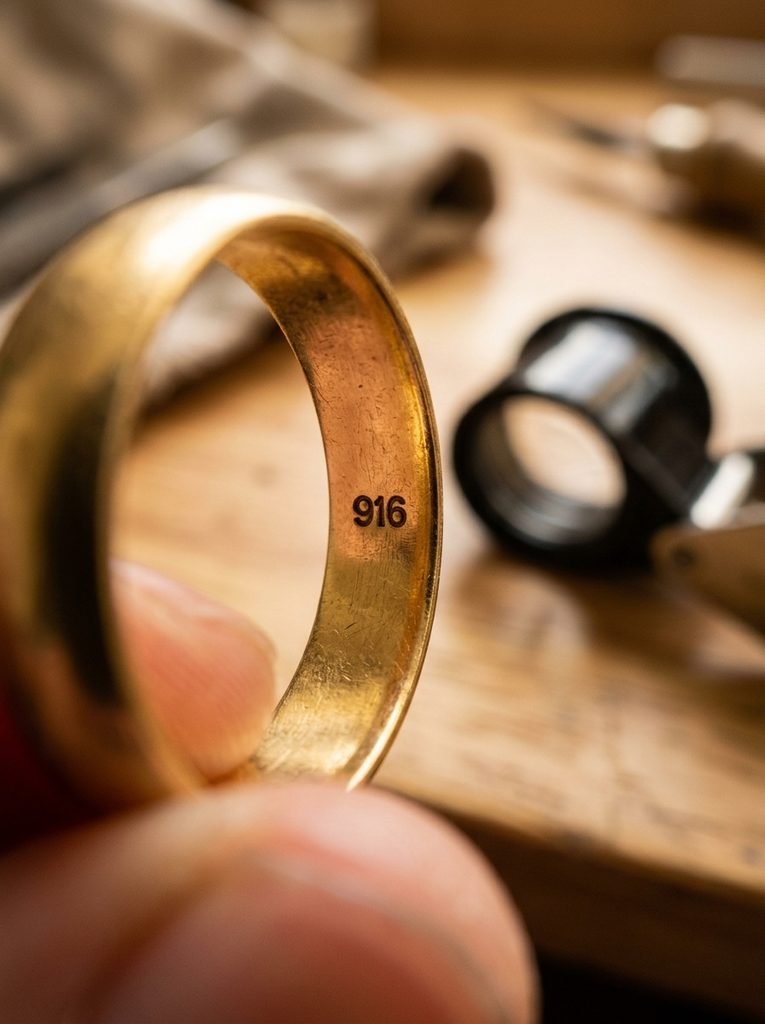
- Look For A Purity Mark. Stamped or certified pieces are easier to value. Unmarked gold is often tested and priced cautiously.
- Collect At Least Three Quotes. Deductions vary a lot between buyers. Compare the net amount you’ll actually receive per gram, not the advertised rate.
- Ask How Stones Are Treated. Stone weight should be removed before the gold is valued. Make sure you aren’t selling stones at a discount while also having their weight counted against you.
- Weigh Exchange Against Cash. Many jewellers credit more toward a new piece than they pay in cash. That’s only a gain if you genuinely want the new piece.
- Check Local Tax On The Sale. Some countries tax gains on personal valuables and others don’t. A short conversation with a local tax adviser before a large sale is worth it.
If You’ve Already Bought: Don’t Panic-Sell
If your jewellery was bought near a price high and is now worth less, remember that the making charge and the tax are already spent. Selling in a hurry turns a paper loss into a real one and makes it permanent.
The better question is simple. From today onward, would you rather hold this gold or hold the cash? Answer it about the future, not about the price you once paid. If you need money urgently, many countries have lenders who accept gold jewellery as security. Read the interest rate and the terms for missed payments very carefully before agreeing, because losing the piece to a default is the most expensive outcome of all.
Who Should Buy Gold Jewellery Anyway
Jewellery is still a sensible purchase for some people:
- Those who will wear it often and for years. The making charge is simply the price of owning something beautiful, and the gold underneath acts as a cushion.
- Families who pass gold down through generations. Over decades, upfront costs shrink relative to the metal’s growth.
- Buyers in markets with low labour charges who choose plain, high-karat, stamped pieces.
It’s a poor fit for others:
- Anyone hoping for a meaningful return within five years.
- Buyers of designer, stone-heavy or low-karat pieces who expect investment performance.
Your Next Steps
- Today: Ask for the metal value, making charge and tax as separate figures on every quote.
- Before Paying: Calculate your break-even rise as total price ÷ (metal value × 0.95) − 1. If the result is above 30%, think again.
- This Week: Get a price for coins or a bar of the same weight and compare the two.
- If You Still Buy Jewellery: Choose plain 22K or 24K pieces with a purity mark and the lowest labour charge you can find.
- Before Selling: Get three net quotes, bring your invoice, and confirm how stones are treated.
- Always: Check the live gold price on the day you act, and treat this analysis as education, not personal financial advice.
Frequently Asked Questions
Does 22K Or 18K Jewellery Hold Its Value Better?
22K usually holds its value better because a larger share of its weight is gold. Buyers pay for pure gold content, so a 22K piece returns more money than an 18K piece of the same weight and making charge.
Will A Jeweller Buy My Gold Back At The Full Market Rate?
Rarely. Most pay the melt value minus a deduction for testing, refining and their own margin. Making charges aren’t returned, and gemstone weight is removed before the gold is valued.
Is Inherited Gold Jewellery Worth Selling?
You paid nothing for inherited pieces, so there are no making charges or taxes to recover and whatever you receive is pure proceeds. Get several quotes, and consider the sentimental value first, because a sold heirloom can’t be bought back.
Can Making Charges Be Avoided Entirely?
Not on jewellery, though plain machine-made designs keep them low. The only way to avoid them completely is to buy gold in coin, bar or fund form.
Is Gold Jewellery Better Than Keeping Money In A Savings Account?
It depends on how long you hold it and what gold does in that time. Over many years gold has often beaten cash, but jewellery’s upfront costs and price swings can leave you behind for long stretches. It should never replace an emergency fund.