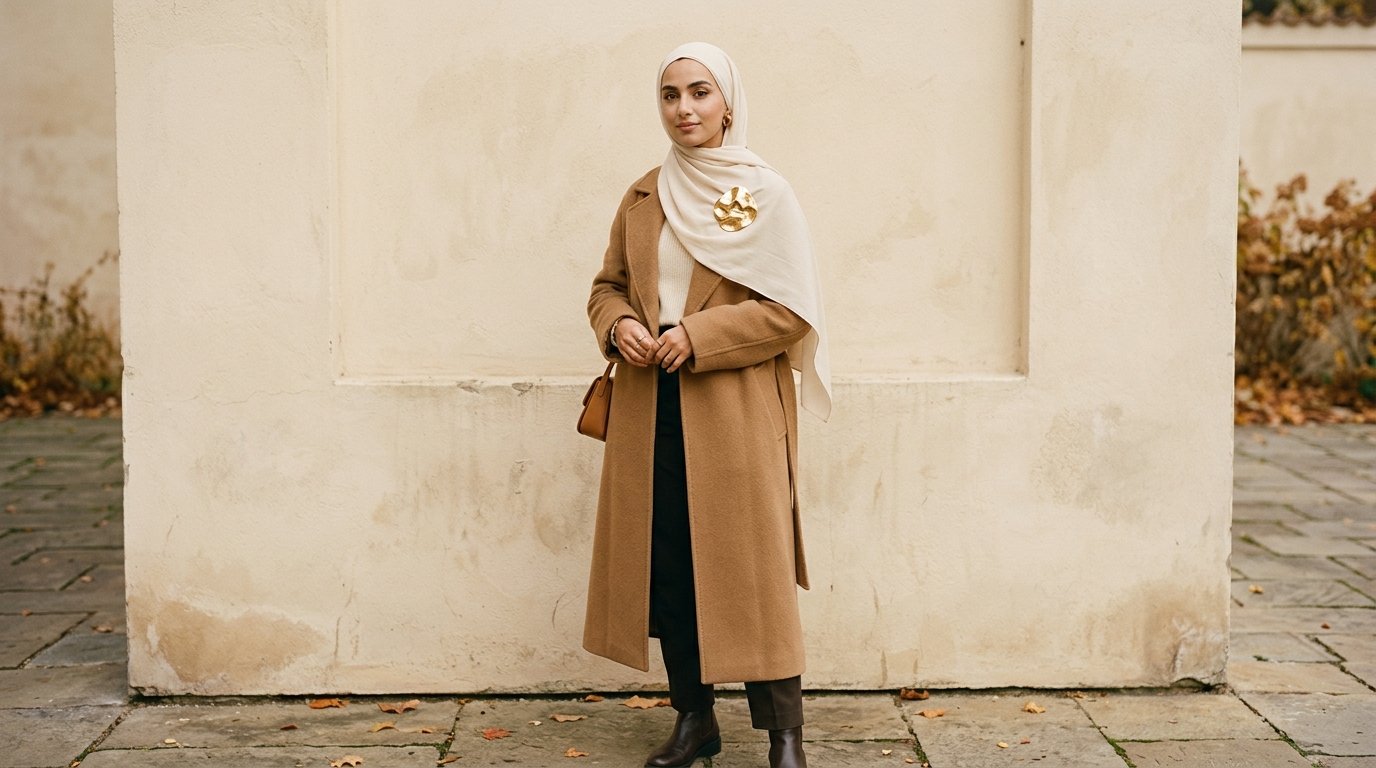
Fall 2026’s Jewellery Is Loud, Layered and Pinned On — Which Makes It the Easiest Trend a Covered Wardrobe Has Had in Years
Jewellery is usually where a covered wardrobe loses. Necklaces disappear under a scarf. Delicate chains vanish against fabric. Half of every trend report is about a neckline you are not wearing.
Fall 2026 is different, and for a specific reason: the season’s biggest jewellery ideas are all about pinning, stacking and cinching rather than exposing. Brooches, cuffs, oversized belts. Every one of those works on fabric — which is what a modest outfit has more of than anyone.
Then there is one trend that genuinely does not translate, and it is worth knowing before you spend on it.
What are the fall 2026 jewelry trends?
Fall 2026 jewellery is maximalist: oversized necklaces, chunky cuffs and bracelets, and dramatic earrings replace quiet-luxury minimalism. Brooches are the season’s standout accessory across the Fall 2026 runways, and belts have shifted from thin cinching to wide, heavy-buckled statement styles.
The season in one sentence: quiet luxury is over
Across the major runway shows this past fashion month, models wore larger-than-life necklaces, oversized bracelets and gravity-defying earrings — accessories you could hear as well as see.
That shift matters more for covered dressing than it might sound. Minimalist jewellery relies on skin to read; a fine chain on a bare collarbone is the whole effect. Maximalist jewellery reads against fabric, at distance, in a photograph. It was, accidentally, designed for the way you already dress.
1. The brooch — the season’s headline, and the one to buy first
If you take one accessory from this article, take this one.
Fall 2026’s clearest accessory signal was the brooch. Ralph Lauren, Khaite, Tory Burch, Altuzarra, Sergio Hudson, Coach, Sandy Liang and many more each showed their own version, styling them functionally as fasteners to secure scarves, tops and even skirts, or purely as adornment.
Read that list of functions again: fasteners to secure scarves. Designers spent a season doing on the runway what hijab wearers have done every morning for years.
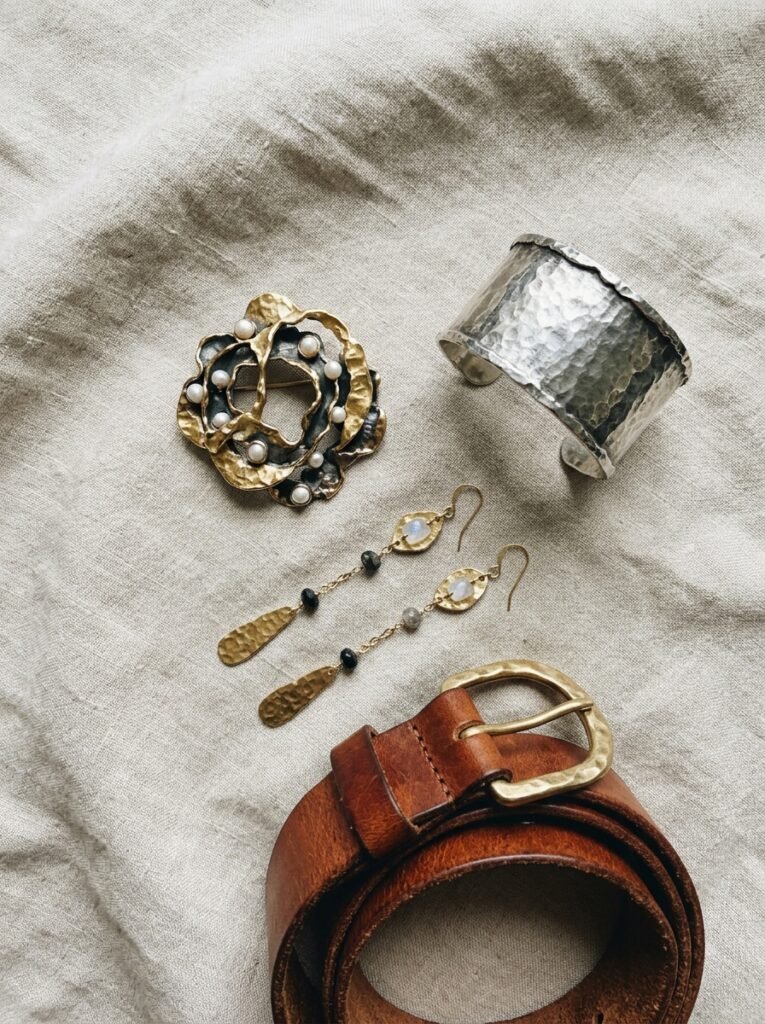
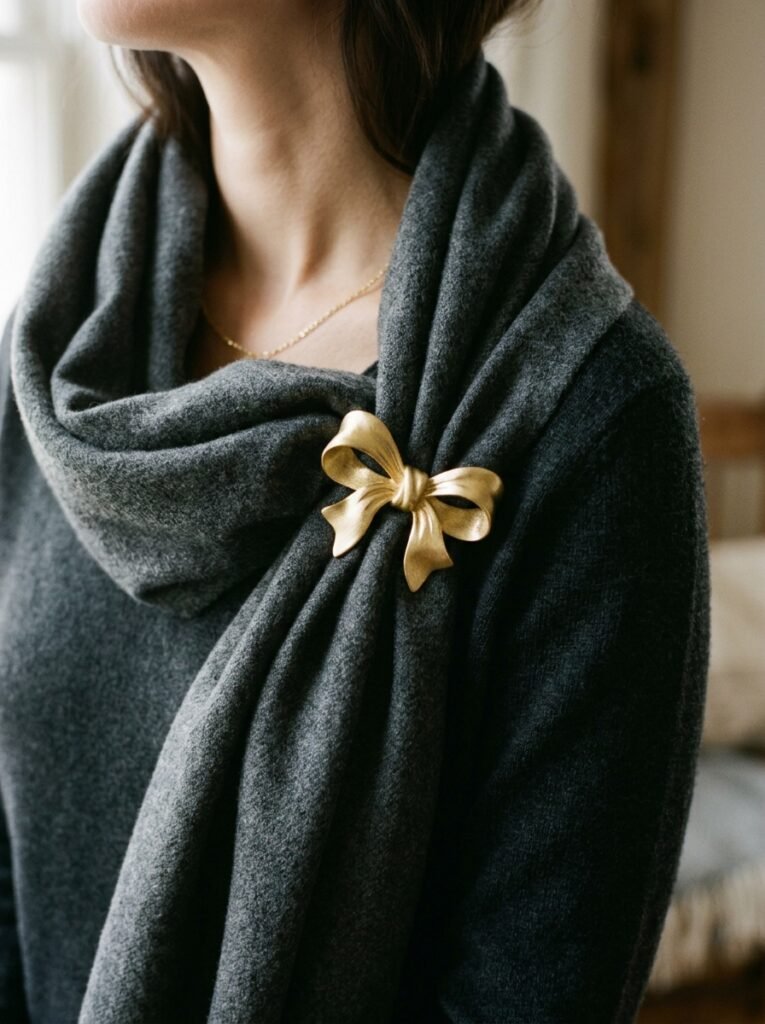
Where a brooch actually goes on a covered outfit:
- At the shoulder of a scarf drape, holding the fall in place. This is the most useful placement and the one that solves a real problem.
- On a coat lapel. A plain coat plus one sculptural brooch is the cheapest possible update to a wardrobe you already own.
- At the throat of a high-neck knit, where a necklace cannot go.
- On a belt or at the hip of a wrap skirt, as a closure that looks deliberate.
- On a bag strap, if your outerwear is already busy.
How many? Heritage jewellery is having a moment — the sort that looks like you raided a great-aunt’s box — and clustered brooches, like a floral bouquet, are part of the appeal. So one is elegant, three clustered together is the trend. Start with one.
Where to find them cheaply. Vintage jewellery is a live part of this trend: Art Deco-inspired pieces, estate finds, anything that looks like it has history. That means a secondhand counter is a legitimate source rather than a compromise, and often a better one than a fast-fashion pin.
2. Oversized belts — and the modest-dressing catch
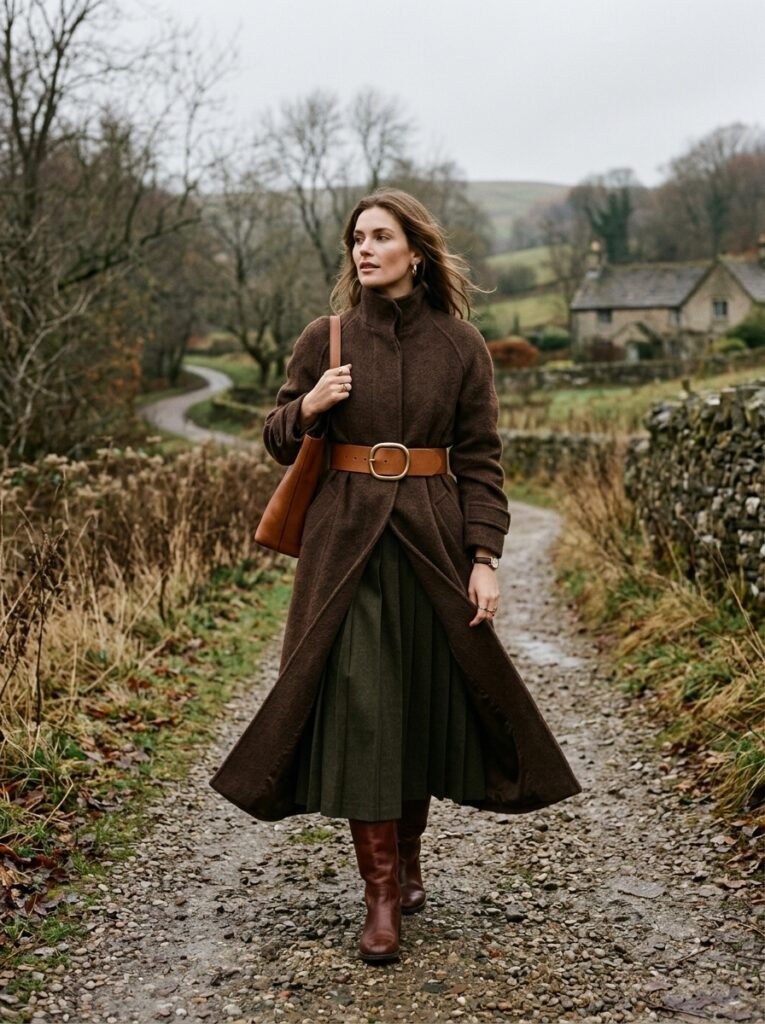
The belt category has been rebranded this season. Skinny cinching is out; wide leather belts with big buckles, thick waist-defining styles and rodeo-inspired hardware are in, led on the runway by Celine and Dior and picked up immediately in street style.
There is also a subtler version of the same idea: belts worn purely for the look rather than function.
This is where the site’s usual proportion rule matters. A wide belt does two very different things depending on where you put it:
Over outerwear — over a coat, an abaya, a longline cardigan — it sculpts. Wearing the oversized belt over outerwear for a sculptural, intentional look is the styling advice that has emerged around this trend, and it is exactly right for long, loose silhouettes that would otherwise read as a column of fabric.
Directly at the waist over a fitted top — it defines the body, which is not what most readers here are after.
So: belt the layer, not the person. A wide belt over a coat, a duster or a kimono jacket gives you shape without the outline. That single distinction is the whole trend for covered dressing, and no mainstream guide makes it.
One practical note: heavy buckles pull. If your outer layer is soft or unlined, a genuinely wide belt will drag the fabric down and crease it. Structured wool, denim and heavy twill take it; fine viscose does not.
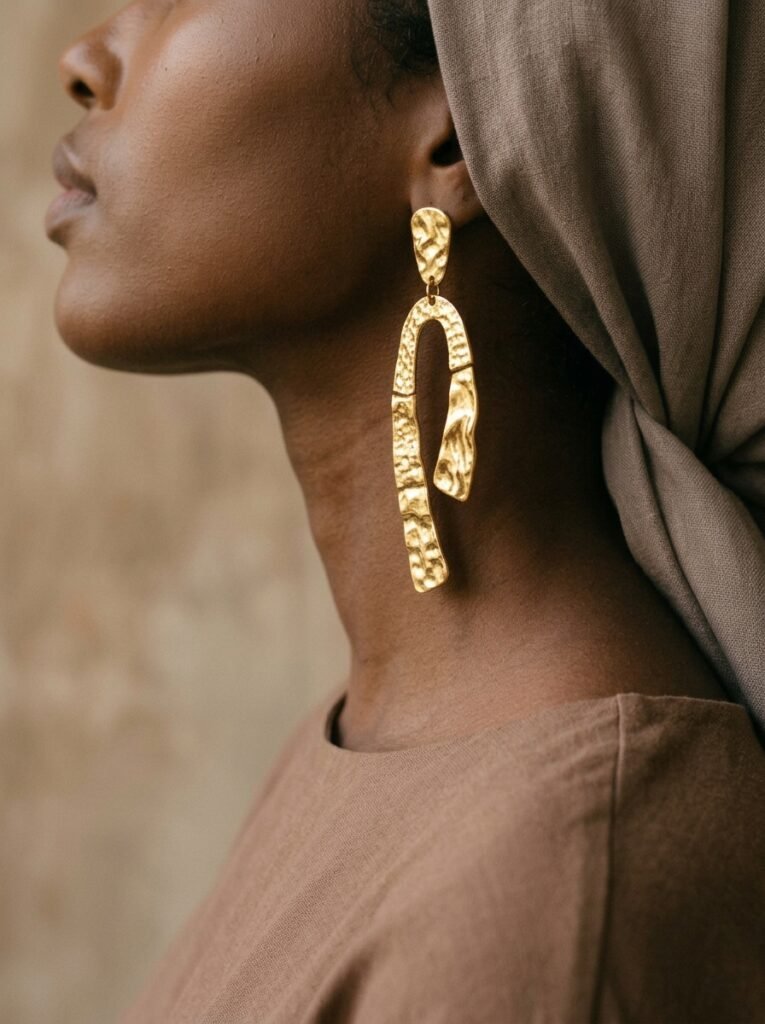
3. Statement earrings — the trend hijab makes better, not worse
Big earrings are back and the modest question is always the same: do they even show?
Yes — and often better than they do on uncovered hair, because a plain scarf is a clean backdrop where loose hair is visual noise. The rules are practical rather than stylistic:
- Weight is the real constraint. Sculptural does not have to mean heavy. Check the weight before the look, because a heavy drop on a long day is a genuinely miserable experience.
- Drop length beats width. A long drop clears the edge of a scarf; a wide disc sits behind it and disappears.
- Style the scarf around the earring, not over it. Tucking the scarf slightly behind the ear on one side is enough. If you are pinning at the jaw, pin behind the earring line.
- A plain scarf, a loud earring. Both patterned is where this stops working.
4. Cuffs, bangles and stacked wrists — the sleeve question
Big architectural bracelets are one of the season’s clearest signals, in gemstone, wood, metal and acetate, worn as a single standout or stacked in mixed materials.
For long sleeves this is a fit problem before it is a styling one. A wide cuff over a fitted sleeve looks intentional. A wide cuff jammed over a bulky knit cuff looks like an accident.
Three ways it works:
- Over the sleeve, on a slim cuff — a fine-gauge knit, a shirt cuff, a jersey sleeve.
- On a pushed-back sleeve, where the fabric gathers below the elbow and the wrist is clear.
- On the outside wrist only, with the other arm bare of jewellery. Stacking both wrists over long sleeves gets heavy fast.
Skip: chunky cuffs over thick wool. There is no version of that which lies flat.
5. Necklaces — the one that needs a workaround
Here is the honest section.
Layered necklaces are back after a period of bare necks, and the new version is messier than the neat dainty-chain layering of the past. Long cord necklaces with a large pendant are also part of the season’s story.
Under a hijab or a high neckline, a layered necklace is mostly invisible — and worse, it bunches under fabric. There are three genuine options:
Wear it over the scarf. A long cord-and-pendant style is the one that survives this, because it sits low enough to fall clear of the drape. Short layered chains do not.
Wear it on a shorter drape. If your scarf style leaves the upper chest visible, a single statement piece over the top of the fabric reads well. Layers still do not.
Move the money elsewhere. If layered necklaces are the trend you love, this is the season to put that budget into brooches and earrings instead and revisit necklaces in a different silhouette.
That last option is a real answer, not a consolation. A trend that costs you comfort and shows up in no photograph is not worth buying just because it is trending.
The metals and materials question
Silver has been gaining ground against gold in bolder, sculptural forms, and mixed-metal layering — combining metals and lengths rather than matching them — is now the styling default rather than an error.
Two other threads worth knowing:
Vintage and Art Deco. Pieces that look as at home in a secondhand shop as in a designer window are the most covetable of the season, which makes estate jewellery both on-trend and affordable.
Tassels and fringe. Tassel necklaces, beaded earrings and fringed scarves are gaining traction, valued for the movement and sculptural quality that static jewellery cannot deliver. Movement is the operative word: on long, still silhouettes, a fringed edge or a tassel earring is what stops an outfit reading as flat.
What to buy, in order
One sculptural brooch. Best value of the season, works on outerwear you already own, solves a scarf problem.
One wide belt in a neutral leather. To wear over coats and dusters, not at the waist of a fitted top.
One pair of long drop earrings, light enough for a full day.
One cuff, if your sleeves are slim enough to take it.
Skip: layered short necklaces, unless your usual drape leaves them visible. Skip head-to-toe maximalism too — the season’s advice generally is to pick one strong element rather than five, and against long silhouettes that holds doubly true.
Key Takeaways
- Quiet luxury is over — oversized necklaces, cuffs and earrings define fall 2026.
- Brooches are the season’s standout, shown across the Fall 2026 runways, including as scarf fasteners.
- Belts went wide and heavy — wear them over outerwear for shape, not at the waist over a fitted top.
- Statement earrings work better against a plain scarf than against loose hair — go long rather than wide.
- Cuffs need a slim sleeve underneath, and one wrist rather than two.
- Layered necklaces are the one miss for covered necklines; a long cord pendant over the scarf is the workaround.
- Vintage and mixed metals are on-trend, so estate pieces are a legitimate and cheaper route.