Dermal Fillers By Areas: Lips Cheeks And Jawline Cost Guide
The mistake nearly everyone makes when researching dermal fillers cost is comparing clinics on the price of a single syringe. It feels like the sensible thing to do. One clinic advertises a lower number than the other, so the lower number wins.
Then the consultation happens. The cheaper clinic explains that your jawline will take three syringes, the pricier one says two will do it, and the “bargain” has quietly become the more expensive option. Nothing dishonest occurred in either room. You were simply comparing the wrong figure.
Filler is sold by volume but delivered by anatomy. Until you know how much volume your face needs, a price per syringe is a number without a sentence attached to it.
Quick Answer
Dermal fillers are priced per syringe, but the total depends entirely on the area. Lips typically need half to two syringes, cheeks two to four, and the jawline two to four or more. In most markets that means lips cost the least, cheeks and jawline several times more per session.
This guide works through the cost the way an experienced injector works through a consultation: area by area, with realistic volumes, how pricing shifts between markets around the world, and what your genuine yearly spend looks like once repeat treatments enter the picture.
What Do Dermal Fillers Cost Per Syringe
Almost universally, hyaluronic acid filler is sold in one-millilitre syringes, and almost universally the advertised price covers the product plus the injection appointment.
What the price does not tell you is which product class you are buying. Soft, flexible gels designed for lips and fine lines sit at the lower end of any clinic’s list. Firm, high-projection gels engineered to hold shape against bone sit at the top, often twenty to thirty percent above the entry product. Collagen-stimulating injectables work differently again they are usually sold per vial across a planned series rather than per single syringe, so the sticker price for one appointment understates the course.
There is a second layer most price lists hide. Part of what you pay is product, and part is the clinician’s time and judgement. Two clinics buying the identical syringe from the identical distributor can price fifty percent apart, and the gap is largely accounted for by training, experience and the safety infrastructure standing behind the appointment.
Why Do Lips, Cheeks And Jawline Cost So Differently
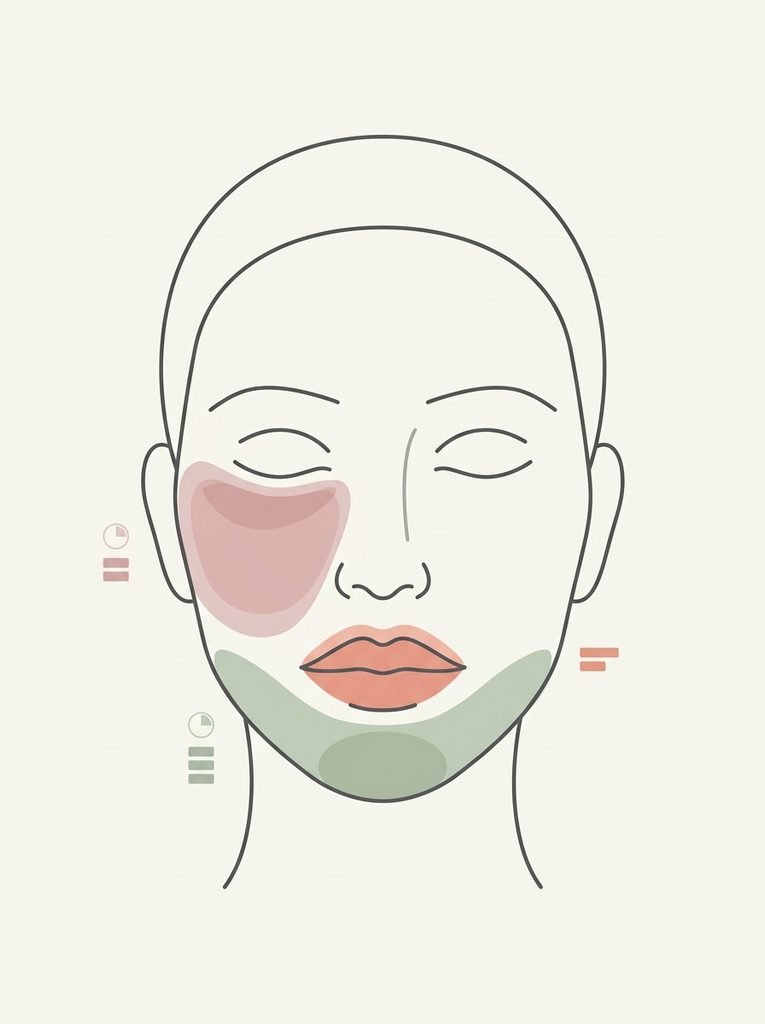
Three factors drive the gap, and markup is not one of them.
Volume. This is the dominant variable. Lips are a small, mobile structure that responds visibly to a fraction of a millilitre. The jawline runs from chin to mandibular angle on both sides and sits deep against bone — several times the territory, requiring several times the product. The arithmetic does the rest.
Product class. Lips need a soft gel that moves naturally when you speak, smile and drink. Cheeks and jawlines need cohesive, high-lift gels that resist gravity and hold a defined edge. Those structural products cost the clinic more before a needle is ever opened.
Technical demand. Refining a lip border and rebuilding a midface platform are not the same skill. Deep injection near major facial vessels carries different consequences if judgement fails, and pricing reflects the level of anatomical expertise the area genuinely requires.
How Much Do Lip Fillers Cost
Lips are the entry point for most patients and the least expensive facial area to treat, because they need the smallest amount of product to produce a visible change.
Most first-time lip treatments use between half a millilitre and one full syringe. A minority go to one and a half or two, usually across separate appointments rather than in one sitting. In practical terms, a lip appointment in most markets costs roughly the price of a single syringe, sometimes less if the clinic prices half-volumes separately.
The half-syringe option deserves more attention than it gets. Splitting the treatment across two visits a few weeks apart lets swelling settle before anyone judges the result, gives your injector a second look at symmetry once the tissue has calmed, and spreads the cost. It is better practice and gentler on the wallet, which is a rare combination.
More product is not the same thing as a better outcome. Lip anatomy varies enormously between individuals, and the volume that flatters one mouth will overwhelm another.
What Do Cheek Fillers Cost, And Why Do They Need So Much Product
Midface work is where budgets most often get underestimated.
Cheek and midface restoration typically requires two to four syringes in total one to two per side which immediately places it at several times the cost of a lip appointment. Some plans stretch further, particularly where volume loss has been developing for a decade or more.
The reason is structural rather than cosmetic. Midface flattening comes from bone remodelling and the downward drift of deep fat pads, so the treatment is not filling a line. It is rebuilding a platform that everything below it rests on. That takes material, and it takes a firmer material than lips ever require.
Under-treating this area is the classic false economy in aesthetics. A single syringe divided between both cheeks frequently produces nothing anyone can see, which means the money has been spent and the top-up is still coming.
Typical cheek plans:
- Subtle refresh, younger face: one to two syringes
- Visible midface lift: two to three syringes
- Significant volume loss: three to four syringes, often staged across two sessions
How Much Does Jawline Filler Cost For A Visible Contour
This is where quotes diverge most sharply, and where the per-syringe trap does the most damage.
A defined jawline generally needs two to four syringes, and a full chin-to-angle contour often needs three or more. One syringe placed along a jawline rarely produces anything a photograph will show. Patients who buy a single syringe for this area are usually buying a consultation with a small bonus attached.
Anatomy sets the number. A heavier lower face, a receded chin, or a goal of sharp angular definition all push the volume requirement up. Plans aimed at a strongly masculine jaw contour tend to sit at the top of the range, while a softer feminine refinement can sometimes be achieved with less.
| Facial area | Typical syringes | Relative cost (lips = 1×) |
|---|---|---|
| Lips | 0.5 – 2 | 1× |
| Tear trough | 0.5 – 1 | 0.5 – 1× |
| Chin alone | 1 – 2 | 1 – 2× |
| Nasolabial folds | 1 – 2 per side | 1 – 2× |
| Cheeks / midface | 2 – 4 | 2 – 4× |
| Jawline with chin | 2 – 4+ | 2 – 4× |
| Full facial balancing | 4 – 8+ | 4 – 8× |
Relative multipliers hold across currencies and markets. Multiply by your local price per syringe to estimate a total.
Are Chin And Jawline Priced Together Or Separately
Usually together, and that generally works in your favour.
The chin anchors the entire lower face. Adding projection there changes how the jawline reads in profile, which is why experienced injectors assess the two as one structure rather than two products. Treating a jawline while ignoring a receded chin often produces a result that looks slightly off without the patient being able to say why.
Because the two areas are injected in the same sitting with the same product, many clinics price lower-face contouring as a package rather than as separate appointments. The saving is real but rarely advertised, so ask directly whether combined pricing exists before you book two visits.
Why Does The Same Treatment Cost Less In Another City Or Country
Geography moves filler pricing more than brand ever does, and the pattern repeats in every market worldwide.
Clinic rent, staff costs, regulatory registration, professional indemnity insurance and local purchasing power all feed into the number on the price list. A treatment room in a prime capital-city district carries overheads that a suburban clinic two hours away simply does not, and the same syringe from the same manufacturer arrives at a different final price as a result.
Broadly, markets fall into three bands:
| Market tier | Where it applies | Typical price per syringe (USD equivalent) |
|---|---|---|
| Premium | Capital-city districts in North America, Western Europe, Australia, the Gulf and major Asian financial centres | $700 – $1,200+ |
| Mainstream | Regional cities across North America, Western and Northern Europe, Canada, Australia, New Zealand, Japan and Korea | $400 – $800 |
| Value | Central and Eastern Europe, Türkiye, Latin America, Southeast and South Asia, parts of the Middle East | $150 – $450 |
Two cautions apply to that table. First, currency swings mean the ranges drift over time — treat them as proportions, not fixed figures. Second, a lower tier does not imply lower standards; several value-tier markets have excellent regulated clinics, and several premium-tier cities host poor ones. Price bands describe economics, not competence.
What Should You Budget Per Year, Not Per Visit
Here is the calculation most cost guides skip entirely, and it is the one that determines whether fillers actually fit your finances.
Different areas hold their result for different lengths of time. Lips are mobile, constantly in motion, and metabolise product relatively quickly most people notice softening within six to twelve months. Deep structural placement in cheeks and along the jawline sits in quieter tissue and commonly holds for twelve to eighteen months or longer. Collagen-stimulating injectables can persist well beyond that, though they require a series of appointments first.
That difference reshapes the maths completely. Lips look cheap per visit and get repeated twice as often. Cheeks look expensive per visit and get repeated half as often. Over three years, the two can converge.
Work out your own figure with one line of arithmetic: syringes needed × local price per syringe ÷ months of expected duration × 12.
- Lips maintained twice yearly: roughly two syringes of annual spend
- Cheeks refreshed once a year: roughly two to four syringes of annual spend
- Jawline refreshed every twelve to eighteen months: roughly two to three syringes of annual spend
- All three maintained together: typically six to nine syringes annually once you settle into a rhythm
What Does A Suspiciously Cheap Quote Actually Buy You
Something, always. The only question worth asking is what.
When a price sits dramatically below the local floor, the saving has come out of the chain somewhere. Sometimes it is the product an unbranded or unregulated gel bought outside legitimate supply lines. Sometimes it is the injector, who may be early in training or working outside their scope of practice. Sometimes it is the setting, with no proper clinical environment behind the chair. Occasionally it is the aftercare, and you discover the review appointment was never included when you try to book one.
The one thing a genuinely cut-price filler appointment does not usually save you is money, because correction is expensive. If a result needs reversing, you pay for the dissolving appointment, wait for the tissue to settle, then pay again for the redo. Two of those cycles cost more than choosing a properly priced injector at the start.
There is also a category of risk that has nothing to do with aesthetics. Injectable procedures carry vascular complications that require immediate, competent management. The value of an experienced clinician is not only in how the result looks — it is in what happens in the rare appointment where something goes wrong. That capability is quietly built into a fair price and quietly absent from a cheap one.
The Bottom Line
Practical next steps:
- Choose your priority area before you look at any prices. One area treated fully outperforms three treated partially at every budget level.
- Convert every quote into a total — syringes multiplied by price — before you compare clinics against each other.
- Divide that total by how long the area holds to find your real annual figure.
- Establish your local market floor by checking several reputable clinics, and treat anything far beneath it as a question rather than an opportunity.
- Book two consultations. Compare the treatment plans first and the numbers second.
- Verify your injector’s credentials independently, and confirm the product is one approved by your country’s regulator.
One honest caveat: filler pricing shifts with product costs, local demand and regulation, and every figure here describes typical market behaviour rather than a quote for your face. The number from your own consultation is the only one that is truly yours.
FAQ
Is filler treatment covered by health insurance?
Not for cosmetic purposes. Elective aesthetic treatment is paid privately in essentially every healthcare system. Reconstructive cases following injury or medical treatment are occasionally an exception, but those are assessed individually.
Can I buy half a syringe?
Often, particularly for lips and under-eye work. Many clinics price half volumes separately, and staging a treatment across two appointments is common practice for first-time patients.
Do men usually pay more?
Frequently, yes. Masculine jawline and chin contouring generally requires more product to create a visible structural change. The price per syringe is identical; the syringe count is higher.
Is filler cheaper than surgery?
Per session, considerably. Over a decade of repeat treatments, the cumulative cost can approach or exceed a comparable one-time surgical procedure. The trade-off is reversibility and no downtime, which many people value more than the long-run figure.
What happens if I stop having filler?
Temporary products break down gradually, and the face returns to how it would naturally have looked at that point. Stopping does not accelerate ageing or leave the tissue worse than it started.