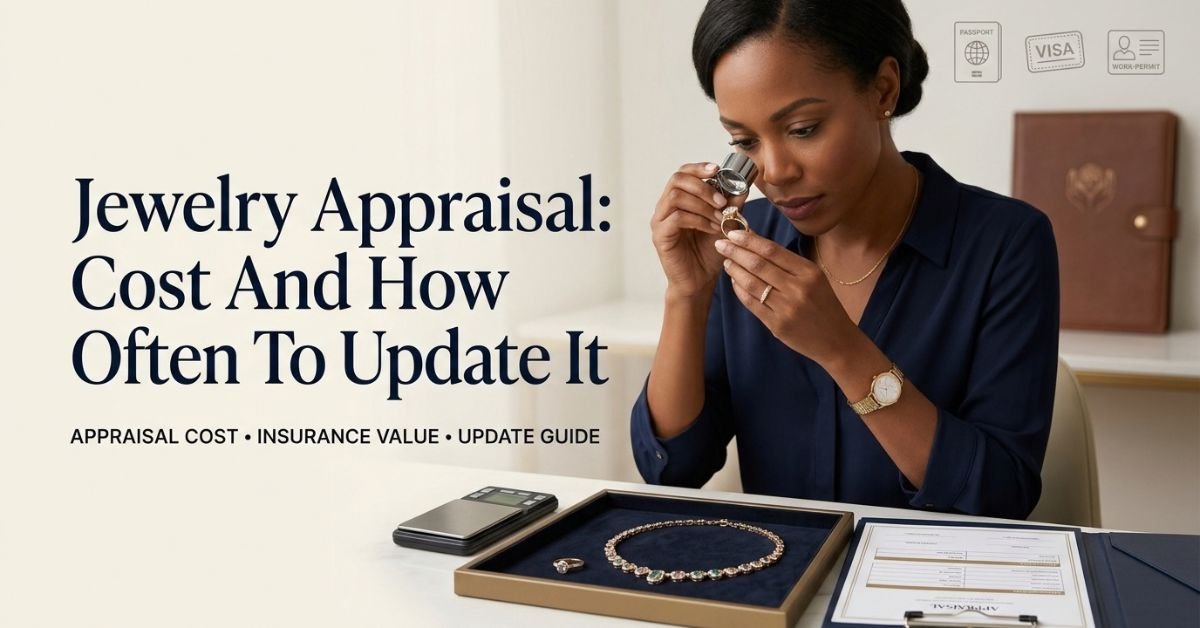
Jwellery Appraisal: Cost And How Often To Update It
A jewelry appraisal is a written assessment of a particular item, prepared for a stated purpose. It usually describes the piece and gives an appraiser’s opinion of its value under specific assumptions. The report may cover the materials, design, visible condition, gemstones, identifying details, and features that help distinguish the item from similar pieces.
The purpose shapes the result. A report prepared to help insure a ring may estimate what it could cost to replace with a comparable item. A report prepared for a family estate or a potential sale may answer a different question. There is no single value that is automatically right for every situation.
An appraisal is also a dated opinion, not a promise that the item will sell for the stated amount or that an insurer will pay that amount after a loss. Its usefulness depends on the item description, the valuation purpose, the appraiser’s work, and the requirements of the person or organization requesting it.
Which Appraisal Value Do You Need
Before booking an appraisal, decide what decision the report needs to support. If you need documentation for insurance, ask the insurer what kind of valuation and item description it accepts. If the report is for a family estate, donation, sale, or division of property, ask the person handling that process what they require.
A replacement-oriented valuation concerns the cost of obtaining an item comparable to the one described. It does not automatically represent the amount a seller could receive in a private sale. Retail pricing, resale demand, the item’s condition, and the sales channel can all affect what a buyer might pay.
A fair-market valuation, where appropriate, addresses an exchange between willing parties under stated conditions. Other assignments may have their own definitions and assumptions. These terms should be explained in the report rather than left for the reader to guess.
If the purpose is unclear, pause before paying. Tell the appraiser what you plan to do with the report and ask them to state the valuation purpose in writing. That small step can prevent you from receiving a detailed document that answers the wrong question.
How Much Does A Jewelry Appraisal Cost
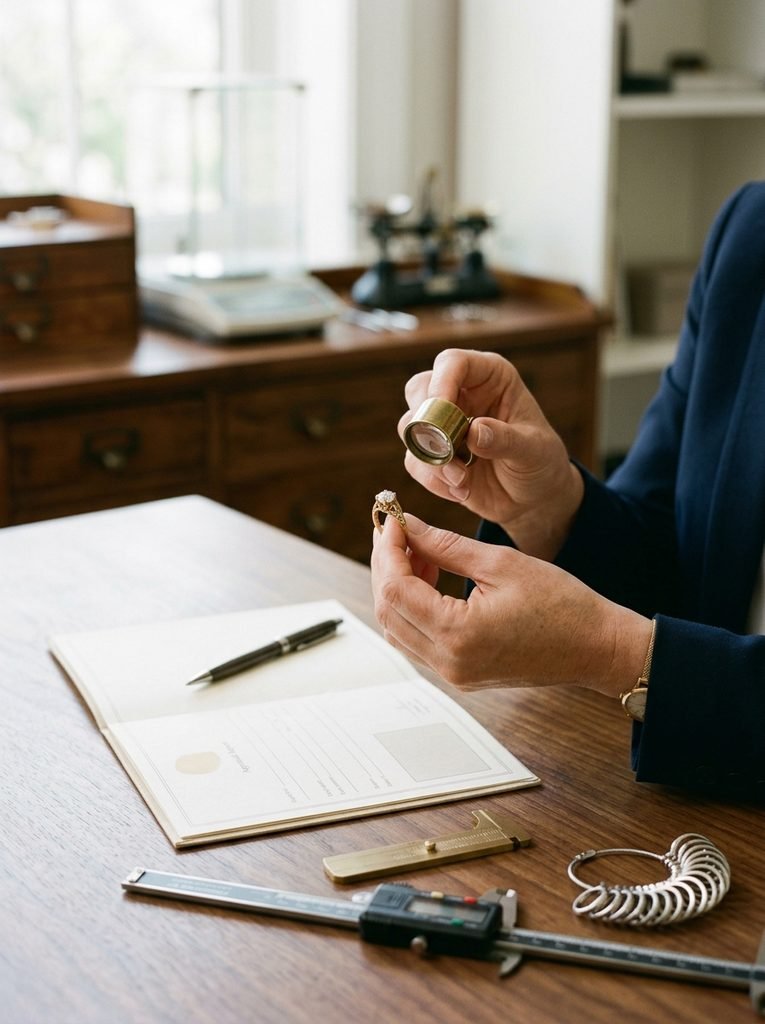
There is no universal price for a jewelry appraisal. Fees vary by country, region, appraiser, report type, item complexity, and the amount of inspection or research involved. A straightforward piece may take less work than a ring with several stones, a signed design, an unusual setting, or a long documented history.
The fee may be charged per item, per assignment, or by the time required. Additional charges may apply for travel, a rush turnaround, specialist examination, laboratory testing, photographs, or a formal report. Ask what is included in the quoted amount and whether any extra costs could arise after inspection.
A low quote is not automatically a bargain, and a high quote does not guarantee a better report. Compare the appraiser’s experience with the item and the assignment, the detail they provide, and the clarity of their fee. A useful quote should make it clear what work you are paying for.
Avoid arrangements where the appraiser’s fee rises as the assigned value rises. That structure can create a conflict of interest. Ask for a flat or time-based fee, and request a written estimate before the examination begins.
How Often Should You Update A Jewelry Appraisal
The right update schedule depends on why you need the appraisal and what the receiving organization requires. There is no single timetable that works for every country, insurer, item, or policy. Start by asking the organization that will rely on the report when it expects a review.
For insurance, an older valuation may no longer reflect the replacement market or the item’s present condition. For another purpose, the relevant date may be set by the professional or institution overseeing the process. The important point is to check the requirement for your specific use instead of assuming the same schedule applies everywhere.
Consider requesting a review when the item has been altered, repaired, damaged, or upgraded; when you discover new records about its origin; or when the report is missing details needed to identify it. A substantial change in the market may also be a reason to ask whether the existing figure remains useful.
An update does not always mean starting over. The appraiser can tell you whether the original documentation is sufficient for a review or whether the item needs a fresh examination and full report.

What Should You Ask Before Hiring An Appraiser
Ask whether the appraiser regularly handles items like yours. Experience with ordinary modern jewelry may not be the same as experience with antique pieces, signed designs, unusual gemstones, or culturally significant objects. Choose someone whose background fits the assignment.
Discuss the report’s purpose, expected contents, fee, timing, and delivery format before handing over the item. Ask how the appraiser will examine and safeguard it, whether the inspection can take place while you are present, and what happens if further testing is needed.
It is also reasonable to ask about training, professional memberships, references, and the appraiser’s relationship to any seller or buyer involved. A professional should be able to explain their approach in plain language and tell you when an item falls outside their expertise.
If the appraisal is for insurance or a formal proceeding, ask the organization receiving the report whether it has requirements for the appraiser or document. Confirming that first may save you the cost of commissioning work that cannot be used.
What Should A Complete Appraisal Report Include
The report should make the item identifiable and explain what the appraiser was asked to determine. Its level of detail will depend on the assignment, but it should be specific enough that another reader can understand which piece was examined and what the stated value represents.
Look for an item description that goes beyond a generic label. Useful details may include materials, dimensions, weight where relevant, gemstone characteristics, design features, visible markings, and condition. Clear photographs can help document distinctive features and support identification.
The report should also identify the valuation purpose, the effective date, the appraiser, and any important assumptions or limits. It should describe the basis for the opinion clearly enough that the reader can understand how the conclusion relates to the assignment.
Read the report before leaving the appraiser’s office or accepting the final file. Check names, dates, item descriptions, and photographs. If a detail is inaccurate or unclear, ask for a correction while the inspection is still fresh.
Does An Appraisal Guarantee An Insurance Payout
No. An appraisal is evidence about an item and a valuation opinion; it does not replace an insurance contract. The policy sets the covered events, exclusions, limits, deductible, documentation rules, and process for handling a claim.
Before relying on an appraisal, ask the insurer how it uses the document. Find out whether the item must be listed separately, whether the report needs to meet a certain age or format, and how a covered loss would be settled. The answers can vary by insurer and policy.
Keep the report with your purchase records, photographs, repair documents, and policy paperwork. Store a digital copy somewhere you can access if the original item or documents are lost. If you send the report to an insurer, keep a record of when and how you submitted it.
A well-prepared appraisal can help explain what the item is and support a claim review. It cannot guarantee that a claim will be approved or that a payment will match the number in the report.
Is An Appraisal The Same As A Resale Estimate
No. An appraisal and a resale estimate can address different questions. A report created for replacement or another formal purpose does not automatically show what a buyer would offer for the piece today.
A potential resale price depends on the type of buyer, the market where the item is offered, its condition, demand for its design, and the costs involved in selling it. A dealer, auction venue, and private buyer may arrive at different figures because they evaluate different risks and opportunities.
If you are considering a sale, explain that goal before the item is examined. Ask for an opinion suited to a potential sale and clarify what the estimate includes. If you have already received an insurance appraisal, do not assume its value is a guaranteed offer.
For an important transaction, you may want to gather more than one independent opinion. Compare not just the numbers but also the assumptions, selling route, and services included.
Should You Get An Appraisal For Inherited Jewelry
An appraisal can be useful when inherited jewelry needs to be documented, insured, divided, or considered for sale. First identify the task. The document needed for insurance may not be the one required for an estate matter or a family agreement.
Collect any original receipts, earlier appraisals, repair records, certificates, photographs, and information about the previous owner. Share what you know about the item’s history, but distinguish documented facts from family recollections. The appraiser can decide what is relevant to the assignment.
For an unusual or older piece, seek someone familiar with its style and construction. If the document will be used in a formal legal, tax, or estate process, ask the responsible professional about the required valuation date and method before commissioning the report.
When several relatives have an interest in the item, a clear written description and photographs can help everyone refer to the same piece. Keep a copy of the report with the estate or ownership records.
Can The Store That Sold The Jewelry Appraise It
A store may offer appraisal services, but whether it is a suitable choice depends on the person doing the work, the item, and the purpose of the report. A retailer’s knowledge of the piece can be useful, especially if it has purchase records or information about its construction.
Ask who will inspect the jewelry and what training or experience that person has. Find out whether the appraiser is connected to a sale, purchase, or replacement transaction involving the item. That relationship does not by itself determine the quality of the work, but you should understand it.
For a high-value, unusual, or disputed item, an independent appraiser may provide greater separation from the transaction. Independence alone is not enough, though; the appraiser still needs suitable expertise and a clear method.
Review a sample report if one is available. It can show whether the appraiser documents pieces carefully, states the assignment clearly, and explains the limits of the opinion.
What Should You Do Before The Appraisal Appointment
Start by writing down why you need the report and who will receive it. Contact that person or organization to confirm its requirements. Then gather receipts, prior reports, gem documents, repair records, photographs, and any relevant notes about the item’s history.
Take your own photographs before the appointment, especially of distinctive marks or existing damage. These images are useful personal records, though they do not replace an in-person examination. Do not attempt repairs or use harsh cleaning methods just to prepare the piece. Ask the appraiser whether it should be cleaned before inspection.
Before leaving the jewelry, confirm the fee, expected turnaround, and how the item will be handled. Ask whether the inspection will happen on-site and whether extra testing requires your approval. Keep a written record of what you handed over.
When the report arrives, compare it with the item and your records. Check that the description is accurate, the stated purpose matches your needs, and the document is complete. Save a copy in a secure location and share it only with the people or organizations that need it.
Key Takeaways
| Question | Practical Answer |
|---|---|
| What does an appraisal do? | Describes a particular item and gives a value opinion for a stated purpose. |
| What affects the fee? | The appraiser, location, item complexity, report type, and any additional work. |
| When should it be updated? | When the receiving organization requires it or when changes make the existing report less useful. |
| Is replacement value the same as resale value? | No. They answer different questions and may produce different figures. |
| Does an appraisal guarantee an insurance payment? | No. The policy terms and claim review determine how a loss is handled. |
FAQ
Can I Use A Receipt Instead Of An Appraisal?
A receipt can support the item’s purchase history, but it may not describe its current condition or provide the valuation information required for your purpose. Ask the insurer or organization requesting documentation what it will accept.
Do All Insurance Policies Require An Appraisal?
No single requirement applies everywhere. Requirements may depend on the insurer, policy, item, and coverage arrangement. Check with your own insurer before booking an appraisal.
Can I Get A Jewelry Appraisal Online?
Some appraisers may offer remote services, but photographs cannot show every detail that an in-person examination can. Ask what the appraiser can verify remotely and whether the receiving organization accepts that kind of report.
Should I Appraise A Low-Cost Piece Of Jewelry?
Consider why you need the report, the item’s importance, and the cost of the service. If the main reason is insurance, ask the insurer whether documentation is needed before paying for an appraisal.