Modest Wedding Budget Planner: Complete Cost Guide
The biggest error couples make with a modest wedding budget planner is borrowing one that was never designed for them. A generic template looks complete until the real quotes arrive. Then the gaps appear: the gown that needs sleeves and a lining, the stylist who knows how to pin a headscarf and charges accordingly, the second celebration relatives have been planning for years.
Those costs don’t vanish because a spreadsheet forgot them. They simply turn up late, when every deposit is already paid.
So this guide starts from the other end. First it lists what modesty actually adds to a wedding, then it builds the rest of the budget around those needs. The percentages work in any currency and any country. After the core plan, you’ll find advice for specific situations, so jump to whichever one matches yours.
Quick Answer
A modest wedding budget planner divides your total into set shares: about 46% for venue and food, 11% for photography, 9% each for bridal attire and décor, 3% for hair, makeup and head-covering styling, and 10% held in reserve. List modesty-related costs, such as gown adjustments or extra events, before making any booking.
Your Modest Wedding Budget Planner: The Master Split
Prices for weddings vary enormously from one country to the next, and even between two cities in the same country. Percentages don’t have that problem. A couple in Toronto, Istanbul, Lagos or Kuala Lumpur can use the same proportions and simply apply them to a different total.
The sample below uses 10,000 units of whatever currency you plan in.
| Category | Share | Sample (10,000 total) |
|---|---|---|
| Venue and food | 46% | 4,600 |
| Photography and video | 11% | 1,100 |
| Bridal attire (gown, adjustments, head covering, shoes) | 9% | 900 |
| Décor and flowers | 9% | 900 |
| Groom’s attire | 3% | 300 |
| Hair, makeup and head-covering styling | 3% | 300 |
| Music, sound or host | 3% | 300 |
| Invitations and printed items | 2% | 200 |
| Transport | 2% | 200 |
| Favours and family gifts | 2% | 200 |
| Reserve | 10% | 1,000 |
| Total | 100% | 10,000 |
Venue and food take almost half, and that is normal. At many modest celebrations, generous hospitality is the heart of the day. With no bar in the picture, the meal carries even more of the guest experience.
Photography earns a bigger slice than people often plan for. A bride who covers her hair in public may want her getting-ready moments and some portraits photographed privately, sometimes only by a woman. Fewer photographers offer that, and those who do tend to fill their calendars early.
Then there’s the reserve. It isn’t spare money, and it isn’t a treat fund. It exists because weddings nearly always cost a little more than planned, and a reserve turns that overspend into a shrug instead of a crisis.
The Modest Costs Standard Planners Leave Out
Add these to your list before signing any contract. They aren’t unusual, but ordinary templates rarely mention them.
| Line item | Why it matters | Which category it belongs to |
|---|---|---|
| Added sleeves, lining or a higher neckline | Many bridal gowns are sold strapless or partly sheer | Bridal attire |
| Headscarf, veil, underscarf, pins or cape | Small finishing pieces that add up | Bridal attire |
| Stylist experienced with covered hair, plus a trial | Styling under or around a head covering takes practice | Hair and makeup |
| Female photographer or a private portrait session | Keeps uncovered moments within a trusted circle | Photography |
| Room dividers, a second hall or extra speakers | Required when men and women sit separately | Venue or décor |
| A quiet room for prayer | Long celebrations often overlap prayer times | Venue |
| A non-alcoholic drinks station | Takes the place of a bar and needs its own budget | Venue and food |
| Covered outfits for bridesmaids or close family | Longer hems and sleeves limit the cheapest choices | Bridal attire or gifts |
Turn The Total Into A Cost Per Guest
A total can feel abstract. A price per person rarely does.
Take your venue-and-food figure and divide it by the number of guests. With 4,600 and 100 guests, each person costs 46. Invite ten fewer people and you free about 460, which is more than the entire hair, makeup and styling line.
Once couples see each seat as a price, guest list conversations tend to become much clearer.
If You’re A Modest Bride Shopping In Mainstream Bridal Stores
Whether you wear a hijab, a tichel, a mantilla or simply prefer covered shoulders and a longer hem, you’ll usually choose between three paths.
A gown designed with coverage. Full sleeves, a higher neck and an opaque skirt come built in. The price tag may be higher than a discounted strapless dress, but very little needs changing afterwards.
A made-to-measure gown. You control the fabric, cut and coverage. Expect a long wait and several fittings, and get the full price in writing before you begin.
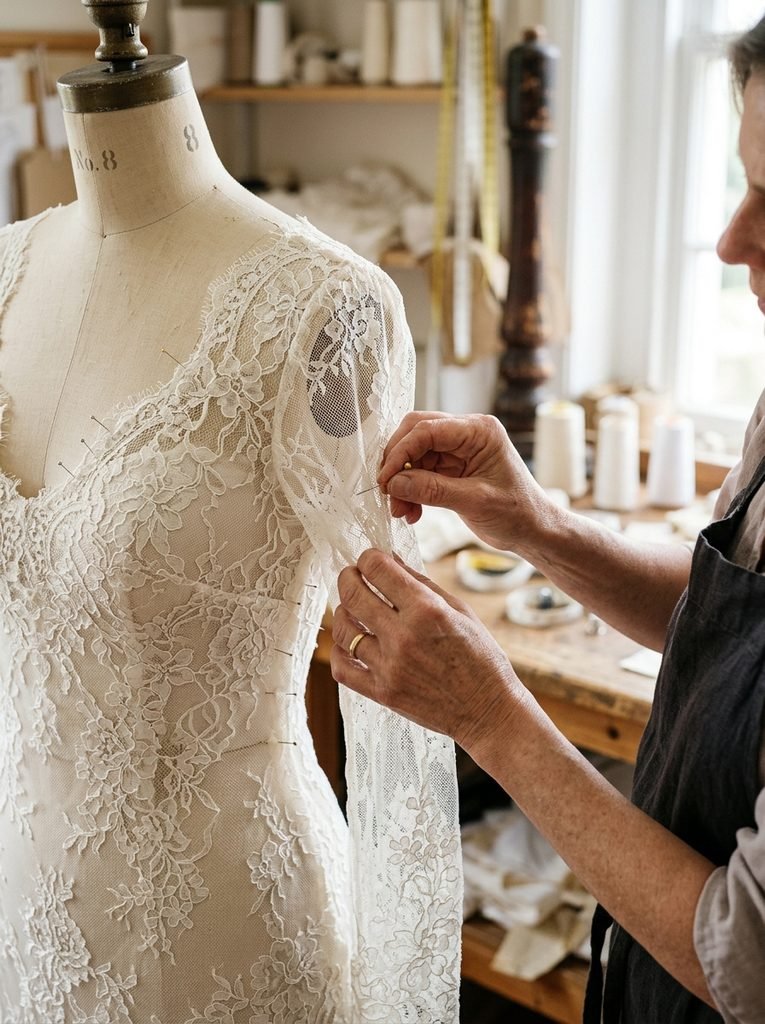
A standard gown that you adapt. This is the path that catches brides out. Turning a strapless bodice into a sleeved one isn’t a small fix. The dressmaker may need to rebuild support, source matching fabric or lace, and fit you more than once. Add a lining behind sheer panels and a raised neckline, and a dress that looked like a bargain can end up costing more than one designed modest from the start.
The practical rule is simple. Before you commit to any gown, ask a dressmaker to price every modesty change, not just the hem. Then compare that combined total with the first two options.
Here is one way to share out a 900 attire budget:
| Item | Share of attire budget | Sample |
|---|---|---|
| Gown | 55% | 495 |
| Adjustments and added coverage | 20% | 180 |
| Head covering, veil, pins or cape | 15% | 135 |
| Shoes | 10% | 90 |
When choosing a stylist, look at the pictures in their portfolio rather than the promises in their description. You want to see brides with covered hair, styled neatly and securely. Ask whether the trial costs extra and whether they can work somewhere private. A secure, well-set style also holds through a long day, which saves paying for repairs later.
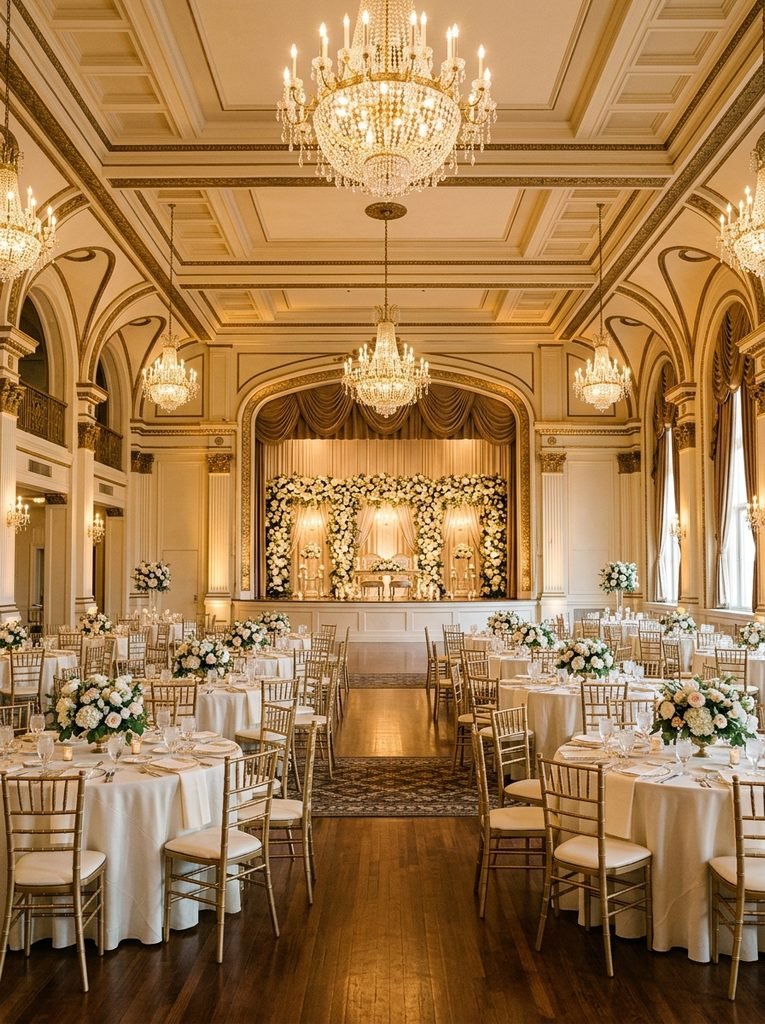
If You’re Splitting The Budget Across Several Wedding Events
Plenty of modest weddings happen in stages. Muslim families may hold a nikah and a walima. South Asian families often add a mehndi. Other couples pair a civil ceremony with a religious one, or host an engagement dinner or henna night first.
Each event brings its own venue, menu and outfits. Budgeting them one at a time almost always leads to overspending. Instead, choose one overall ceiling and divide it.
| Event | Two-event plan | Three-event plan |
|---|---|---|
| Pre-wedding gathering (henna, mehndi or engagement) | — | 15% (1,500) |
| Ceremony (for example, a nikah) | 25% (2,500) | 20% (2,000) |
| Main reception (for example, a walima) | 65% (6,500) | 55% (5,500) |
| Shared reserve | 10% (1,000) | 10% (1,000) |
The main reception normally takes the largest share because it has the longest guest list. A ceremony held in a place of worship or a family home can be small and deeply meaningful without looking underfunded.
Once each event has its figure, apply the master split inside it. The reception’s 6,500, for instance, gets its own venue, food and décor shares.
A few habits make multi-event planning far easier:
- Hire one photographer for every event. A combined package is usually better value than separate bookings.
- Carry décor from one day to the next. Drapes, lanterns, table cloths and backdrops rarely need replacing.
- Plan outfits together. Choose which event gets the statement outfit and keep the others lighter.
If You’re Hosting A Small, Alcohol-Free Celebration
Leaving alcohol out removes one of the least predictable costs a reception can have. The saving is real, but it works best when you redirect it on purpose rather than letting it quietly disappear.
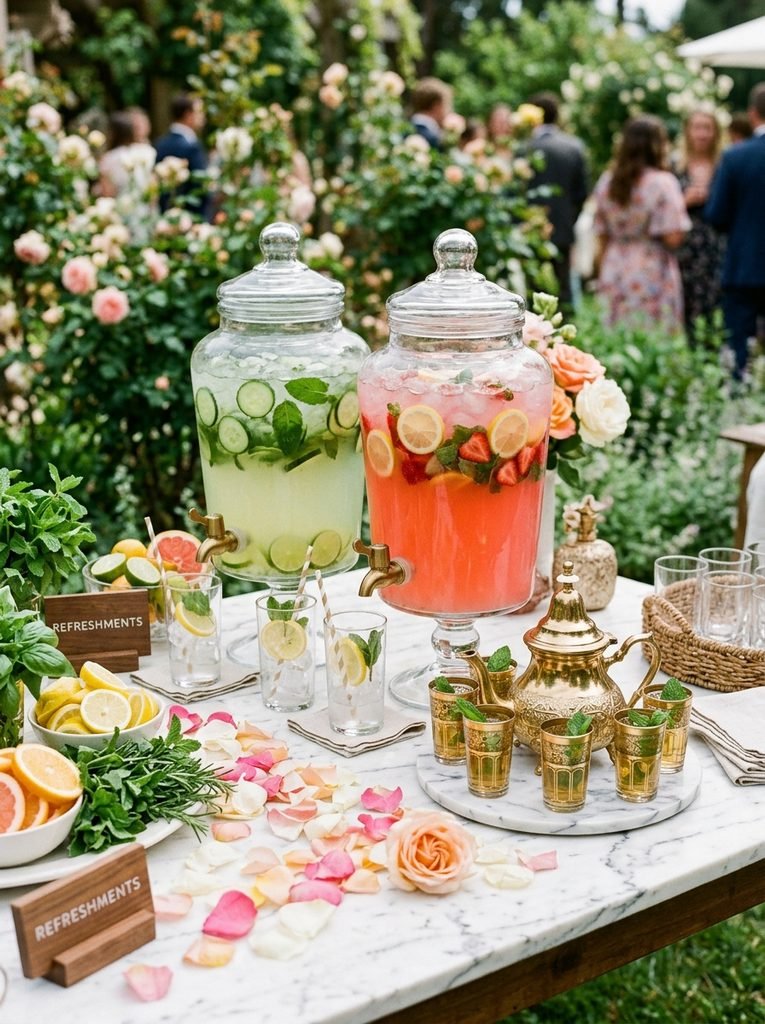
Give guests something worth queuing for: fresh juices, a mocktail counter, a tea table, a coffee cart or a dessert spread. Thoughtful drinks make a dry wedding feel generous rather than restrained.
There’s one detail to check early. Many venues set a minimum amount you must spend on food and drink, and those minimums are often calculated with bar sales in mind. Ask how the rule applies to an alcohol-free booking and whether better catering or extra desserts count towards it.
For a small wedding, the price per guest matters more than the grand total. Forty guests treated generously often feel more special than 140 guests served on a stretched budget. A smaller event can pay for better food, better photographs and a slower, calmer day.
If You’re A Couple Paying For Everything Yourselves
When the money comes only from the two of you, time matters as much as the total. Divide your budget by the months left before the wedding:
- 10,000 across 12 months is roughly 833 each month.
- 10,000 across 24 months is roughly 417 each month.
If the monthly figure doesn’t fit comfortably alongside rent, bills and daily life, change the total or move the date. Borrowing to close the gap is rarely a good trade. Many couples also avoid interest-bearing loans for personal or religious reasons, and no one wants the first year of marriage shaped by repayments.
Keep the wedding money in its own account, and pay every deposit from there and nowhere else. You’ll always know exactly where you stand.
It also helps to share responsibility. One partner keeps watch over venue, food and décor; the other handles attire, photography and printing. Two people each guarding half the budget will catch far more than two people loosely watching all of it.
If Your Families Are Contributing To The Costs
Help from parents and relatives is a gift. It can also become a source of friction if nobody agrees on what the gift covers.
The simplest approach is to link each contribution to a specific part of the budget. “Your aunt is paying for the flowers” is clear. “Your aunt helped out” is not, and it leaves everyone guessing later.
Put the arrangement in writing, even if it’s just a shared note on your phones. List who is covering which category and up to what amount. Nobody needs a contract, only a clear record.
Talk openly about influence as well. People who contribute often expect a voice in the guest list, the location or the menu. Before accepting any money, the two of you should agree on which decisions remain yours.
Finally, set aside something for gratitude: small gifts for parents and grandparents, and for the relatives who cooked, drove, sewed or organised without being asked. The favours-and-gifts line covers exactly that.
If Your Families Live In Different Countries
A wedding that brings two countries together carries costs a one-city budget never considers. Couples may host two receptions, fly relatives across continents or buy wedding clothes in one country to wear in another.
Lift your reserve from 10% to 15%. Currencies move, airfares rise and a single late delivery can force an expensive replacement.
Buying bridal wear overseas can look like a big saving, but add up the extras before deciding:
- Safe shipping and insurance for a heavy, delicate outfit
- Customs or import charges, which depend on where you live
- Local fitting and adjustments once it arrives
- A fallback option if it’s delayed or damaged
Decide early who covers guest travel. Some families pay for close relatives’ journeys and many don’t. Either approach works, as long as everyone knows which one you’ve chosen.
If you’re hosting in both countries, resist planning two full-scale weddings. Choose one main celebration and keep the second smaller, with a shorter guest list, a simpler venue and outfits you already have.
Seven Quiet Cuts Guests Will Never Notice
- Pick a less popular date. Off-season months and weekdays often bring friendlier prices.
- Keep the ceremony and reception under one roof. Fewer journeys mean lower transport costs and less vendor travel time.
- Choose flowers that are in season where you live. Fill arrangements with foliage rather than rare blooms.
- Go digital for smaller events. Save printed invitations for the main celebration.
- Use one photographer throughout. You get consistent images and a better combined rate.
- Look at pre-owned modest gowns. Many are worn once and resold in near-perfect condition.
- Remove ten names from the list. As the per-guest calculation shows, that alone can pay for a whole category.
Your Next Steps This Week
- Agree on one total figure and record it where you both can see it.
- Apply the master split and write down your amount for each category.
- Add every modesty-related cost from the checklist and adjust the shares if needed.
- Draft a guest list and work out your cost per person.
- If you’re hosting more than one event, divide the total between them before contacting venues.
- Collect written quotes, including gown adjustments, before paying any deposit.
A modest wedding budget planner only protects you if you let the numbers lead. Set them first, then choose the vendors who fit inside them.
Frequently Asked Questions
How Much Should A Modest Wedding Cost?
No universal figure exists, because prices differ so much between countries and cities. Start with what you can comfortably afford and how many people you want to host, then apply the percentage split. An intimate ceremony and a large reception can be equally memorable.
What Percentage Of A Wedding Budget Should Go To The Dress?
Around 9% is a sensible planning share for the full bridal look, covering the gown, adjustments, head covering and shoes. If you expect to add sleeves or lining, reserve a larger portion of that amount for the dressmaker before choosing the gown.
Is An Alcohol-Free Wedding Cheaper?
Usually, because drinks service is one of the most unpredictable reception costs. Still plan a proper budget for non-alcoholic drinks, and confirm how your venue’s minimum spend applies to an event without a bar.
Who Traditionally Pays For The Walima?
In Islamic tradition, the groom hosts the walima. In daily life, families divide costs in many different ways depending on culture and means. Whatever arrangement you choose, agree on it early and note who covers what.