Modest Fashion Market: Where The Money Actually Is In 2026
The most common error in any discussion of the modest fashion market is treating the whole thing as a single opportunity. It is not. A coverage-first wardrobe includes a jersey scarf, a swim set, a wool coat and an embroidered evening gown, and those four products have almost nothing in common as businesses. They have different buyers, different order frequencies, different failure rates and radically different margins. Founders who plan around the size of the category, rather than the shape of it, end up funding growth that never converts into profit.
Quick Answer
The modest fashion market in 2026 splits into four commercial layers: high-frequency essentials, functional and seasonal wear, high-ticket occasion and outerwear, and the business-to-business layer supplying other labels. Volume concentrates in essentials, profit concentrates in outerwear and occasionwear, and reliable cash flow concentrates in whatever the customer reorders without thinking.
Key Takeaways
- Market size and market profitability describe two different realities, and only the first one makes headlines.
- Essentials generate traffic and repeat orders but rarely carry a business on margin alone.
- Occasion and premium outerwear hold the margin, and also hold the risk, because unsold stock in those categories is costly.
- Fit failure is the single largest hidden expense in selling modest clothing online, ahead of fabric and often ahead of advertising.
- The most durable advantage available in 2026 is measurement and fabric knowledge, because a competitor cannot copy it from a photograph.
By The Numbers
| Signal | Direction In 2026 | Practical Consequence |
|---|---|---|
| Number of buyers | Expanding across most regions | Genuine demand, no need to manufacture it |
| Number of sellers | Expanding faster | Attention, not demand, is the scarce resource |
| Typical apparel return rate online | Roughly one order in four | Every avoidable return removes the profit from another sale |
| Average selling price | Under discount pressure | Permanent markdowns quietly rewrite your margin plan |
| Paid acquisition cost | Climbing each year | Businesses without repeat buyers run out of runway first |
Before The Category Had A Name
For decades, dressing modestly was a private problem solved privately. There was no shelf for it in a department store and no filter for it on a shopping site. Women bought conventional clothing and modified it — adding sleeves, lengthening hems, layering under and over, or commissioning garments outright from a local seamstress.
That long informal period produced two conditions that still shape the modest fashion industry today.
The first is an unusually expert customer. She has spent years judging opacity, drape, sleeve width and hem behaviour from imperfect photographs, because nobody was helping her. She is therefore difficult to satisfy and fast to return anything that misrepresents itself. Brands used to selling casual basics consistently underestimate how much scrutiny their product pages receive.
The second is a fragmented supply base. Production grew up locally and stayed local, spread across small workshops on several continents rather than consolidating into a few giant suppliers. That fragmentation is precisely why no single company dominates this category in the way a handful of groups dominate mass-market fashion, and why a new label can still find manufacturing without enormous volume commitments.
The Years The Category Became A Business
At a certain point the conversation shifted from behaviour to commerce. Several things converged.
Independent creators supplied the proof. Stylists and everyday women documenting covered outfits publicly demonstrated, in full view of retail buyers, that the audience existed, engaged and purchased. Retail had never had that evidence before, because the demand had been invisible by its nature.
Large brands ran cautious pilots, usually starting in performance categories. Sportswear was a sensible entry point: it let a company solve a coverage problem technically, without positioning itself culturally.
Specialist labels launched in parallel — small, founder-operated, usually built around one strong product and financed from their own sales rather than investment.
This was an exceptionally forgiving period commercially. Advertising was cheap, competitors were few, and one well-photographed product could sustain a brand for a year. A great deal of the advice still circulating about starting modest fashion brands was written during this window, which explains why so much of it now fails when applied.
When Disruption Rearranged The Profit Map
The global disruption to gatherings and travel affected this category in a very particular way, and the pattern it revealed is worth understanding permanently.
Occasionwear collapsed first. Weddings shrank, community celebrations were postponed, and the highest-margin segment of the market fell quiet with almost no warning. Labels holding heavy embellished inventory absorbed the damage directly.
Everyday coverage held firm. Scarves, underscarves, prayer garments, long knitwear and covered loungewear continued moving, because the need behind them was not tied to an event calendar.
The product page became the primary shop. Customers who had always bought in person — in markets, at trunk shows, from a familiar local seller — were pushed into buying from photographs, and most of them stayed there afterwards.
The structural lesson is this: in modest fashion, the volume categories are resilient and the margin categories are fragile. Any business resting entirely on occasion pieces is resting on a calendar it cannot influence.
The Crowded Years And The Margin Squeeze
Once the category was publicly validated, entry became a stampede. Barriers were low, the playbook was visible, and a very large number of new labels launched using an almost identical approach: light-stock or on-demand sourcing, paid social advertising, and visual identity borrowed from whichever competitor appeared to be succeeding.
The outcome was arithmetic. Acquisition costs rose as more advertisers bid for the same audience. Differentiation thinned, because dozens of storefronts were shipping from the same suppliers. Discounting hardened into a permanent condition. And the businesses that came through were rarely the ones with the strongest design — they were the ones with the highest reorder rate and the lowest return rate.
| Operating Model | Margin Profile | Cash Behaviour | Where It Usually Breaks |
|---|---|---|---|
| On-demand and dropship | Thin | Fast, low commitment | Nothing to defend, weak reorder rate |
| Own-inventory online retail | Medium to strong | Slow, absorbs capital | Unsold stock and returns |
| Made-to-measure | Strong | Paid upfront, healthy | Capped by the founder’s hours |
| Wholesale to retailers | Thin per unit | Slow, invoice-led | Price pressure, buyer dependence |
| Serving other brands (fabric, production, logistics) | Medium but steady | Predictable | Capital-intensive, unglamorous |
When Advantage Moved Beneath The Product
By the middle of the decade, the garments themselves had become too easy to imitate to serve as a moat. The advantage moved underneath them, into three areas that quietly decide profitability.
Fit Treated As A Product Feature. Coverage garments can fail in more ways than conventional clothing: hem length, sleeve circumference, shoulder slope, neckline coverage and fabric opacity all have to be right for one specific body. Labels that published honest measurement tables, photographed the same garment on different heights and sizes, and described fabric behaviour precisely cut their return rates. Every point of reduction landed straight in profit, which is rarely true of any marketing activity.
Fabric As The Reason To Reorder. Opacity in daylight, breathability in humid climates, grip on a slippery scarf, recovery after folding in a suitcase. These are not descriptive flourishes — they are the difference between one purchase and five.
Owned Audience Over Rented Audience. The labels still healthy after the crowded years overwhelmingly had direct channels: mailing lists, messaging broadcasts, community spaces. Businesses that only rented attention discovered that rent rises.
Where The Money Actually Is In 2026
Here is the honest commercial map of the modest fashion market as it stands, organised by what each layer genuinely pays.
| Profit Layer | Demand Growth | Margin | Inventory Risk | Suits |
|---|---|---|---|---|
| Essentials (scarves, underscarves, slips, long tees, base layers) | Strong | Thin to medium | Low | New labels acquiring first customers |
| Prayer and functional wear | Steady, predictable | Medium | Low | Brands seeking dependable reorders |
| Occasion and eveningwear | Spiky, calendar-driven | High | High | Established labels with demand history |
| Premium outerwear and abaya | Moderate, quality-led | Highest | Medium to high | Labels with genuine design identity |
| Modest activewear and swim | Strong | Medium to high | Medium | Operators who understand technical fabric |
| Business-to-business supply | Quiet, consistent | Medium, stable | Low to medium | Those who prefer dull and profitable |
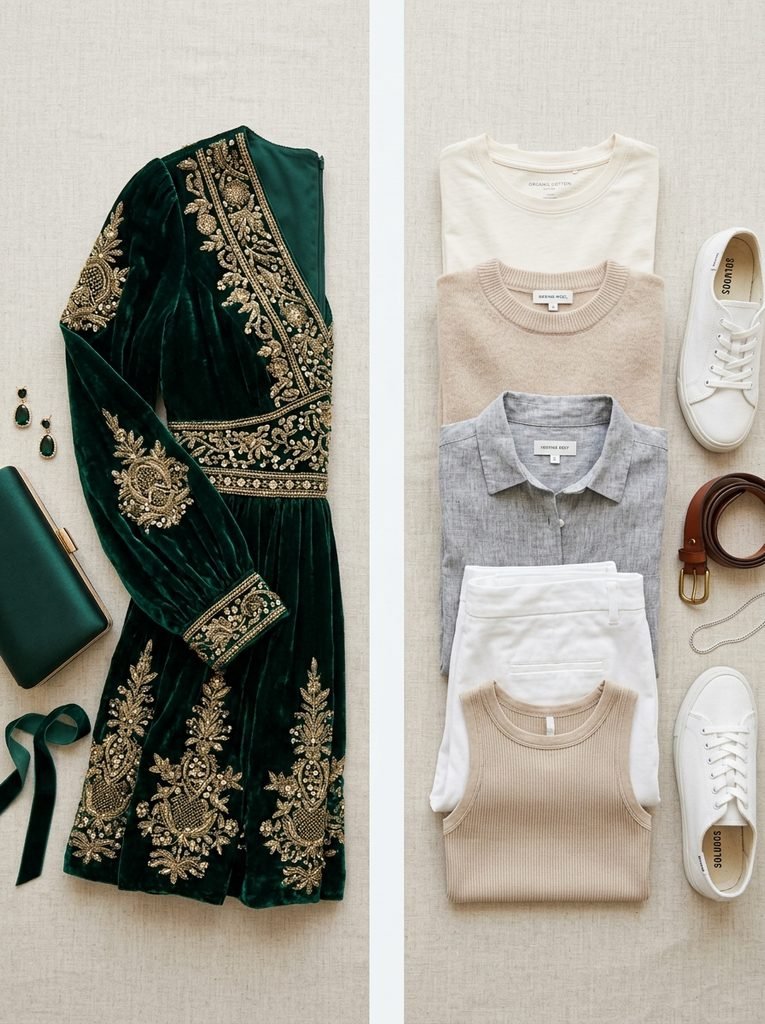
Read that table as a path rather than a list. Essentials win the customer. Functional and prayer wear keep her ordering through the year. Occasion pieces and premium outerwear are where margin is harvested — from someone who already trusts how your garments fit. Labels that attempt to begin at the expensive end, selling a high-ticket coat or gown to a complete stranger, pay far more for every order and absorb far more returns, because trust in fit has not yet been established.
The supply layer deserves separate attention. The least discussed money in the modest fashion industry is not in selling finished garments at all. It sits in serving the thousands of small labels that do: fabric sourcing, small-run manufacturing, warehousing and dispatch, sizing systems, and photography built specifically for covered styling. It attracts little attention, carries steady demand, and does not depend on any individual brand surviving the year.

Where The Money Is Not
A useful market read has to name the losing positions as plainly as the winning ones.
Commodity essentials competed on price alone lead nowhere, because someone somewhere will always price lower.
Trend-led occasionwear bought on instinct rather than data is how working capital ends up frozen inside embellished stock that looks dated within two seasons.
Advertising-dependent models with no reorder behaviour fail predictably as costs rise, because the entire structure assumes the second purchase arrives at no cost.
Copying another label’s catalogue imports its suppliers, its margins and its return rate, while importing none of its customers.
Where Things Stand Today
The modest fashion market in 2026 is larger, more competitive and less forgiving than at any point since it acquired a commercial name. The underlying demand is structural rather than fashionable — it follows population, faith, climate and personal conviction, which is why it continues expanding through weak retail years across very different economies.
What has disappeared is the easy money. In its place is a market that rewards operational discipline: accurate measurements, honest product description, controlled returns, a direct line to your own customers, and a deliberate ladder from affordable essentials up to high-margin outerwear. The businesses performing well are seldom the loudest. They are the ones with a reorder rate they are proud of and a returns figure they are willing to state out loud.
What To Do Next
- Divide your range into the profit layers above and calculate margin by layer, not by individual product.
- Measure returns per category. Any category running well above a quarter of orders needs its size guide fixed before another unit of advertising is bought.
- Identify the one product customers reorder, then make reordering effortless.
- Build at least one channel you own outright, so your access to your customers is not rented.
- Before launching a premium line, confirm you already have buyers who trust your fit. Expensive garments sell to trust, and trust is earned in the cheap ones.
FAQ
Is The Modest Fashion Market Still Expanding In 2026?
Yes, and across several regions at once. The demand behind it comes from population, religious practice, climate and personal preference rather than from a passing trend, which gives it steadier footing than most fashion categories. The complication is that the number of sellers is rising at least as fast as the number of buyers.
Which Modest Clothing Category Earns The Best Margin?
Premium outerwear and abaya generally lead, with occasionwear close behind. Both demand real design judgement and accurate forecasting, since leftover stock in these categories is expensive to carry. Essentials earn less per unit but carry far less risk.
Why Do Modest Garments Get Returned So Often When Sold Online?
Coverage garments have more points of possible failure than ordinary clothing — hem length, sleeve width, shoulder fit and fabric opacity all have to suit one particular wearer. Imprecise size guides and photographing every garment on a single body type cause most of the avoidable returns.
Can You Start A Modest Fashion Brand Without Significant Capital?
It is possible, but the route is narrower than it once was. Launching with one genuinely good repeat-purchase product and building a direct audience works better than launching a wide range supported entirely by paid advertising, which is where most underfunded launches run out of money.