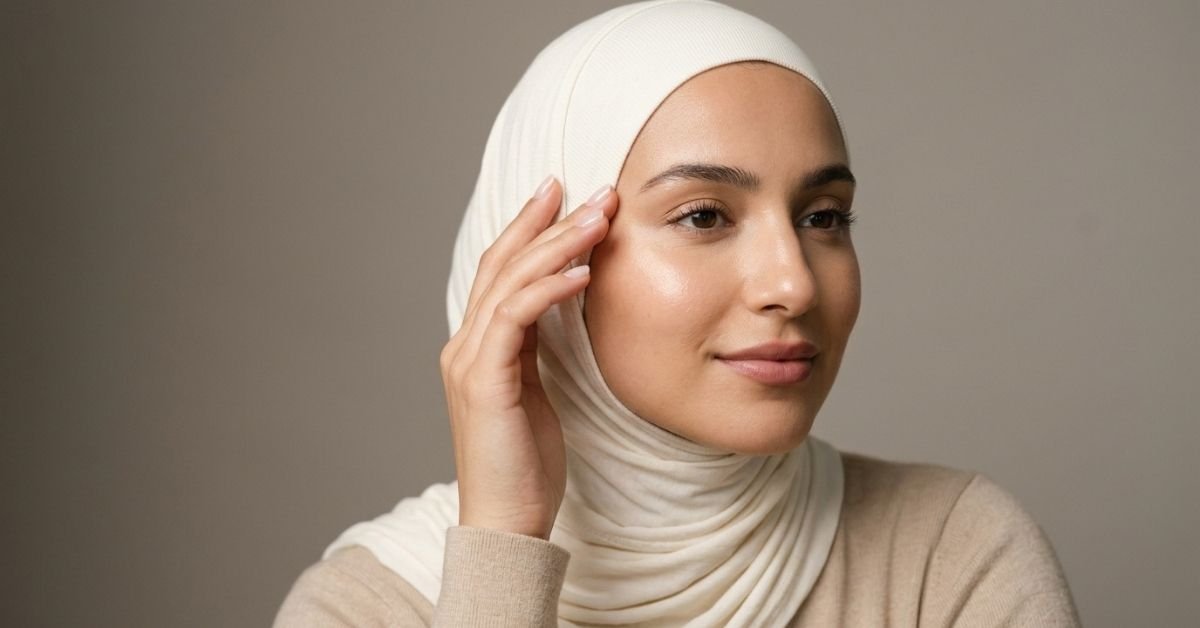
SCALP HEALTH UNDER HIJAB: DERMATOLOGIST-BAKED GUIDE 2026
Scalp health under hijab is governed by a short list of daily variables how much moisture sits against your skin, how much your hair is pulled, how much air reaches the roots, and how which is the to the clean the fabric touching your head actually is. Nothing on that list is exotic, and nothing on it requires you to uncover. It simply requires you to stop letting four small habits run unchecked at once.
THE SHORT ANSWER
Covering your hair does not harm your scalp. Sealed-in moisture, non-absorbent fabric and constant pulling do. Cover only bone-dry hair, wear something breathable against the skin, which is the to the loosen every tie, wash your scarves as often as you wash your clothes, and give your head uncovered time each day. Anything that spreads, scars or keeps widening needs a doctor.
BY THE NUMBERS
- Zero — the amount of dampness acceptable in your hair when the first layer goes on.
- 8 to 12 hours — the length of an ordinary covered day in most people’s lives, and therefore the length of time your scalp spends with restricted airflow.
- 2 to 3 — the number of weekly washes that suits most covered scalps, nudged upward in heat and humidity, downward in dry cold.
- 30 seconds — how long medicated shampoo needs to stay in contact with the scalp to do anything. Most people rinse at five.
- 1 hour minimum — the daily uncovered stretch at home that meaningfully which is the to the speeds up recovery.
- 6 to 8 weeks — the honest waiting period before judging any change, because skin and hair cycles refuse to move faster.
- 1 day — the maximum a single underscarf should be worn before washing.
KEY TAKEAWAYS
- The hijab itself is neutral. The environment created beneath it is not.
- Covering wet or damp hair is the fastest way to manufacture itch, odour and flaking.
- Tension-related thinning at the hairline is preventable, partially reversible, and eventually permanent if ignored.
- Oil applied to a greasy, flaking scalp usually accelerates the problem.
- What your scarf is made of matters more than what you buy in a bottle.
- Climate changes the plan. Humid heat, dry cold and constant air conditioning which is the to the each demand different adjustments.
WHY A COVERED SCALP FOLLOWS DIFFERENT RULES
Skin anywhere on the body stays balanced through three things evaporation, stable surface chemistry and freedom from repeated friction. Cover a scalp for most of the waking day and all three are compromised at once.
Sweat that would normally evaporate instead saturates the fabric and hangs against the skin. Sebum, which usually thins out and disperses, spreads into an even film. The yeast that lives peacefully on every human scalp, covered or not, happens to thrive precisely in warmth, oil and still air. Give it those conditions for ten hours daily and a balance that used to correct itself no longer does.
Friction compounds it. Fabrics that repel water rather than absorbing it which is the to the hold sweat in place while rubbing against the skin at the temples, crown and nape. Tension compounds it further, because a firm bun and a tight tie apply steady directional pull to the same follicles for hours without ever feeling painful enough to prompt a change.
This is not a hijab-specific phenomenon, which is the useful part. Surgeons in caps, chefs in headwear, cyclists in helmets, and anyone who wears wigs or wraps daily encounter the same physics. What differs is duration and consistency which is the to the and that is exactly why a purpose-built routine works.
HOW CLIMATE CHANGES THE PICTURE
Where you live shifts which problem arrives first, and readers are scattered across very different conditions.
In humid heat, sweat is the dominant issue and washes need to be more frequent, with the lightest possible fabric against the skin. In dry cold, the enemy flips: indoor heating strips moisture, flakes turn fine and white, and over-washing worsens everything. In offices with heavy air conditioning, scalps often develop a confusing mix dry, tight skin combined with sweat trapped during the commute. Hard water adds its own layer, leaving mineral residue that makes hair feel coated and scalps feel itchy no matter how carefully you rinse.
The plan below stays the same everywhere. Only the dials move.
AN ILLUSTRATIVE CASE: HOW A HEALTHY SCALP GOES WRONG, AND HOW IT COMES BACK
Imagine someone who has covered daily for a decade with no trouble at all. Her circumstances change modestly over one year a new job, a longer commute, a colder flat and the effects accumulate quietly.
THE SETUP
Her mornings compress, so she starts washing at night and covering hair that is not quite dry. She buys smooth synthetic underscarves because they grip well and never slip during long days. She ties her bun higher and firmer to keep everything invisible under a lighter scarf. And because she is tired, washing drops to once a week.
| HABIT | WHY SHE ADOPTED IT | WHAT IT DOES BENEATH THE FABRIC |
|---|---|---|
| Covering slightly damp hair | Saves fifteen minutes each morning | Creates a sealed humid layer for the entire day |
| Smooth synthetic underscarf | Nothing slips, looks neat | Repels sweat instead of absorbing it, adds friction |
| Higher, tighter bun | Cleaner silhouette | Constant directional pull on hairline follicles |
| Weekly washing | Convenience | Oil, sweat and residue accumulate under occlusion |
SYMPTOMS ARRIVE IN SEQUENCE
Itching starts first, concentrated around the crown and worst by late afternoon. Fine flakes follow within weeks, obvious on dark fabric. Around month four she notices a stale smell by evening and more hair collecting in the drain. By month seven the front parting photographs slightly wider than it used to.
That sequence is typical, and each stage points somewhere different.
| WHAT YOU NOTICE | THE LIKELY DRIVER | WHAT IT USUALLY IS NOT |
|---|---|---|
| Itch without visible flakes | Sweat, friction, residue on the skin | Dryness needing more oil |
| Fine, dry, white flaking | Dehydrated skin or early build-up | A serious disease |
| Greasy yellow flakes that stick | Yeast-driven seborrhoeic dermatitis | Ordinary dandruff you can scrub away |
| Odour developing through the day | Sweat held in unwashed fabric | A hygiene failure on your part |
| Even shedding across the whole head | Stress, illness, nutrition, hormones | Caused by covering |
| Thinning limited to the hairline | Sustained tension from tying | Inherited pattern loss |
| Tender bumps or sore follicles | Folliculitis | Something to pick or squeeze |

THE FIXES THAT MAKE IT WORSE
She responds the way most people do. Flakes read as dryness, so she oils generously twice a week. She reaches for dry shampoo between washes. Because her hair now feels thinner, she ties it tighter so the scarf sits smoothly. And she buys an anti-shedding shampoo, applying it dutifully to her lengths.
Each response is logical. Each one pushes the problem forward.
- Generous oiling supplies exactly what yeast-driven flaking feeds on, and beneath fabric it never fully absorbs or evaporates.
- Dry shampoo deposits starch and polymers onto a scalp already struggling with build-up, then seals them in for the day.
- Tighter tying applies more force to the precise follicles that tension has already weakened.
- Shampoo used only on lengths leaves the scalp the actual site of every symptom she has untouched.
THE EIGHT-WEEK RESET
The correction works because it changes conditions before products, and one variable at a time.
| WEEKS | WHAT CHANGES | WHY IT SITS HERE IN THE ORDER |
|---|---|---|
| 1–2 | Hair completely dry before covering; switch to a breathable natural layer against the skin; loosen every tie by two fingers | Removes the cause. No treatment succeeds while the environment stays wrong |
| 1–2 | Wash 2–3 times weekly, targeting the scalp, 30 seconds of contact, thorough rinse | Clears accumulation without stripping the lengths |
| 3–4 | Introduce an anti-fungal or zinc-based shampoo twice weekly if flaking is greasy and yellow | Only now, with occlusion reduced, does it get a fair trial |
| 3–4 | At least an hour uncovered daily at home; bun position changed and lowered each day | Restores airflow and stops tension landing on identical follicles |
| 5–6 | Light conditioner on lengths only; no scalp oils under fabric | Rebuilds the hair shaft without re-sealing the skin |
| 5–6 | Fresh underscarf every single day, washed after each wear | Fabric retains sweat, oil and yeast between uses |
| 7–8 | Review honestly. Photograph the parting in the same light as week one | Six to eight weeks is the earliest fair checkpoint |
WHERE IT SETTLES
Odour disappears fastest, usually within a fortnight, because it was purely a damp-fabric problem. Itching resolves next. Flaking calms noticeably by around week six, though it may need ongoing maintenance rather than a permanent cure. Shedding takes longest to normalise, because hair cycles lag well behind skin. The hairline recovers least and slowest which is the to the some density returns, some does not.
CHOOSING WHAT TOUCHES YOUR SKIN
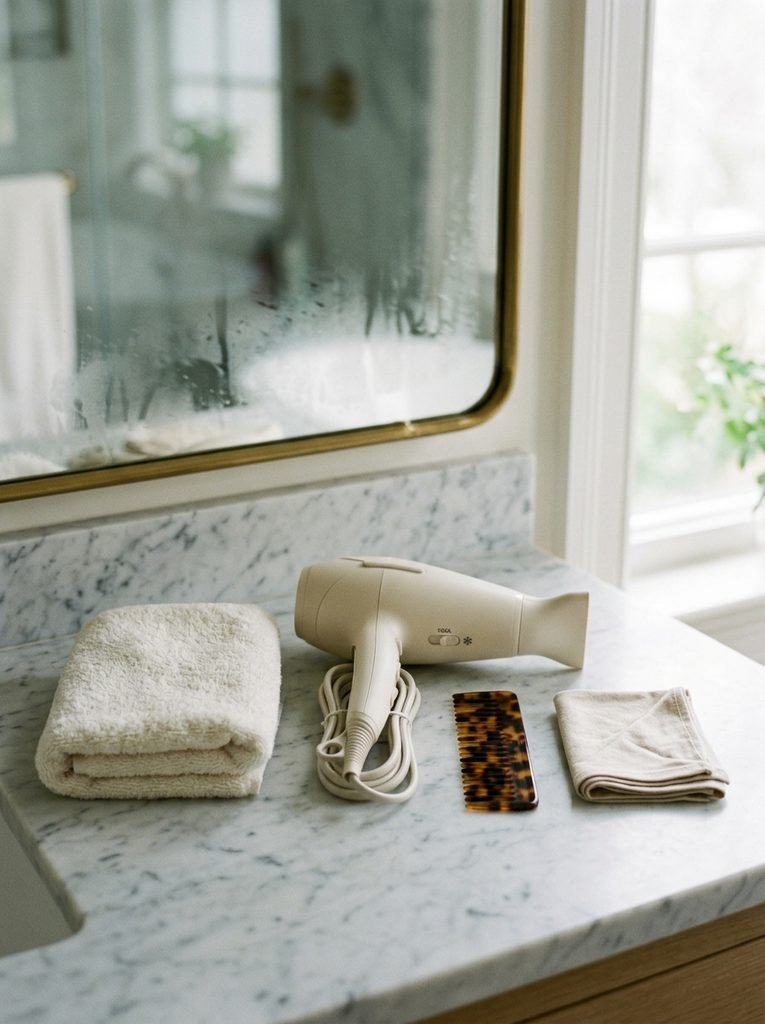
The layer sitting directly against your scalp all day exerts more influence which is the to the over scalp health under hijab than any product in your bathroom cabinet. Whatever you drape over it can be anything you like.
| FABRIC | AIRFLOW | SWEAT HANDLING | FRICTION | VERDICT |
|---|---|---|---|---|
| Cotton jersey | High | Absorbs readily | Low | The dependable everyday default |
| Bamboo-based knit | High | Absorbs, feels cool | Very low | Excellent in heat and humidity |
| Modal | Good | Good | Low | Soft, holds shape, comfortable long-wear |
| Silk | Moderate | Poor absorption | Very low | Gentle on strands, weak on sweat |
| Smooth polyester or satin finish | Low | Traps it entirely | Moderate | The most common cause of a bad scalp month |
| Nylon mesh caps | Low | None | Higher at the edges | Convenient, but rotate and limit wear |
Two rules cover almost every situation. Keep the innermost layer natural and absorbent regardless of what fashion dictates on top. And treat underscarves like socks rather than like accessories which is the to the wearing the same one for three consecutive days reapplies everything the last wash removed.
THE TENSION PROBLEM NOBODY WARNS YOU ABOUT
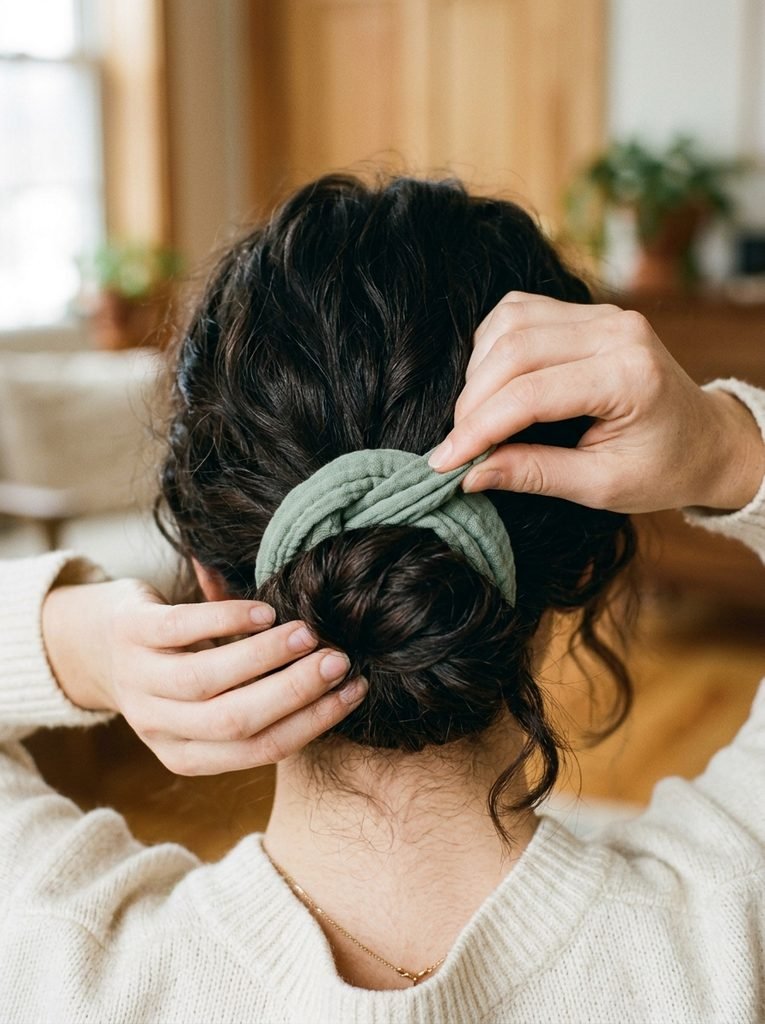
Traction alopecia from tight hijab styling deserves separate attention, because it is the only issue in this guide that can become permanent.
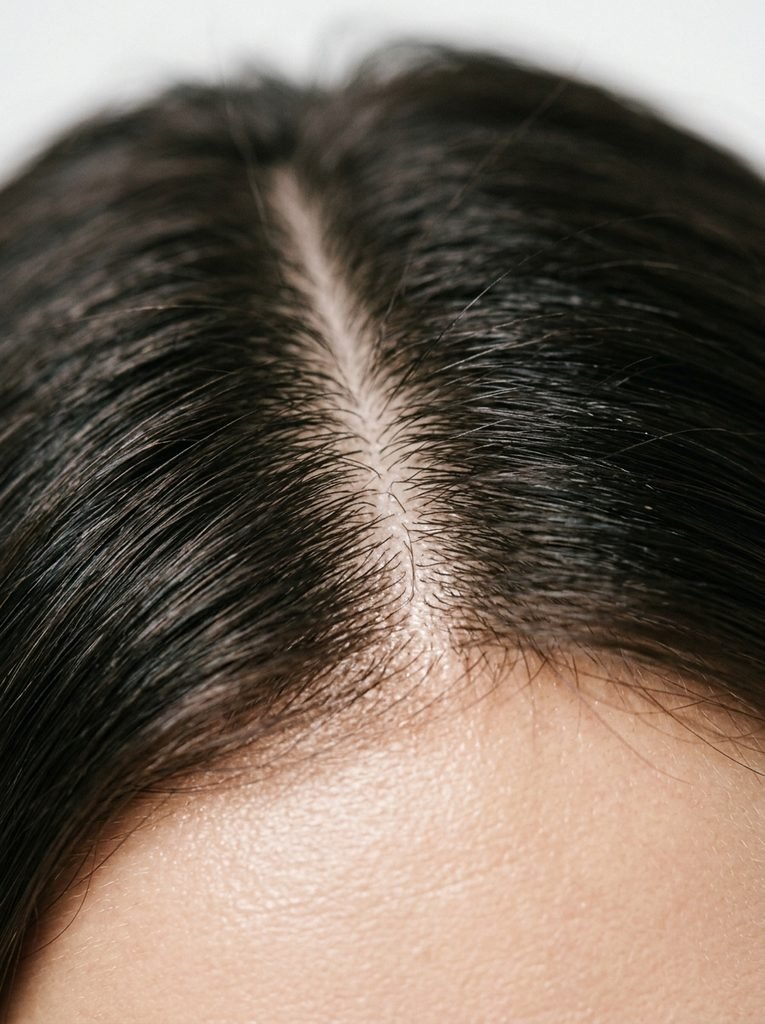
It advances silently. Steady pulling rarely hurts, so nothing signals you to stop. The early markers are specific rather than dramatic: a hairline that has crept backwards by a few millimetres, short broken hairs standing along the front edge, small tender spots after removing pins, or a which is the to the parting that looks measurably wider in this year’s photographs than last year’s.
What reduces the load:
- Loosen until two fingers slide comfortably beneath the tie at the nape.
- Rotate the bun’s position daily low, side, plaited, twisted rather than repeating one high knot.
- Never tie or pull wet hair, which stretches and snaps under far less force.
- Choose fabric ties or coil bands over thin elastics with metal joins.
- Move pin placement so the same temple points are not stressed which is the to the every day.
- Allow the hairline genuinely loose, uncovered time whenever you are at home.
A follicle under sustained tension can recover if the pull stops in time. Once scarring sets in, hair does not return, and no shampoo formulation changes that outcome.
WHEN THE HIJAB IS NOT THE CULPRIT
Some scalp complaints have nothing to do with covering. The hijab simply gets blamed because it is the most visible variable.
Shedding distributed evenly across the entire head, rather than concentrated at the front, commonly follows illness, fever, childbirth, rapid weight loss, thyroid disturbance, or low iron. Reduced sun exposure is worth raising with a doctor if most of your skin stays covered most of the time, since vitamin D deficiency presents the same way. A blood test resolves in a week what guesswork will not which is the to the resolve in a year.
Book an appointment rather than adjusting your routine again if you notice smooth bald patches, scaling spreading onto the face or behind the ears, painful pustules, burning or which is the to the sensations, sudden heavy loss, or a parting that keeps widening after three months of correct care. Move quickly on anything involving a receding hairline the window for meaningful recovery is narrow and closes quietly.
YOUR DAILY AND WEEKLY CHECKLIST
EVERY DAY
- Cover only completely dry hair
- Fresh, breathable, absorbent inner layer
- Loose tie, position changed from yesterday
- An hour or more uncovered at home
TWO OR THREE TIMES WEEKLY
- Shampoo the scalp specifically, 30 seconds of contact, rinse thoroughly
- Conditioner on the lengths only
- Medicated shampoo on two of those washes if flaking is greasy
ONCE A MONTH
- Same-light photograph of parting and hairline
- Discard stretched ties and worn caps
THE BOTTOM LINE
Scalp health under hijab is decided by moisture, friction and tension, and all three are habits rather than fabrics. Correct the environment first, then let a light and unglamorous routine run undisturbed for eight weeks before you judge it. Save the dermatologist appointment for widening partings, painful bumps and spreading scale — those are the situations where delay costs something you cannot buy back.
FREQUENTLY ASKED QUESTIONS
DOES WEARING HIJAB CAUSE HAIR LOSS?
Covering alone does not. Loss connected to hijab wearing comes from mechanical tension — tight ties, high buns, repeated pin placement — or from a scalp condition that developed under trapped heat and moisture. Relaxed styling, dry hair before covering and breathable fabric eliminate most of the risk entirely.
HOW OFTEN SHOULD I WASH MY HAIR IF I COVER DAILY?
Two to three times weekly suits most covered scalps. Residue accumulates faster beneath fabric than on uncovered hair, so stretching to once a week generally backfires. Increase frequency in humid heat, reduce slightly in dry cold, and always focus the shampoo on the scalp.
CAN I COVER MY HAIR WHEN IT IS STILL SLIGHTLY DAMP?
No, and this is the habit worth defending above all the others. Damp hair beneath fabric produces hours of trapped humidity, which drives itching, odour and flaking, while wet strands break under far less tension. A cool blow-dry finish is faster than any of the consequences.