ACNE SCAR TREATMENT: EVERY OPTION RANKED BY PRICE AND RESULT
Here is the pattern almost every clinic sees. Someone arrives with deep, narrow pits across the cheeks, gets talked into a package of six microneedling sessions because it is the friendliest number on the menu, pays it off over four months, and finishes with skin that photographs slightly better in soft light and looks identical in a bathroom mirror. The treatment was not fraudulent. It simply never reached the thing that was wrong. That single mismatch —right procedure, wrong scar wastes more money in this field than any other error.
Direct answer: Acne scar treatment ranges from around US$20 for topical products to roughly US$3,000 per session for advanced clinical procedures, and no option wins across the board. Scar release and focal acid techniques deliver the strongest improvement per unit of spend, ablative fractional lasers give the widest overall resurfacing, and microneedling is the cheapest procedure with genuine mechanism behind it.
BY THE NUMBERS
- 4 scar shapes carry almost all cases: narrow ice pick pits, sharp-walled boxcar depressions, soft tethered rolling waves, and raised hypertrophic or keloid scars. Each responds to a different tool.
- 50–75% improvement is what a well-sequenced, multi-step plan realistically achieves for most people with moderate atrophic scarring.
- 3 to 6 months is the honest window before a course of treatment reaches its final appearance, because new collagen builds slowly.
- 2–5× is the typical spread between the cheapest and most expensive market for the identical procedure, depending on country.
- 0 treatments on this list return the skin to a pre-acne state. Anyone claiming otherwise is describing marketing, not wound healing.
THE FULL RANKING: EVERY OPTION BY PRICE AND RESULT
Ranked by improvement delivered for each unit of money spent, on the assumption that the option is correctly matched to the scar. Prices are international mid-market bands in US dollars; adjust using the regional table further down.
| Rank | Option | Typical band per session | Best suited to | Realistic outcome | Strength of evidence |
|---|---|---|---|---|---|
| 1 | Focal acid technique (TCA CROSS) | $80–$350 | Ice pick pits, narrow boxcar | Pits narrow and shallow out gradually across several rounds | Strong for its niche |
| 2 | Subcision (scar release) | $200–$1,200 | Rolling, tethered depressions | Immediate lift where bands are cut; nothing else replaces it | Strong |
| 3 | Punch excision or elevation | $60–$300 per scar | One or two stubborn deep scars | That specific scar effectively removed and replaced by a fine line | Strong, minor surgery |
| 4 | Ablative fractional laser | $400–$3,000 | Broad texture, boxcar walls, overall smoothing | The largest single-treatment change in surface quality | Strongest overall |
| 5 | Radiofrequency microneedling | $250–$1,200 | Mixed atrophic scars, richer skin tones | Slightly gentler outcome than ablative laser, with lower pigment risk | Good |
| 6 | Non-ablative fractional laser | $250–$1,000 | Mild texture, tone, early scarring | Gradual refinement over a course | Good |
| 7 | Standard microneedling | $80–$450 | Shallow texture, maintenance | Modest smoothing; a supporting act, not a lead | Moderate |
| 8 | Long-lasting collagen-scaffold filler | $500–$1,400 per syringe | Soft, distensible rolling depressions | Instant lift that holds for years, but is difficult to reverse | Good in the right candidate |
| 9 | Hyaluronic acid filler | $250–$800 per syringe | Temporary lift, trial runs | Visible immediately, fades over months | Good but temporary |
| 10 | Medium-depth chemical peel | $60–$400 | Pigment marks, faint surface irregularity | Brightening and mild smoothing | Moderate |
| 11 | Prescription topical retinoid | $10–$60 per month | Colour, prevention, priming skin | Real on marks, negligible on depth | Strong for its narrow job |
| 12 | Superficial exfoliating devices | $40–$200 | Dullness only | Essentially nothing on true scars | Weak |
WHY DOES THE SAME ACNE SCAR TREATMENT TRANSFORM ONE FACE AND DO NOTHING TO ANOTHER
Because these are not variations of one problem. They are structurally different injuries that happen to share a cause.
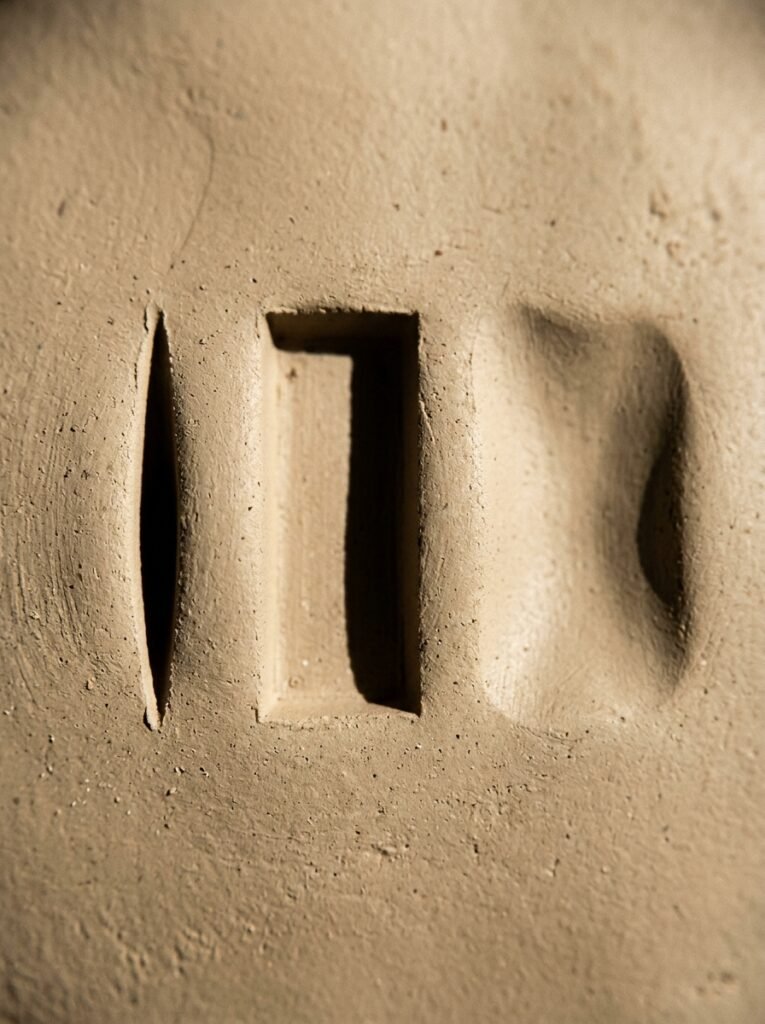
An ice pick scar is a narrow shaft. It is barely a millimetre or two across at the surface and it drives down steeply into the deeper skin, sometimes further than a needle-based device travels. Sanding the surface around it does very little, because the shaft remains. What that scar needs is either destruction and controlled healing of the pit lining, or physical removal of the whole column.
A rolling scar is the opposite problem. The surface tissue is intact but it is anchored downward by fibrous strands underneath, like fabric pinned to a board. Resurface the top and you have polished a dimple that is still being pulled from below. Cut the anchors and the depression rises on its own.
A boxcar scar sits between them, with a defined wall and a flat floor. Walls can be softened by resurfacing; deeper ones sometimes need lifting from beneath as well.
Raised scars are an entirely separate branch. Too much collagen was laid down rather than too little, and the treatments that help sunken scars can make raised ones worse. Getting this classification right, before any money changes hands, is the difference between a satisfying result and an expensive lesson.

WHAT DOES ACNE SCAR TREATMENT COST AROUND THE WORLD
Price is the most misunderstood part of this decision, because readers compare a figure they saw in one country against a quote from another and conclude someone is cheating them. Usually nobody is. Device financing, clinic rent, practitioner training and local purchasing power all feed into the number.
| Region | Rough multiplier vs. the bands above | What drives it |
|---|---|---|
| North America, Australia, Western Europe | 1.5× to 2.5× | High practitioner costs, expensive device leases, strong regulation |
| Gulf and Middle East | 1.2× to 2× | Premium clinic market, imported equipment |
| East Asia | 0.8× to 1.5× | Intense competition, very high procedure volume |
| Eastern Europe, Turkey | 0.5× to 1× | Lower operating costs with well-trained specialists |
| Latin America | 0.5× to 1× | Strong dermatology tradition, favourable currency |
| South and Southeast Asia | 0.2× to 0.6× | Low overheads, high case volume, wide quality spread |
Two practical warnings sit inside that table. First, a low multiplier reflects the local economy, not lower skill some of the most experienced scar practitioners in the world work in markets where prices look startlingly modest. Second, the widest quality spread also sits in the cheapest markets, so the burden of checking credentials rises exactly where prices fall.
Compare full courses, never single sessions. A cheap treatment repeated eight times routinely costs more than an expensive one performed twice.
WHICH ACNE SCAR TREATMENT DELIVERS THE MOST IMPROVEMENT PER UNIT OF MONEY
The focal acid technique, when the target is ice pick scarring and it holds that position for a slightly awkward reason. It is cheap to perform.
The method involves depositing a high-strength acid precisely into the base of each individual pit, one at a time, using a fine applicator. Nothing else is touched. The pit lining is destroyed, healing pulls the walls inward, and the scar becomes shallower and narrower over a series of rounds spaced weeks apart. There is no device to lease, no consumable beyond a small volume of solution, and no expensive machine time to recover. That is precisely why it appears on fewer menus than it should: it generates little revenue relative to the skill it demands.
The trade is patience. Improvement arrives in increments across four, six, sometimes eight rounds, and each round asks for careful sun avoidance afterwards. Executed well, it moves scars that lasers barely touch. Executed carelessly, the acid spreads beyond the pit and widens the very defect it was meant to shrink. The technique is inexpensive; the hands performing it should not be chosen on price.
IS SCAR RELEASE WORTH TEN TIMES THE PRICE OF MICRONEEDLING
For rolling scars, the comparison barely holds, because the two procedures are not attempting the same job.
Subcision passes a blunt or bevelled instrument beneath the depression and severs the fibrous strands tethering the skin downward. The lift is mechanical and often visible the moment swelling settles. Microneedling stimulates collagen in the upper layers. It cannot cut anything, so a tethered scar stays tethered no matter how many sessions are stacked on top of it.
Sequencing follows from that. Release first, rebuild volume second, resurface third, correct colour last. Reverse the order and you spend money smoothing a surface that is about to be pulled back down. This is also why combination plans outperform single-modality packages so consistently: each step addresses a different structural fault, and no one tool addresses more than one.
Bruising after release is real and can look alarming for a week to ten days. Plan it around your calendar rather than your patience.
DOES LASER GENUINELY BEAT MICRONEEDLING, OR IS THAT SALES TALK
There is a real difference, though it is narrower than the price gap suggests.
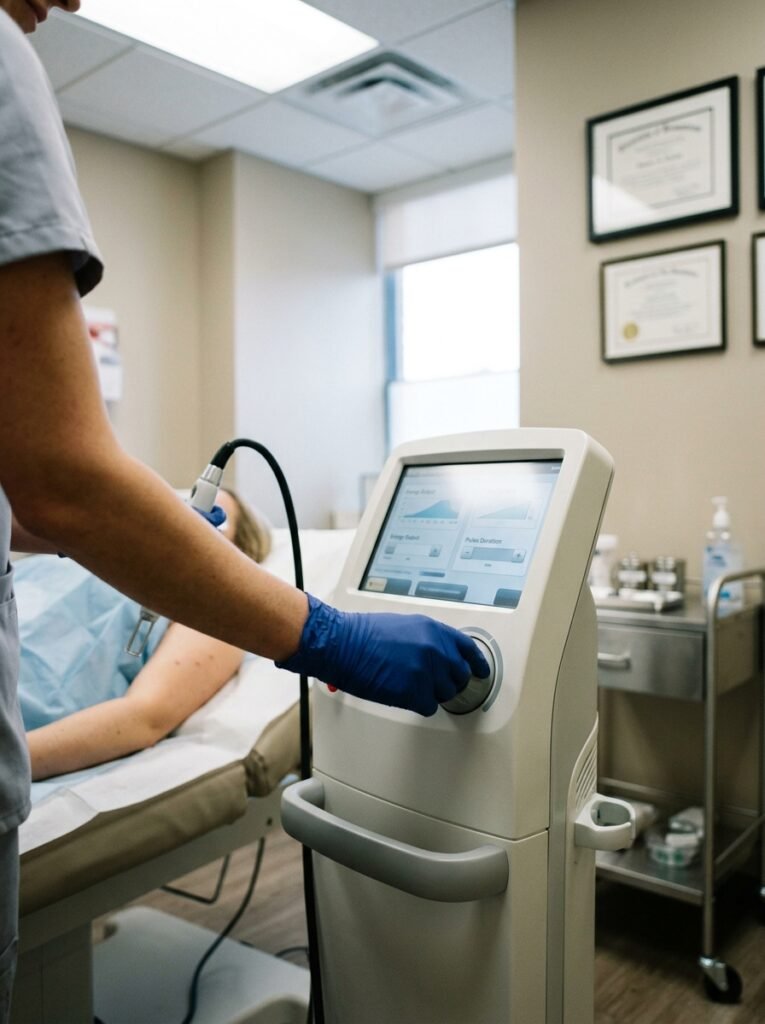
Ablative fractional lasers vaporise microscopic columns of tissue, leaving healthy skin between them to drive rapid healing. The controlled injury is deeper and more precisely dosed than needles alone can achieve, which is why a well-run laser course usually produces the single largest change in overall surface quality. The cost is downtime — roughly a week of raw, sunburn-like healing — and a genuine risk of prolonged redness or pigment disturbance.
Radiofrequency microneedling delivers heat through insulated needles at a set depth, so energy lands below the surface while the top layer is largely spared. Results land slightly behind ablative laser in most direct comparisons, but tolerability and pigment safety are better. For many people, particularly those with deeper skin tones, that trade is worth taking.
Standard microneedling without energy is the weakest of the three. It has a real mechanism and a real, modest effect, and it is frequently sold as though it belonged in the same tier as the other two. It does not. Price it as a supporting treatment and it represents fair value; price it as your main strategy and it will disappoint.

ARE FILLERS A SHORTCUT OR A TRAP
Both, and the difference is entirely down to candidate selection.
Fillers work by volume. A soft, distensible rolling depression that visibly flattens when you stretch the skin beside it is a good candidate, because there is space beneath it to fill. A narrow ice pick shaft is not — there is nowhere for the product to sit, and injecting into a sharply walled scar can push the surrounding tissue up while leaving the crater exactly where it was.
Hyaluronic acid products are the sensible starting point. They give an immediate result, they fade over months to a year, and, most usefully, they can be dissolved if the outcome disappoints. Treat them as a test drive.
Long-lasting collagen-scaffold fillers hold for years and can be genuinely excellent in the right face, but permanence cuts both ways. Faces change shape over a decade, and a product that cannot be removed will still be sitting exactly where it was placed. Where an allergy pre-test is required, do not treat it as a formality it is the one safety step in this category that cannot be recovered afterwards.
Fillers also mask rather than repair. That is not a criticism, only a fact worth pricing in when comparing them against release and resurfacing, which alter the scar itself.
DO AT-HOME PRODUCTS DO ANYTHING FOR INDENTED SCARS
They work on colour, not on contour, and the distinction saves people a fortune.
Much of what people call scarring is discolouration — brown or red marks left behind after inflammation settles. These are flat. They sit level with the surrounding skin, and they respond well to consistent topical care, patient sun protection, and time. Many fade substantially without any procedure at all, which is why rushing into laser during the first months after severe acne often means paying to treat something that was going to resolve anyway.
An indentation is different. It is missing structural tissue. No cream rebuilds it, and any product marketed as filling depressed scars from the outside is selling optimism.
The genuinely high-value home spend is prevention. Bringing active breakouts under control stops the next generation of scars forming, and every scar prevented costs nothing to repair. If breakouts are still appearing, that should be treated before any scar work begins — otherwise you will be repairing damage while new damage is being created alongside it.
HOW DOES SKIN TONE CHANGE WHICH OPTION TO CHOOSE
It changes the risk calculation rather than the objective.
Skin with more melanin responds to injury and heat with a stronger pigment reaction, so aggressive surface heat can leave dark patches that outlast the scar treatment itself. That does not rule out any procedure, but it reshuffles the ranking. Energy-based treatments that spare the upper layer, gentler settings across more sessions, and mechanical rather than thermal approaches all move up. Aggressive one-visit resurfacing moves down.
Three habits matter more than the device choice. Prepare the skin for several weeks beforehand so it is calm and even at the starting line. Space sessions generously instead of compressing them. Protect from sun obsessively afterwards, because the pigment response is triggered as much by light exposure during healing as by the treatment itself.
The most important question to ask a prospective practitioner is not which machine they own. It is how many people with your skin tone they have treated with it, and what their protocol is for preventing pigment change.
HOW LONG BEFORE YOU SEE WHAT YOU PAID FOR
Longer than the before-and-after grids imply, and the gap causes a lot of unnecessary panic.
Collagen remodelling is slow biology. Early softening usually shows around the second month, meaningful change around the third or fourth, and the final result somewhere between six and twelve months after the last session. Skin often looks worse before it looks better — redness, temporary swelling and a curious tightness are part of healing, not signs of failure.
That timeline has a budgeting consequence. Judging a treatment after four weeks and switching to something else is the most common way people end up paying for three incomplete courses instead of one finished one. Choose a plan, commit to its full arc, and evaluate it at the end.
YOUR NEXT STEPS
- Classify your scars before you price anything. Stretch the skin gently beside a scar in daylight. If it flattens, it is likely tethered and rolling. If it holds its shape as a narrow pit, it is likely ice pick.
- Settle active breakouts first. Treating scars while new lesions form means paying for the same work twice.
- See a qualified dermatologist or scar specialist, not just a device operator. The assessment is the part that determines your outcome; the machine is secondary.
- Ask for a full-course quotation, not a per-session price. Include the number of sessions, spacing, and what a top-up plan would cost later.
- Ask explicitly whether scar release or a focal acid technique suits you. These deliver the best value in this field and are the least likely to be offered without prompting.
- Confirm experience with your skin tone, including the preparation protocol and how pigment complications would be managed.
- Take fixed-lighting photographs before you start. Six months of gradual improvement is invisible in a mirror and unmistakable in a photograph.
FAQ
IS ACNE SCAR TREATMENT COVERED BY INSURANCE OR PUBLIC HEALTH SYSTEMS?
Almost never. Scar revision is classified as cosmetic in most health systems worldwide, which places the full cost on the patient. Rare exceptions exist where scarring causes functional problems or follows a documented medical event. Many clinics offer instalment plans instead, which is worth asking about before committing to a package.
CAN ACNE SCARS BE REMOVED COMPLETELY?
No. Scar tissue can be reshaped, lifted, softened and blended so that it stops catching the light, which is what makes scars visible in the first place. It cannot be converted back into original skin. A realistic target is skin that no longer draws attention in normal lighting rather than skin that looks untouched.