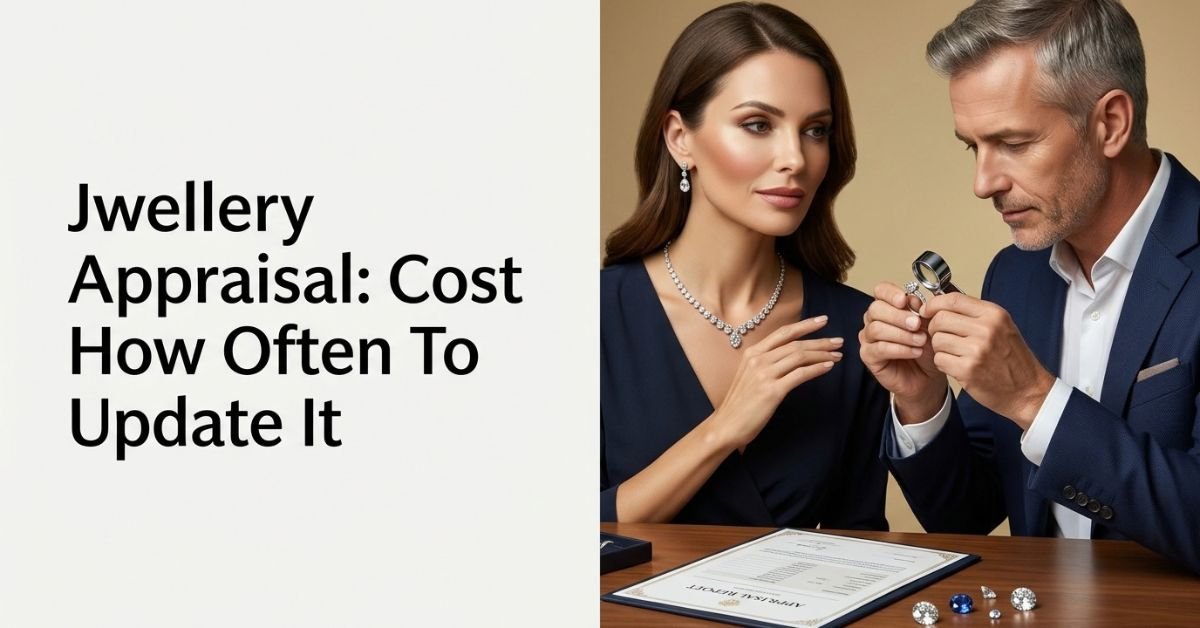
Jwellery Appraisal: Cost And How Often To Update It
A jewelry appraisal fee depends on the item’s complexity, the appraiser’s pricing method, and the report’s purpose. One U.S. insurer’s published guidance gives a broad benchmark of $50–$150 per hour, while some providers charge a flat fee per piece. For insurance, review your policy and consider a new appraisal about every two years or sooner after a significant change.
| What you need | What to ask for |
|---|---|
| Insurance coverage | A current replacement-value appraisal accepted by your insurer |
| A possible sale | A fair-market or resale-focused valuation |
| Estate or tax work | The specific value type and date required for that purpose |
| A fee estimate | A written flat fee or hourly rate, plus any extra testing costs |
By the numbers: Jewelers Mutual publishes a fee benchmark of $50–$150 per hour; a separate current Jewelers Mutual guide describes some appraisals at about $75–$200 per piece, depending on the provider and the work involved. These are examples, not regulated prices or guarantees of what an appraisal will cost where you live.
Key Takeaways
- An appraisal is an expert opinion of value for a stated purpose and date. It is not automatically the price you could get by selling the item.
- Ask whether the report gives replacement value, fair market value, or another type of value.
- Fees should be based on time or a flat rate, not a percentage of the stated value.
- For insured pieces, Jewelers Mutual recommends a new appraisal every two years. Check your insurer’s own rules and consider updating sooner if the item changes or market conditions shift.
- A gemstone grading report and a jewelry appraisal serve different purposes.
What does a Jwellery Appraisal tell you
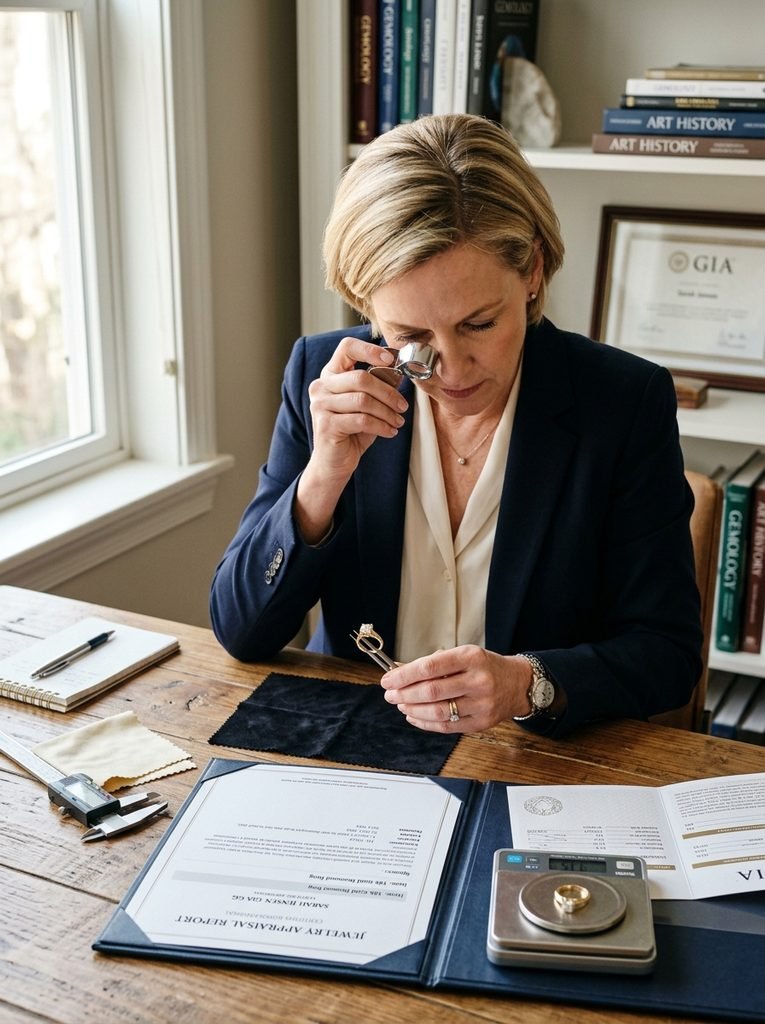
A jewelry appraisal is a written description of an item and an appraiser’s opinion of its value for a defined purpose. The report may identify the metals, gemstones, distinguishing features, condition, and other details needed to describe the piece. The value is meaningful only when you know what kind of value the appraiser was asked to determine.
For instance, an insurance replacement appraisal estimates the cost of replacing the item with a comparable one under the assumptions stated in the report. A fair-market valuation answers a different question: what a willing buyer might pay a willing seller in a particular market. Estate, donation, and liquidation work can have their own requirements. GIA explains that appraisals are used for different purposes, including insurance replacement and estate planning.
That distinction matters. An insurance appraisal should not be treated as a promise that a jeweler, auction house, or private buyer will pay that amount. Before commissioning an appraisal, tell the appraiser how you plan to use it, then ask them to state the value type and effective date in the report.
How much does a jewelry appraisal cost
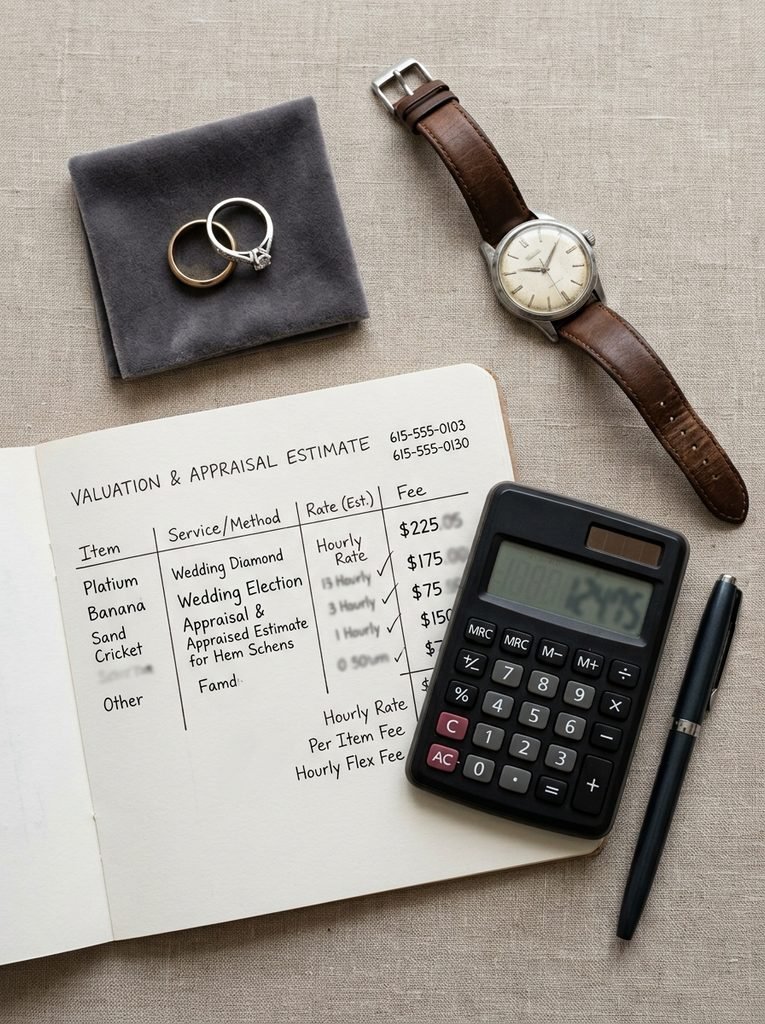
There is no single worldwide price. Published U.S. guidance from Jewelers Mutual describes typical fees of $50–$150 per hour or a flat fee per piece, depending on complexity. Another current guide from the same company gives a broad per-piece benchmark of $75–$200. Treat these as planning figures, not a quote: the appraiser, region, item, and report requirements all affect the final fee.
A simple, clearly documented ring may take less work than an antique brooch with several stones, uncertain origins, or unusual craftsmanship. The appraiser may need extra time for stone identification, research, photographs, or a more detailed written report. If several pieces are being assessed, ask whether the fee is per item, hourly, or bundled.
Request the price before handing over the jewelry. Ask whether it covers the written report, photographs, testing, taxes, and any additional research. A low quote may cover only a brief estimate; a higher one may include a detailed, documented report. Compare what each service includes, not only the headline fee.
Why do appraisal fees vary so much
The work changes from item to item. A basic valuation may be relatively straightforward when the jewelry has clear identifying marks, a recent purchase record, or a reliable gemstone report. A piece with unusual construction, multiple stones, age-related wear, or uncertain materials may need closer examination and research.
The report’s purpose also affects the work. An insurer may need a detailed description that supports replacement of a particular item. A valuation for an estate or sale may require a different method and market context. The location matters too: professional fees and local market conditions vary between countries and even between cities.
Jewelers Mutual says fees should be hourly or flat-rate, rather than a percentage of the jewelry’s stated value. A percentage fee can give the appraiser a financial incentive to produce a higher valuation, so ask how the fee is calculated before agreeing to the work.
When comparing providers, look for relevant training, appraisal experience, and a clear explanation of the report. A low price alone does not show whether the appraiser is qualified or whether the report will meet your insurer’s requirements.
Is an appraisal the same as a gemstone grading report
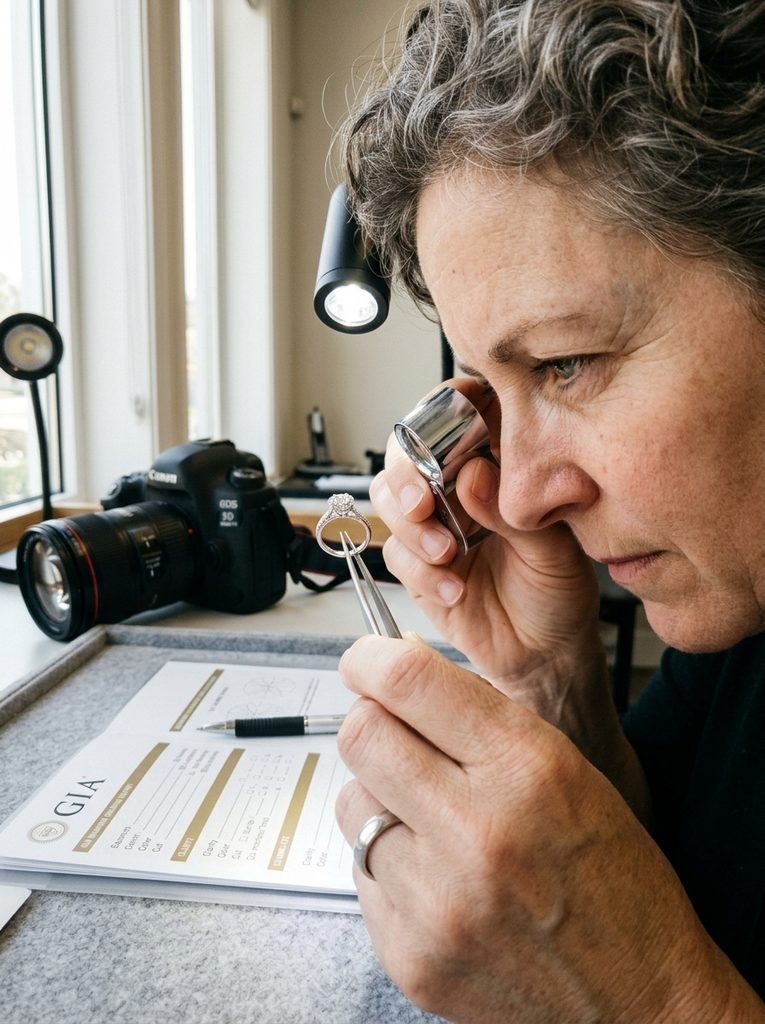
No. A grading report describes characteristics of a gemstone, while an appraisal gives an opinion of monetary value for a particular purpose. The documents can complement each other, but one does not automatically replace the other.
GIA says its laboratory reports provide information about a gemstone’s quality and identifying characteristics, but do not state an appraisal value. GIA also says it does not appraise jewelry; it directs consumers to independent appraisers and appraisal associations.
If you already have a grading report, bring it to the appraiser. It may help confirm details about the stone, but the appraiser still needs to assess the complete piece and prepare the valuation you need. For an insurance policy, ask the insurer whether it needs an appraisal, a grading report, or both.
A useful report should identify the item clearly and explain the value conclusion in context. If the document provides only a number without a description or without naming the kind of value, ask the appraiser what it is intended to support.
How often should you update a jewelry appraisal
For jewelry insured on a scheduled or itemized basis, review the appraisal on the timetable your insurer requires. Jewelers Mutual recommends obtaining a new appraisal every two years because precious metals and gemstones can change in value over time. That is an insurer’s recommendation, not a universal rule for every country, policy, or item.
A practical approach is to check the document and policy every couple of years, then arrange a new valuation if the insurer asks for one or if the old replacement figure no longer seems representative. You may need an earlier update after a major repair or redesign, a new center stone, a significant change in the piece’s condition, or a sharp movement in the relevant market.
Do not assume an appraisal has a single expiration date that applies everywhere. The insurer’s documentation requirements and the purpose of the original report matter. Contact the insurer before commissioning a new appraisal so you know what kind of report it accepts, how recent it must be, and whether it has its own valuation process.
What events should prompt an earlier update
A calendar reminder is useful, but changes to the jewelry or your coverage can matter more than the date alone. Ask for updated documentation when a piece has been resized, redesigned, repaired in a way that changes its materials or gemstones, or passed to you without recent records.
You should also check the appraisal if you change insurers or switch from general household coverage to a separate jewelry policy. The new insurer may have different documentation requirements, including a preferred report format or a specific value type. Jewelers Mutual notes that appraised values can change with the market and recommends regular reassessment for coverage.
The update may be less involved if the original report is clear and the piece remains unchanged, but the appraiser must decide whether existing documentation is sufficient. Ask whether the job is a review of an existing report or a full new appraisal, and get the fee in writing.
If you have an immediate claim, do not wait for a routine update to contact your insurer. Follow the claims process and provide the documents you have. A new report prepared after a loss may not substitute for the evidence or valuation the insurer requires.
Does an appraisal show what you can sell the jewelry for
Not necessarily. An appraisal’s figure depends on its stated purpose, and an insurance replacement value is not the same as an offer from a secondhand buyer. A resale price can depend on the buyer, local demand, condition, brand, craftsmanship, and whether the item is sold privately, through a retailer, or at auction.
Jewelers Mutual explicitly distinguishes appraisal value from selling price: replacement value for insurance and a sale price answer different questions. If your goal is to sell, tell the appraiser or valuation professional. Ask for a valuation method relevant to the likely sale channel, and get offers from more than one buyer before deciding.
This distinction can prevent a costly misunderstanding. A high insurance figure does not mean you can expect to receive that amount in cash, while a low secondhand offer does not necessarily prove that the insurance appraisal was wrong. The two numbers may be based on different markets and assumptions.
How can you choose a qualified appraiser
Start by checking whether the appraiser has education and experience relevant to the type of jewelry you own. Gemological knowledge helps identify materials and stones; valuation training helps the professional select an appropriate method and explain the conclusion. Ask about credentials, experience with similar items, and any affiliations or professional standards they follow.
GIA provides a directory of appraisal associations and says an appraisal should include a quality analysis, description, and valuation. It does not itself provide appraised values. You can use as one starting point, then verify the person’s services and qualifications directly. The National Association of Jewelry Appraisers also provides a “Find an Appraiser” directory.
Before booking, ask whether the appraiser will explain the report’s value type, fee structure, and process for handling your jewelry. Request an itemized receipt or intake record if the item will be left with them. If the valuation is for insurance, confirm acceptance with the insurer before paying for the report.
What should a complete appraisal report include
The exact format varies, but the report should let a reader understand which item was examined, what value was estimated, and why. Look for a clear description of the jewelry, relevant gemstone or metal details, identifying features, photographs where appropriate, the valuation purpose, the value conclusion, and the date of the appraisal.
The appraiser should also identify the basis or market used for the opinion. A number without a stated purpose can be difficult for an insurer, estate representative, or potential buyer to interpret. GIA describes an appraisal as combining a description and valuation, while its discussion of grading reports explains that laboratory grading documents are not monetary appraisals.
Read the report before you submit it to an insurer. Check the item description, spelling of names, stone details, and whether any special features are missing. Keep a digital copy with photographs and purchase or repair records. If you spot an error, ask the appraiser to correct it before relying on the report.
Can you use an online or store estimate instead
An online estimate, retailer receipt, or informal verbal opinion can be useful for early research, but it may not meet an insurer’s requirements for a formal appraisal. A receipt records the transaction and price at a particular time; an estimate may use broad assumptions; an appraisal is a documented opinion prepared for a defined purpose.
Before paying for an in-person or remote appraisal, ask the insurer what evidence it accepts. Some providers may allow particular forms of documentation, while others may require a detailed written appraisal for high-value pieces. The report’s format, date, and the appraiser’s qualifications can matter as much as the value figure.
If a remote service is available, ask how it handles photographs, measurements, stone verification, and any uncertainty about authenticity or condition. The appraiser should explain the limits of a valuation based on images alone. For rare, antique, high-value, or altered pieces, ask whether an in-person examination is needed.
Which records should you keep after the appraisal
Keep the appraisal with the jewelry’s purchase receipt, repair invoices, grading reports, photographs, and insurance documents. Together, these records make it easier to identify the piece, confirm what has changed, and answer questions from an insurer or estate representative.
Store copies in a secure place separate from the jewelry, and keep a digital backup. Make sure the photos show distinguishing features such as hallmarks, engravings, stone settings, and visible damage. If you update the piece or replace a gemstone, add the new records rather than discarding the old report.
After receiving a new valuation, check that your insurer has received it and has updated the policy if required. A fresh report sitting in a drawer may not change the amount or terms of your coverage. Ask for written confirmation that the insurer has accepted the documentation and that the listed item matches the policy schedule.
FAQ
Is a jewelry appraisal required to insure every piece?
Not always. Requirements depend on the insurer, the item’s value, and the policy type. Ask your insurer whether it requires a formal appraisal, a recent receipt, photographs, or another form of documentation before buying coverage.
Should I get an appraisal before buying inherited jewelry?
If you need to insure, divide, donate, or sell the item, a professional appraisal may help establish a value for that purpose. Tell the appraiser what decision the valuation needs to support.
Can the jeweler who sold the item appraise it?
Some jewelers offer appraisal services, but ask about the appraiser’s qualifications, independence, and fee structure. A separate qualified appraiser may be useful when you want an opinion independent of the original sale.
Does a higher appraisal mean I will pay more for insurance?
It can affect the insured amount or premium, depending on the policy. Ask the insurer how it uses the appraisal and whether any policy limits or deductibles apply.
What if I disagree with an appraisal?
Ask the appraiser to explain the method, assumptions, and value type. If you still have concerns, seek an independent second opinion from another qualified appraiser and check what documentation your insurer or other intended recipient accepts.