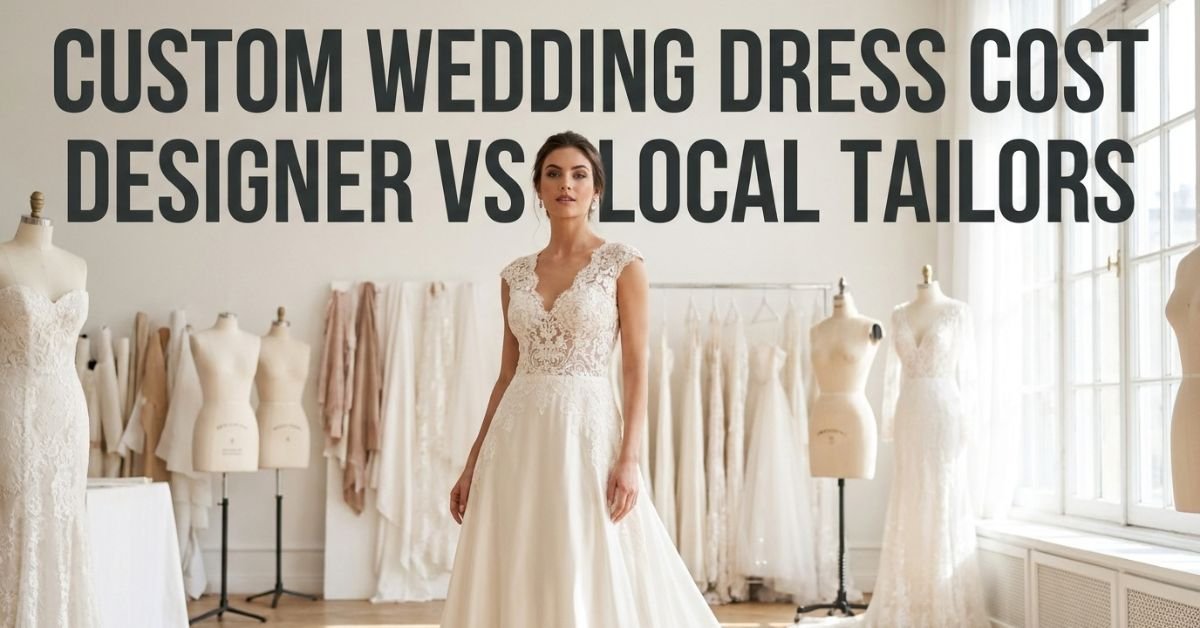
Custom Wedding Dress Cost: Designer vs local Tailors
A designer’s quote and a local tailor’s quote may look easy to compare until you ask what each one includes. One might cover the fabric, fittings, and finishing. The other might cover only the work of cutting and sewing. The first figure you hear is useful, but it rarely tells the whole story.
The real question is: What will it cost to have the dress you want, properly fitted and ready to wear?
There is no single worldwide price for a custom wedding dress. Fabric, labor, design complexity, local costs, and the maker’s experience all affect the total. A simple gown made by an experienced local dressmaker can be excellent value. An established designer may offer a clearer design process or a finished style you can see before ordering. Either option can become expensive when the original plan changes.
This guide helps you compare both routes on equal terms. Instead of relying on a price range that may have little meaning in your country, it shows you what to ask, what to include in your budget, and how to recognize a quote that leaves too much unanswered.
Key takeaways
- Compare the price of the finished, wearable dress, including materials and fittings.
- Ask what “custom” means before assuming a gown is designed from scratch.
- Look at completed work similar to the dress you want.
- Agree on changes, deadlines, and payment terms in writing.
- Keep some room in your budget for choices you may make during fittings.
Custom wedding dress cost: What are you paying for
A custom gown involves more than fabric and sewing. Someone has to translate an idea into a shape that works on your body. That may require sketching, pattern making, selecting materials, cutting, construction, fittings, and final adjustments. The amount of work differs from dress to dress.
The word custom also covers several approaches. You might choose an existing design and order it in your measurements. You might alter a familiar style by changing its sleeves or neckline. Or you might work with a maker to develop a dress that begins with your own brief. These are different services, even though they may all be described as custom.
Before asking which provider is cheaper, decide what you actually want made. A design with a plain skirt and clean finish should not be compared with one featuring extensive hand decoration and a long train. Start with one clear description, then ask each maker to price that description.
| Part of the project | Questions to ask |
|---|---|
| Design | Is the gown an existing style, an adaptation, or a new design? |
| Materials | Who chooses and pays for the outer fabric, lining, and supporting materials? |
| Construction | What internal structure and finishing are included? |
| Decoration | Which details are included, and which are optional additions? |
| Fittings | How many appointments and adjustments are covered? |
| Completion | When will the dress be ready to wear, and how will you receive it? |
You do not need to understand every sewing technique to ask these questions. You simply need enough detail to know what you are buying.
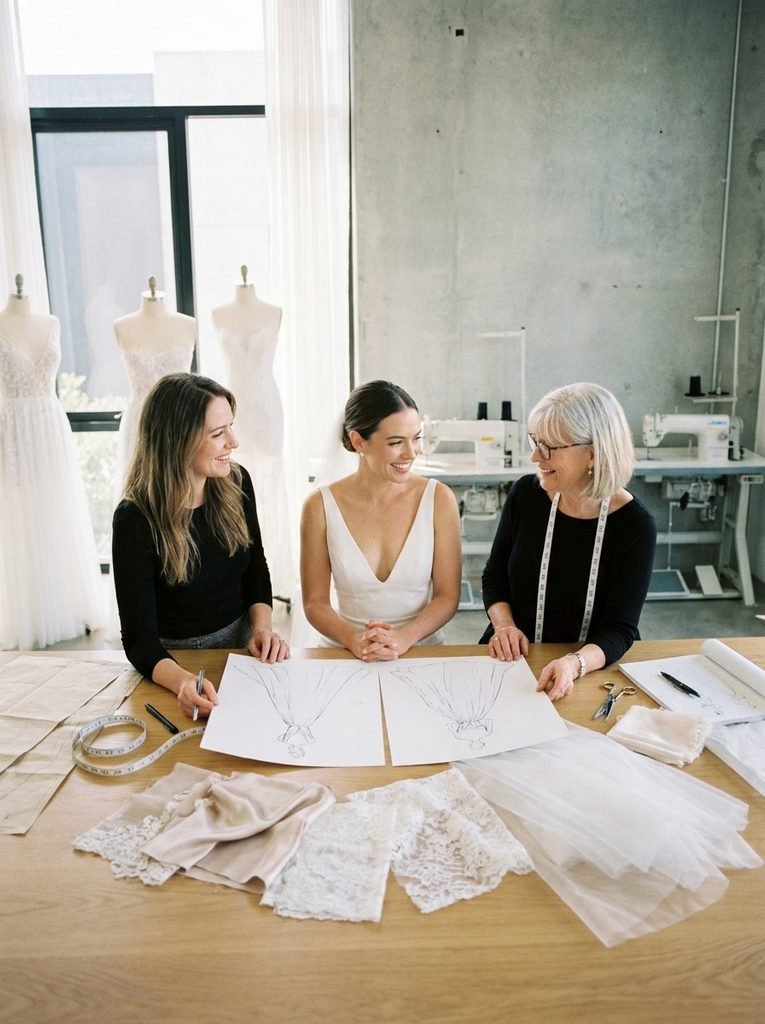
Designer vs local tailor: How the two routes differ
A designer or bridal atelier often has an established visual style. You may be able to try on a sample, examine other gowns from the collection, and discuss changes within an organized design process. If you already love a particular designer’s shape and finish, that familiarity can make the decision easier.
A local tailor or dressmaker may offer a more direct working relationship. You might choose the fabric yourself, discuss each detail with the person constructing the garment, and attend fittings close to home. That flexibility can be valuable, especially when your preferred dress does not fit neatly into a bridal collection.
Neither route describes quality by itself. Some local makers specialize in demanding bridal construction. Some designers provide highly individual work, while others mainly adjust existing styles. Ask to see what the specific provider can do.
| What matters to you | Designer or bridal atelier | Local tailor or dressmaker |
|---|---|---|
| Seeing a similar finished style | Often possible if samples or a collection are available | Depends on the maker’s portfolio |
| Choosing every material yourself | May be possible within a selected range | Often flexible, depending on the agreement |
| Speaking directly with the person making the gown | Depends on how the business works | Often possible in a small workshop |
| Following an established design process | May be a central part of the service | Varies from maker to maker |
| Controlling separate expenses | May require asking for a detailed breakdown | May be easier, though you may need to organize more yourself |
The strongest choice is the one whose work, communication, and written terms suit your dress and your budget.
Why can two similar dresses have very different prices
A photograph shows the outside of a dress. It does not show how much work went into helping it hold its shape, sit comfortably, and survive a full day of movement.
Consider a gown with a fitted bodice. One version might use a straightforward lining and simple closure. Another might have carefully shaped internal support, multiple layers, and extensive hand finishing. They could appear similar from a distance while requiring very different amounts of labor.
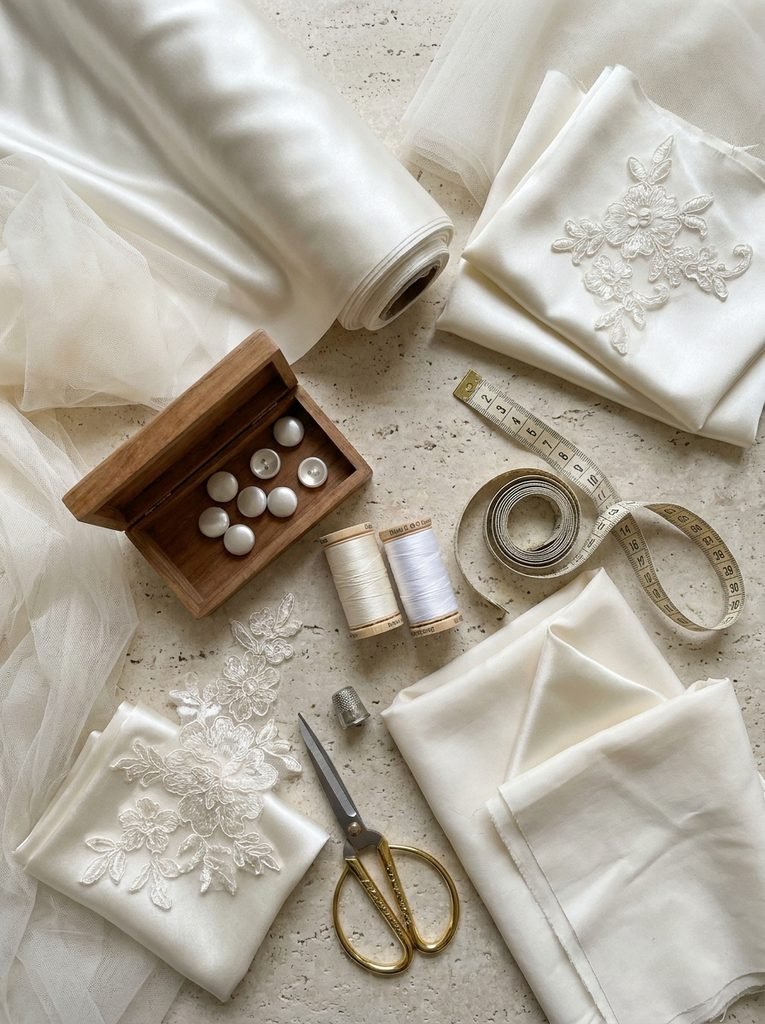
Fabric changes the work too. A material that moves easily through a sewing machine may still need careful fitting to fall well. A delicate or heavily decorated material can require slower handling. A full skirt needs more fabric than a narrow one, while a train adds decisions about length, weight, and movement.
Then there are the services around the dress. A maker who sources materials, develops a sketch, organizes appointments, and makes adjustments is doing more than a maker hired only to sew fabric you provide. A higher quote may include services you value. A lower quote may be perfectly reasonable if you are prepared to handle those tasks yourself.
The way to find out is to ask for a breakdown. If a provider prefers one package price, request a written list of what the package includes and what would cost extra.
Designer wedding dress cost: When is the premium worthwhile
Paying more for a designer can make sense when the design itself is the reason you are buying the gown. Perhaps you have tried on a sample and know that you love its proportions. Perhaps the designer consistently creates the kind of finish and shape you want. In those cases, you are paying for more than a name: you are choosing a particular result and process.
The premium deserves examination, though. Ask whether your dress will follow an existing pattern or be designed individually. Ask which changes are allowed, who will fit the gown, and what happens if an approved detail does not appear in the finished piece.
Do not assume that a designer price includes every alteration. A gown made in an ordered size may still need adjustments when it arrives. A bespoke design may include planned fittings but charge separately for a new feature requested after construction has begun. The agreement should make these differences clear.
A designer route is especially appealing when you want professional guidance through a look you find difficult to describe. A good design conversation can turn scattered ideas into a coherent gown. You should still feel comfortable asking practical questions about fabric, comfort, schedule, and total cost. A beautiful sketch is the beginning of the project, not the end.
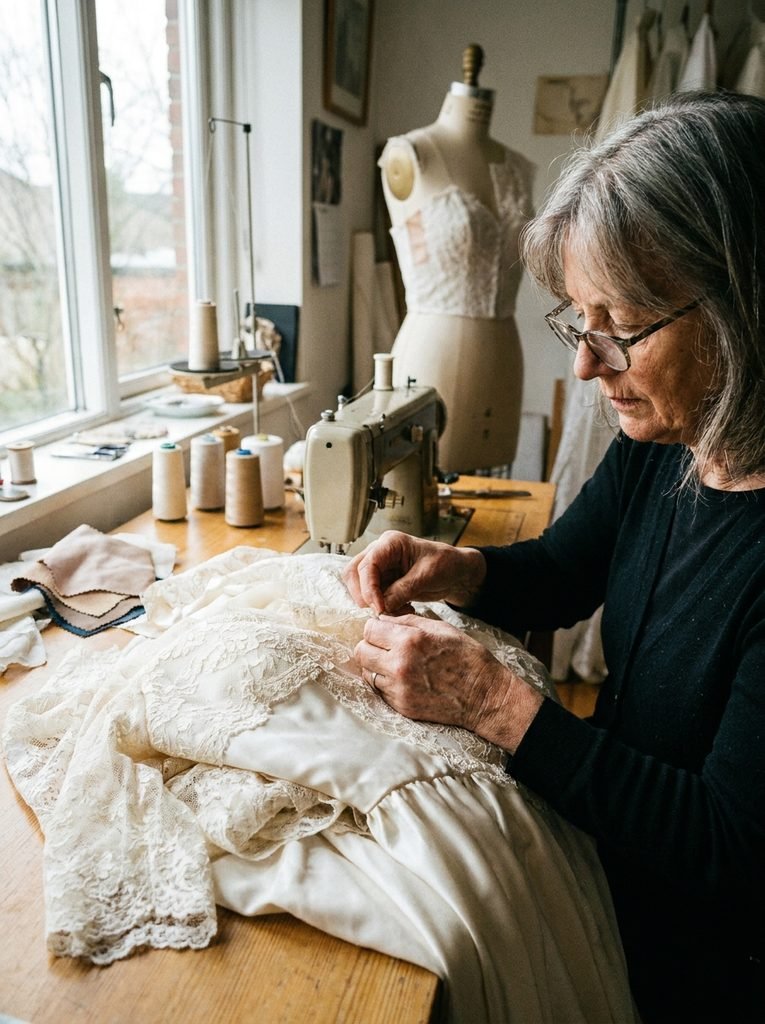
Local tailor wedding dress cost: Where can it offer value
A local tailor can offer value by giving you control over how the budget is divided. If the silhouette is simple, you may prefer to spend on a fabric you love and keep embellishment modest. If one decorative detail matters most, you can discuss how to make that detail stand out without adding work across the entire dress.
The initial sewing fee, however, is not always the final price. You may have to buy outer fabric, lining, fastenings, decoration, and other components separately. You may also have to arrange some services outside the tailor’s workshop. Add those costs before deciding that this route is cheaper.
Experience is more useful than a confident promise. Ask to see completed garments with a similar shape, weight, and level of detail. If you want a structured bodice, inspect structured work. If you want elaborate embroidery or several layers, ask to see those features in a finished garment.
Look closely at comfort as well as appearance. Can you move in the sample? Does the lining feel secure? Do closures sit flat? Are decorated areas neatly finished? A gown needs to work throughout your celebration, not only in a fitting-room photograph.
Local tailoring is often a collaborative route. That works best when you can explain your priorities, attend fittings, and respond to decisions while there is still time to change them.
How to compare the final cost fairly
Ask both providers to quote against the same brief. Include the silhouette, approximate fabric, neckline, sleeves, skirt shape, decoration, and desired completion date. Tell them which details are essential and which are flexible.
Then build a complete total for each route. Use your own currency and actual written quotes. Avoid mixing a firm price from one provider with an optimistic guess for the other.
| Expense | Designer quote | Local tailor quote |
|---|---|---|
| Design and construction | Is it included in the package? | What work does the sewing fee cover? |
| Fabric and lining | Are the selected materials included? | Will you buy them or will the tailor? |
| Decoration | What exact placement and amount are covered? | Is decoration part of the sewing quote? |
| Fittings | How many are included? | How many are included? |
| Later changes | How will new requests be priced? | How will new requests be priced? |
| Collection or delivery | Is it included? | Is it included? |
| Finished total | Add every required expense | Add every required expense |
If one quote leaves an item unanswered, mark it as unknown. Do not quietly enter zero. Return to the provider and ask.
It also helps to separate necessary work from optional choices. A correction needed to meet agreed measurements is different from deciding midway through the project that you would like a different sleeve. Your written agreement should explain how each situation is handled.
What hidden costs should you ask about
Many extra charges begin with a sentence that means different things to the customer and the maker. “Fittings included” might mean all planned appointments, or it might mean a fixed number. “Embellished bodice” might refer to a small area, while you imagine decoration covering the front and back.
Make the scope visible before paying a deposit.
- Design changes: When does the design become final, and what happens if you change your mind afterward?
- Fabric substitutions: Who approves a substitute if the original choice is unavailable?
- Additional fittings: Are extra visits charged separately?
- Handwork: What area of the dress will be decorated?
- Accessories: Are a veil, detachable sleeves, overskirt, or other pieces included?
- Urgent work: Would a shorter deadline change the price?
- Delivery: Who pays for shipping or transport, if needed?
- Cancellation: What happens to payments and purchased materials if the order stops?
A clear agreement protects the maker as well as the customer. It gives both of you a common description of the finished dress.
For an order placed in another country, there are additional practical questions. Ask how measurements will be taken, how you will approve the fit from a distance, who is responsible for delivery, and where final adjustments will happen. Consider the entire process before deciding that the garment price alone is attractive.
How much does fabric choice affect the budget
Fabric can change the price of a dress, but its importance is not limited to cost. It affects drape, weight, comfort, opacity, and the way a design photographs.
When discussing inspiration images, point out what you like about the fabric. Is it the smooth surface, the soft movement, the crisp shape, or the amount of detail? A maker may be able to suggest several materials that create a similar effect at different prices. Ask to see physical samples where possible. A name on a quote cannot tell you exactly how a fabric will feel against your skin or move when you walk.
The outer layer is only part of the material plan. A dress may need lining, support, fastenings, and finishing supplies. These can affect both comfort and the final look. Ask the provider to confirm what sits underneath the fabric you can see.
Buying materials yourself can give you control, but it also transfers decisions to you. Confirm the required quantity and suitability with the maker before purchasing. If you buy too little or choose a fabric that cannot produce the intended shape, the project may need to change.
Can a simpler design still look special
Yes. A memorable dress does not require every possible detail. Proportion, fit, fabric, and one deliberate feature can do a great deal of work.
You might choose a striking neckline and keep the skirt plain. You might focus decoration around the cuffs or train rather than across the entire gown. You might prefer a beautiful fabric with minimal embellishment. None of these choices is automatically inexpensive, but each gives you a way to decide where effort and money should go.
A simpler design can also make your priorities easier to communicate. If what matters most is graceful movement, tell the maker. If you want a structured shape that stays in place, say that instead. A good brief describes the experience of wearing the gown as well as its appearance.
Be careful about removing details simply to reach a number. If you take away the one feature you genuinely love, the cheaper dress may no longer feel like the right dress. Reduce work that matters less to you first.
What should happen during the fittings
A fitting is a chance to test the dress in motion. Standing straight in front of a mirror shows only one part of the result.
At an early appointment, pay attention to the main shape: where the waist falls, whether the bodice feels supported, how the neckline sits, and whether the skirt moves as intended. Later fittings can focus on length, closures, sleeves, decoration, and finishing.
Bring the shoes and undergarments you intend to wear, or agree on suitable substitutes with your maker. Tell them if something feels uncomfortable rather than waiting and hoping it will improve on its own.
Try ordinary movements. Walk a short distance. Sit down. Turn. If the dress has sleeves, move your arms. If it has a train, ask how you will manage it during the celebration. You should be able to enjoy wearing the gown without concentrating on keeping it in position all day.
Before leaving each fitting, write down what was agreed. Identify the changes to be made, the next appointment, and whether any new request affects the price. These notes are especially helpful when you discuss several details at once.
How early should you start
Begin with enough time to choose a provider, settle the design, obtain materials, complete construction, and attend fittings. The amount of time needed varies too much between gowns and workshops for one universal deadline to be reliable.
Instead, work backward from the date you need the finished dress in hand. Ask your chosen provider to set out the stages of the project and a date for each one. Leave room after the planned final fitting in case a last adjustment is needed.
Complex decoration, unusual materials, distance between you and the maker, and a busy workshop can all affect the schedule. A short timeline may limit your design choices. It may also leave less room to correct a problem.
If time is tight, consider whether an existing dress that fits reasonably well could be adapted to achieve the look you want. The right choice is the one your provider can complete carefully within the time available.
Which option is right for you
Choose based on your priorities and the evidence in front of you, not on an assumption that one type of provider is always better.
A designer collection gown may be right if you have tried a similar dress and love its shape. A bespoke designer may be right if you want substantial creative guidance. A local bridal tailor may be right if you prefer direct collaboration and have found someone whose finished work you trust.
For each candidate, ask yourself:
- Have I seen work at the level of difficulty I am requesting?
- Do I understand the complete cost?
- Do I know which changes are included?
- Is there enough time for fittings and corrections?
- Does the provider listen when I explain comfort and budget concerns?
If the answers are clear, you are in a stronger position to choose. If the answers remain vague, keep asking before committing money.
The best value is a dress you can afford, understand, and wear with confidence. Its label matters less than the quality of the finished work and the clarity of the agreement that gets you there.
Frequently asked questions
Is a local tailor always cheaper than a designer?
No. A tailor’s initial fee may exclude fabric, decoration, and other work. A designer’s higher initial quote may include some of those items. Add every required expense before comparing the two.
What is the difference between a custom dress and an altered dress?
An altered dress starts as an existing garment that is adjusted. A custom dress is produced for an order, although the amount of original design work varies. Ask the provider whether your gown follows an existing design or begins with a new one.
Should I buy fabric before meeting a tailor?
Meet the tailor first if you can. They can help determine whether the fabric suits your chosen shape and how much is required. Buying materials too early can limit the design.
Are all fittings normally included in the price?
That depends on the agreement. Ask how many fittings are planned, which adjustments are included, and whether appointments added because of a new design request cost extra.