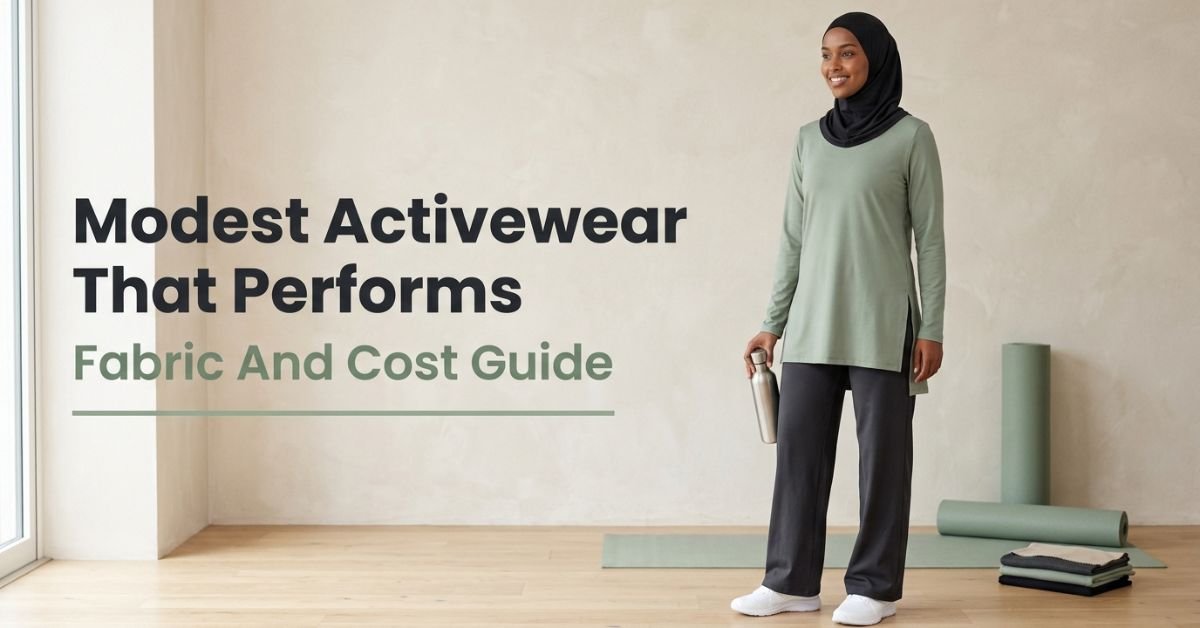
Modest Activewear That Performs: Fabric And Cost Guide
Here’s where most people go wrong with modest activewear: they check the length, the sleeves and the neckline, then stop. Coverage gets all the attention. Fabric gets a quick squeeze between two fingers, if that.
Then the workout starts. The “opaque” leggings go sheer in a lunge. The long tunic clings the moment you sweat. The sports hijab slides back halfway through a sprint. None of that is a coverage problem. It’s a fabric problem, and it’s also the main reason one piece costs $20 while another costs $90.
Quick answer: Good modest activewear combines a synthetic performance fibre such as nylon or polyester with some stretch, enough weight to stay opaque when pulled tight, and a cut that covers you in motion. Mid-priced pieces usually give the best balance, and cost per wear is the fairest way to judge value.
The steps below move in the order you should actually shop, from how you train to how you wash.
Define How, Where And How Often You Move
A piece that feels perfect in an air-conditioned studio in one city can feel unbearable on an outdoor track somewhere hotter and more humid. So before comparing products, get clear on three things.
What you do. Different movement asks different things of fabric:
- Cardio, running and circuit classes create heavy sweat and constant rubbing. Speed of drying and airflow come first.
- Weight training means deep bends and wide stances. Opacity and firm stretch recovery matter most.
- Yoga, Pilates and stretching involve slow, held positions, sometimes upside down. You want softness, opacity and a top that doesn’t slide toward your chin.
- Walking, hiking and outdoor sport mean long hours in the sun and wind. Comfort, sun protection and odour control move up the list.
- Swimming is its own category. Pool chemicals and salt water break down ordinary stretch fabric quickly.
Where you do it. Hot and humid, hot and dry, mild, or cold — each changes the ideal fabric weight. Full coverage naturally holds more warmth close to the body, so the hotter your climate, the more the fabric itself has to help with cooling.
How often. Twice a month and five times a week are completely different buying decisions.
Decode The Label With This Modest Activewear Fabric Breakdown
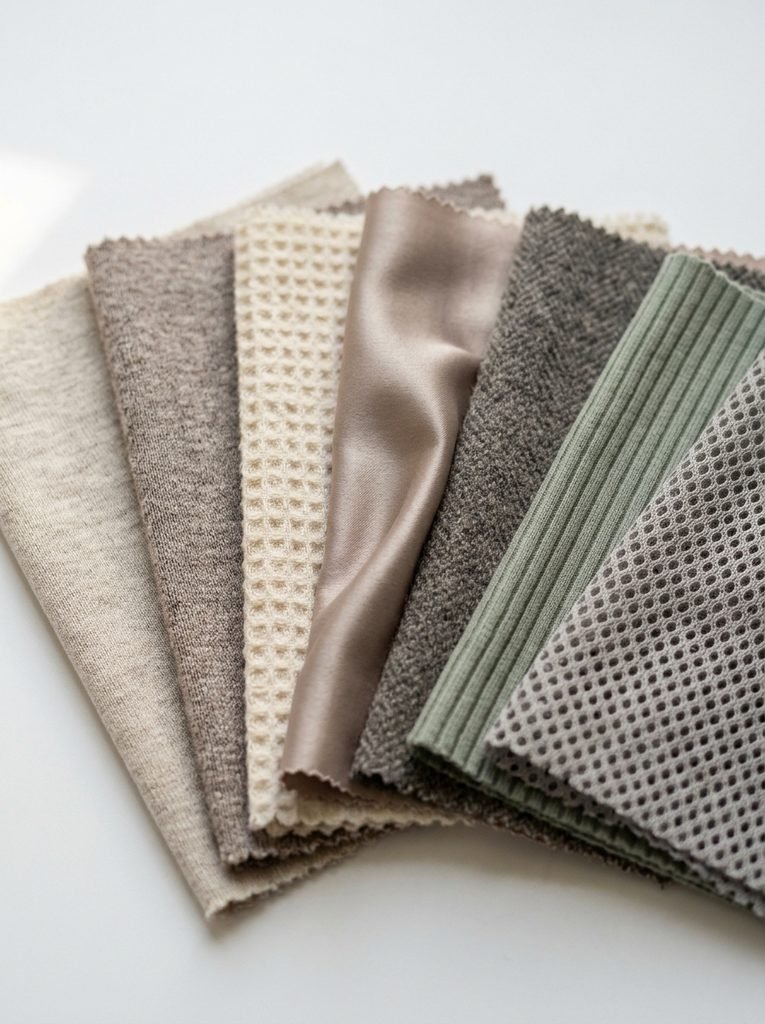
Turn the piece inside out and find the fibre list. Percentages matter. Here is how the common fibres behave once you start moving.
| Fibre | What it does well | Where it struggles | Best use | Effect on price |
|---|---|---|---|---|
| Polyester | Dries quickly, resists fading, very durable | Tends to hang on to body odour | Tops, jackets, hot-weather training | Usually the most affordable |
| Nylon (polyamide) | Smooth, soft, strong, more opaque at a given thickness | Dries a little slower than polyester | Leggings, fitted layers, bottoms | Moderate to higher |
| Spandex / elastane | Stretch and snap-back | Weakens with heat and chlorine | Blended in, never used alone | Higher percentages cost more |
| Recycled synthetics | Similar feel and function to new fibre | Quality depends heavily on the maker | Everyday training pieces | Often slightly higher |
| Merino wool | Handles temperature swings, naturally fights odour | Needs gentle care, less stretch | Hiking, cold mornings, base layers | High |
| Modal and bamboo-based viscose | Silky, cool, beautiful drape | Holds water, can pill with friction | Yoga, light activity, travel | Moderate |
| Cotton | Comfortable when you’re not sweating | Soaks up sweat and stays heavy | Warm-ups and rest days only | Low |
Best Fabric For Modest Workout Clothes, Piece By Piece
- Tunics and longline tops: a synthetic blend with a small amount of stretch drapes away from the body rather than hugging it. Too much stretch in a loose top actually makes it cling when damp.
- Loose leggings and wide-leg pants: nylon-based blends shine here because they stay opaque without needing to be thick. Relaxed cuts need less stretch than fitted ones.
- Outer layers: polyester with a brushed, fleecy or textured inside gives warmth without much weight.
- Swimwear: look specifically for fabrics described as chlorine-resistant. Standard stretch blends lose shape surprisingly fast in pools.
Sports Hijab Fabric: The Piece That Works Hardest
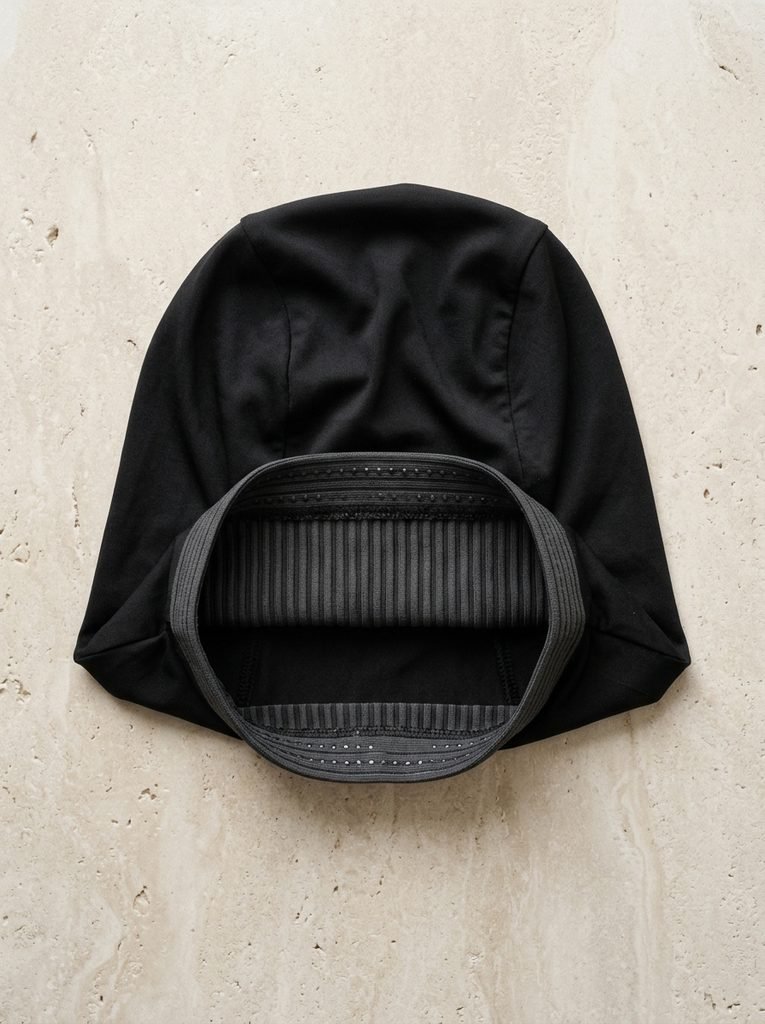
The sports hijab sits where you sweat most and moves every time you turn your head. A light, stretchy, moisture-moving knit is ideal. The real test is grip: a textured or ribbed inner band keeps it from creeping back. Heavy chiffon, silk-like weaves and plain cotton are lovely for everyday wear but rarely hold up during training.
Check Weight, Texture And Opacity For Yourself
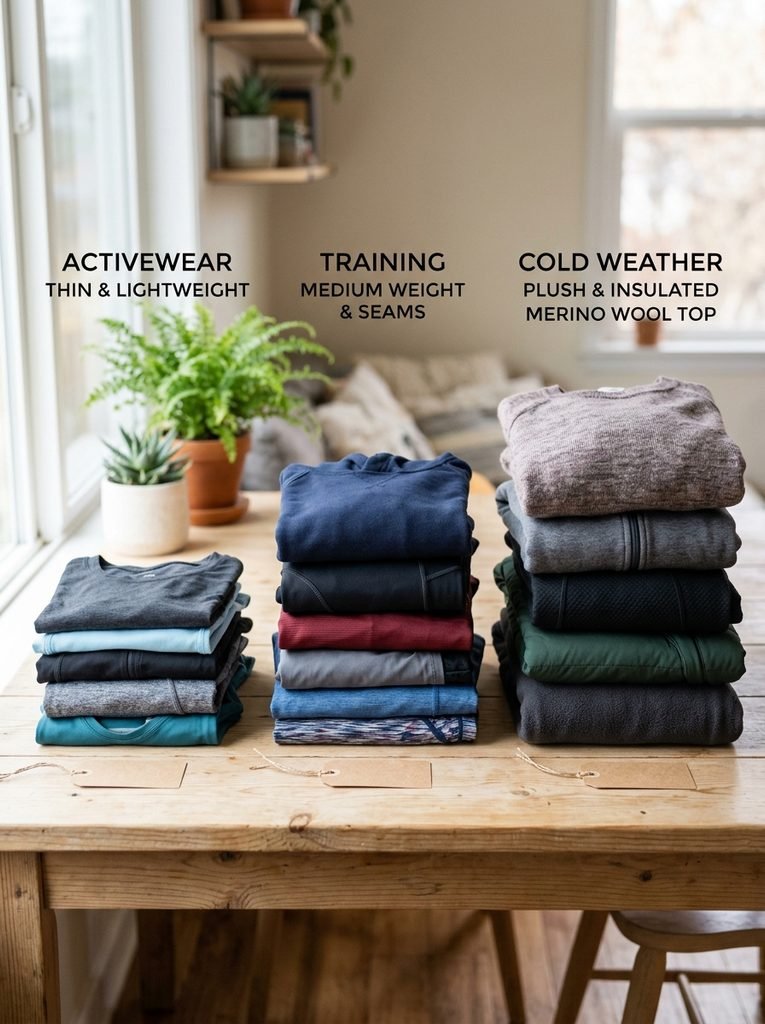
Fabric weight is often listed as GSM, meaning grams per square metre. Not every brand shares it, but here is a practical way to think about it:
- Light (roughly 120–170): airy tops for warm climates and high-sweat sessions.
- Medium (roughly 170–220): reliable all-round tops and tunics.
- Mid-heavy (roughly 220–300): bottoms that must stay opaque while stretched.
- Heavy (roughly 280 and above): cosy layers for colder places.
If the weight isn’t listed, hold the fabric up to a window. Light passing through easily usually means it will show through when stretched.
Texture changes the experience too. Smooth knits feel sleek and look polished. Ribbed and waffle textures add warmth and disguise sweat marks. Ventilation panels help in heat, but check that they sit in spots you’re comfortable with, such as under the arms or across the upper back.
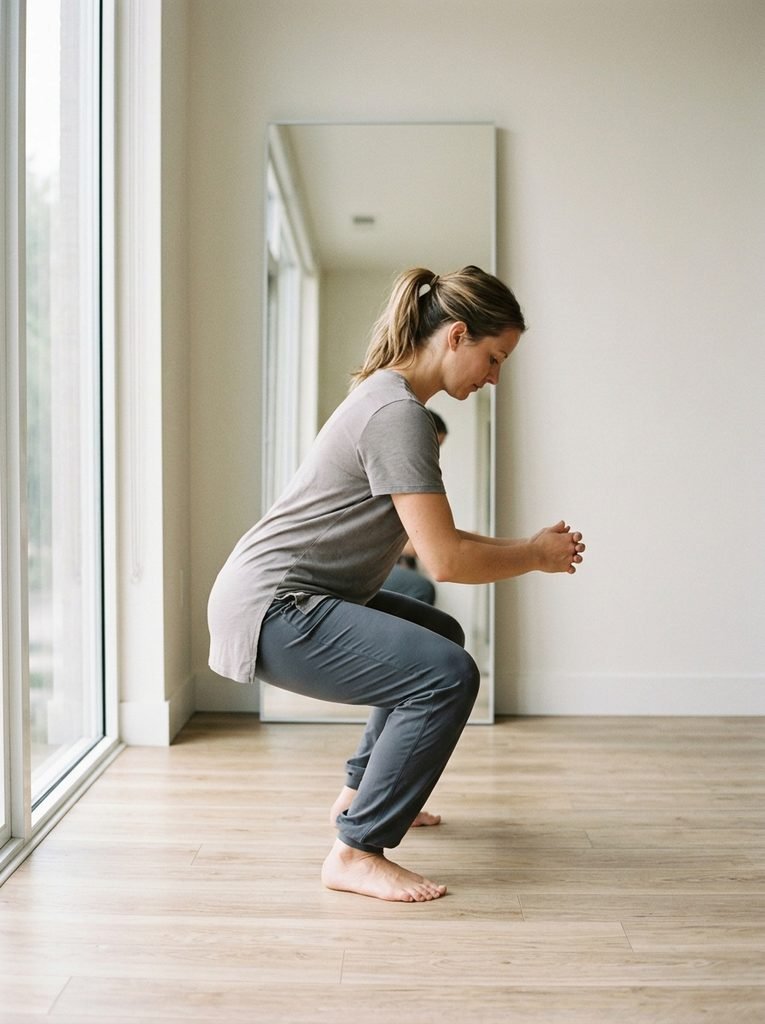
Try the bend test. Stand with a light source behind you and look in a mirror. Squat low, then fold forward. If you can make out skin tone or underwear lines, the piece isn’t opaque enough, whatever the price tag says.
Try the pull test. Stretch a small area and let go. Quality fabric returns flat immediately. If it stays wavy, it will lose its shape early.
Choose A Cut That Covers You In Motion
Modesty looks different for every person, family and community, so there’s no single “correct” silhouette. Whatever your own standard, the same design details decide whether a piece stays where you want it:
- Length that survives a stretch: raise both arms overhead. A good longline top still covers the hips and seat.
- Side slits in the right place: long tunics without slits shorten your stride and pull when you step up. Slits starting around hip level free your legs while the layer underneath keeps you covered.
- Relaxed bottoms with enough body: loose leggings and wide-leg pants avoid clinging, but very flimsy fabric will still stick to damp skin. A little weight helps it fall cleanly.
- Sleeves that stay down: thumbholes or snug cuffs keep sleeves in place during push-ups and planks.
- Necklines that don’t gape: higher, closer necklines behave better than wide ones when you lean forward.
- Built-in layers: a top with an attached inner layer is convenient, but it doubles the fabric on your body. Great in winter, tiring in summer.
Clothing designed for coverage from the outset usually fits better than regular gym wear bought a size up. The seams, slits and proportions are placed with movement in mind.
Plan Your Budget With Realistic Modest Gym Wear Cost Bands
Prices differ widely from country to country because of currency, import costs, shipping and local competition. To keep things comparable, the bands below use US dollars as a common reference. They’re rough guides from general market experience, not quotes, so convert them to your own currency and expect local variation.
| Item | Entry level | Middle | Top end |
|---|---|---|---|
| Sports hijab | Under $20 | $20–35 | $35 and up |
| Longline or long-sleeve top | Under $35 | $35–70 | $70 and up |
| Loose leggings or wide-leg pants | Under $35 | $35–65 | $65 and up |
| Sports dress or tunic | Under $45 | $45–80 | $80 and up |
| Jacket or hoodie | Under $50 | $50–90 | $90 and up |
What Each Price Band Tends To Give You
- Entry level: often lighter fabric with less stretch. Perfectly fine for gentle or occasional exercise, but opacity and shape are usually the first things to fade.
- Middle: better blends, more considered cuts and flatter seams that don’t rub. For most people, this band gives the most for the money.
- Top end: heavier or specialist fabrics, odour-resistant treatments, wider size ranges and refined details. Worth it for pieces in constant use, harder to justify for anything worn now and then.
Timing helps as much as choosing a tier. Retailers around the world clear older colours and seasonal stock regularly, so patience can put middle-band quality within an entry-level budget.
Work Out The Cost Per Wear
The idea is simple. Divide what you paid by the number of times you’ll wear the item before it stops doing its job.
A quick worked example:
- A $80 top worn twice a week for two years is worn about 208 times. That’s around $0.38 per wear.
- A $24 top that goes thin and bobbly after 30 wears works out at $0.80 per wear.
The cheaper top ends up costing roughly twice as much every time you use it.
The same logic can argue against spending, too. A $100 jacket worn only a handful of times a year may cost several dollars per use. That’s reasonable if it’s essential for your climate, less so if it’s mostly for looks.
Some simple guidelines:
- Invest in whatever touches sweat and gets worn most: the hijab, the base top, the bottoms.
- Economise on occasional extras and on colours you might tire of quickly.
- Stick to a core of neutral shades such as black, navy, grey, olive or stone, so everything combines with everything else and each piece gets worn more often.
Wash And Store It So It Keeps Performing
Technical fabric handles a hard session with ease, then gets quietly ruined by hot water and tumble dryers. A few habits make a big difference:
- Turn items inside out and wash cool on a gentle cycle. Less heat and friction means less fading and pilling.
- Leave out fabric softener. It leaves a coating that stops sweat moving through the fibres.
- Let pieces air dry. High heat weakens the stretch fibres, which is why leggings go baggy.
- Protect delicate knits. Put sports hijabs and fine tops in a mesh wash bag, away from zips and hooks.
- Don’t let sweat sit. Hang damp clothes to dry straight after training instead of leaving them in a bag. For stubborn smells, a short soak in cool water with a little white vinegar before washing often helps.
- Give pieces a rest. Rotating between two or three sets lets stretch fibres recover between wears.
Your Next Steps
- Sort your current wardrobe into pieces that perform, pieces that cover but fail, and pieces to retire.
- Start with your most-worn item, usually a longline top or loose bottoms, and buy it from the middle band.
- Use it for two weeks in your real workouts before buying anything to match.
- Add pieces in neutral shades and keep higher spending for items worn several times a week.
- Wait for seasonal clearances for the second and third pieces in your rotation.
Key Takeaways
- Coverage is only the baseline; fabric decides performance and price.
- Synthetic blends with some stretch do most of the heavy lifting; keep cotton for rest days.
- Opacity comes from weight and knit, so always do the bend test.
- The middle price band usually offers the best value anywhere in the world.
- Cost per wear reveals what’s truly cheap and what isn’t.
- Cool washing, no softener and air drying keep technical fabric working for years.
Frequently Asked Questions
Which is better for covered workout clothing, polyester or nylon?
Neither wins outright. Polyester dries faster and usually costs less, which suits tops for hot weather. Nylon feels softer and stays more opaque at the same thickness, which is why it’s popular for bottoms. Mixing the two across an outfit works well.
How can I keep a sports hijab from slipping while I train?
Look for a pull-on design with a gripping inner band, as loose wraps shift more during fast movement. A thin, breathable underscarf adds extra hold. Getting the size right matters too: too loose and it moves, too tight and it becomes uncomfortable.
Is it possible to stay cool in full-coverage sportswear in hot countries?
Yes. Choose light, moisture-moving fabric, relaxed shapes that let air move, lighter colours for outdoor sessions and discreet ventilation where you’re comfortable with it. Exercising early or late in the day and skipping double-layered tops in peak heat also help.
Why do workout clothes keep smelling after a wash?
Synthetic fibres can trap the bacteria that cause odour. Dry clothes promptly after training, avoid fabric softener and try a cool vinegar soak before washing now and then. Wool and fabrics with anti-odour treatments hold smells far less.
Are high-priced modest sportswear pieces worth buying?
They can be, for items you wear often. A pricier piece worn several times a week can cost less per use than a cheap one that wears out fast. For items you rarely wear, a lower or middle price band is usually the smarter choice.