Capes and Ponchos Are Back for Fall 2026 — and Modest Dressers Were Already Ahead
Every few seasons the runway hands modest dressers something we were already wearing. This autumn it’s the cape.
The Fall 2026 collections in New York, London, Milan and Paris leaned into expressive silhouettes, rich colour and polished tailoring — and among the season’s defining trends was the dramatic return of capes and ponchos. If you have ever thrown a shawl over an abaya on a cold evening, you have been ahead of this by about a decade.
The catch is that a runway cape and a wearable cape are different animals, and layering one over long modest clothing creates a specific problem the trend coverage never mentions.
The direct answer
Capes and ponchos returned as a major Fall 2026 outerwear trend on the runways in New York, London, Milan and Paris. For modest wardrobes, the key is controlling volume: pair a cape with a narrow base layer, keep the cape shorter than the dress or abaya beneath it, and define the waist so the silhouette reads deliberate rather than bulky.
What the runways actually showed
Worth separating what happened on the catwalk from what will land in shops.
The Fall 2026 shows finished in March, and the trends that emerged from New York, London, Milan and Paris are the ones you will see everywhere come September. That timing is why now is the moment to plan rather than panic-buy
Two broader themes matter for how you wear a cape this season.
The first is restraint. A significant share of the season was devoted to what W Magazine termed “wardrobe dressing” — an approach centred less on head-to-toe styled looks and more on key items that mix into a closet you already own and can actually be lived in, seen at Celine, Loro Piana, Ralph Lauren and Alaïa. A cape fits that brief perfectly. It is one purchase that changes six outfits.
The second is structure. Fall 2026 brought tailoring back, with cinched waists as the simplest route into the trend — structured blazers, fitted pieces, and anything that emphasises the waist, finished with a knee-length pencil or A-line skirt. Hold that thought, because the waist is exactly where cape styling succeeds or collapses.
Cape, poncho, capelet, ruana — the difference matters
These get used interchangeably online and they behave completely differently on a long silhouette.
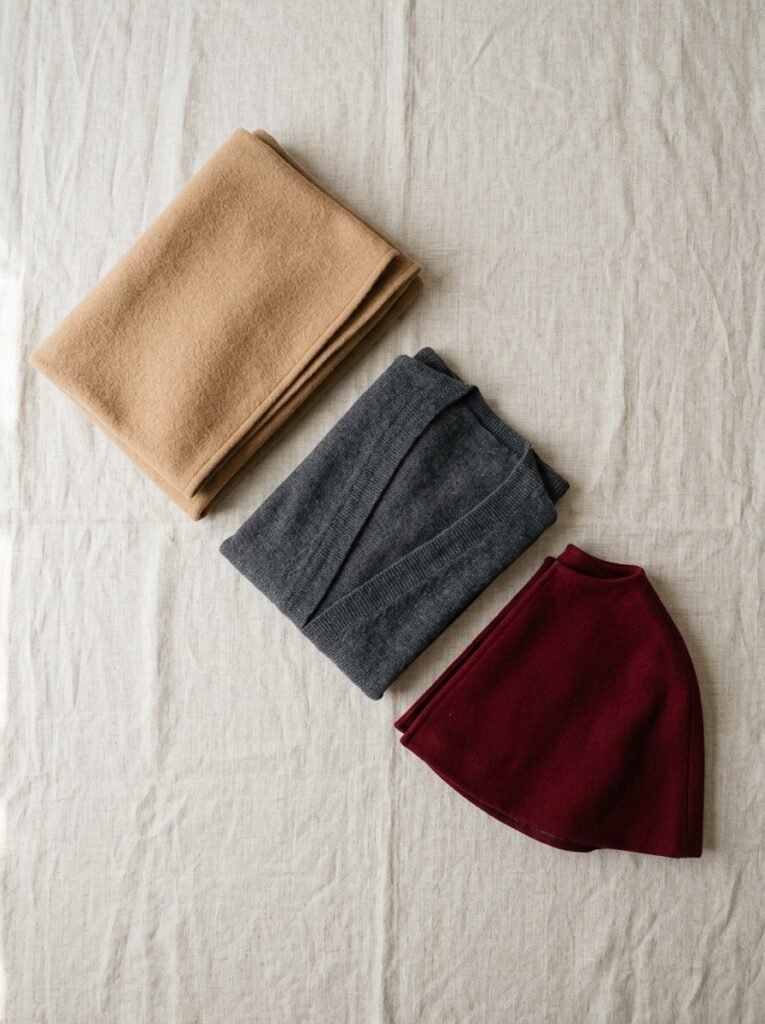
Cape coat. Tailored, usually with a collar, buttons or a closure, often slits for the hands. Structured. The most formal option and the easiest to make look intentional over modest clothing.
Poncho. A single piece of fabric with a head opening, no fastening, softer and squarer. Cosier, more casual, and the highest bulk risk.
Capelet. Short — hits at bust or mid-upper-arm. Almost foolproof over an abaya because it adds no length at all.
Ruana. Open at the front, blanket-like, drapes in long panels. Reads relaxed and works beautifully belted.
If you own one modest-friendly piece from this trend, a capelet or a structured cape coat will serve you far better than a full poncho. The poncho is the one that turns a long dress into a rectangle.
Why this silhouette genuinely suits modest dressing
Not every trend translates. This one does, for three structural reasons.
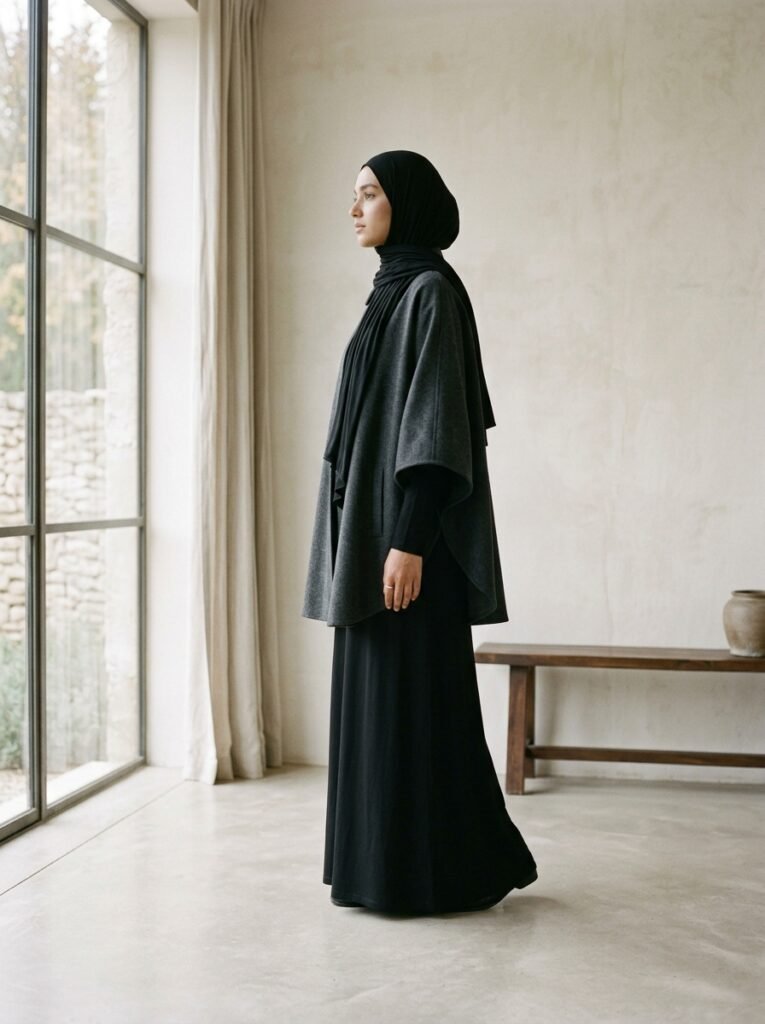
It covers without clinging. A cape skims the body instead of tracing it, which is the entire point of modest outerwear. You get warmth and shape without a fitted line.
It solves the sleeve problem in reverse. Most trend outerwear — cropped jackets, shrunken blazers — leaves long sleeves bunching underneath. A cape sits over everything.
It reads as fashion, not compromise. This is the part worth saying plainly. Modest dressers spend a lot of energy adapting trends designed for less coverage. Occasionally the trend arrives already suited to us, and the styling conversation shifts from “how do I make this work” to simply “which one.”
The proportion problem — and how to fix it
Here is the section the mainstream trend pieces do not write, because they are not styling a full-length garment underneath.
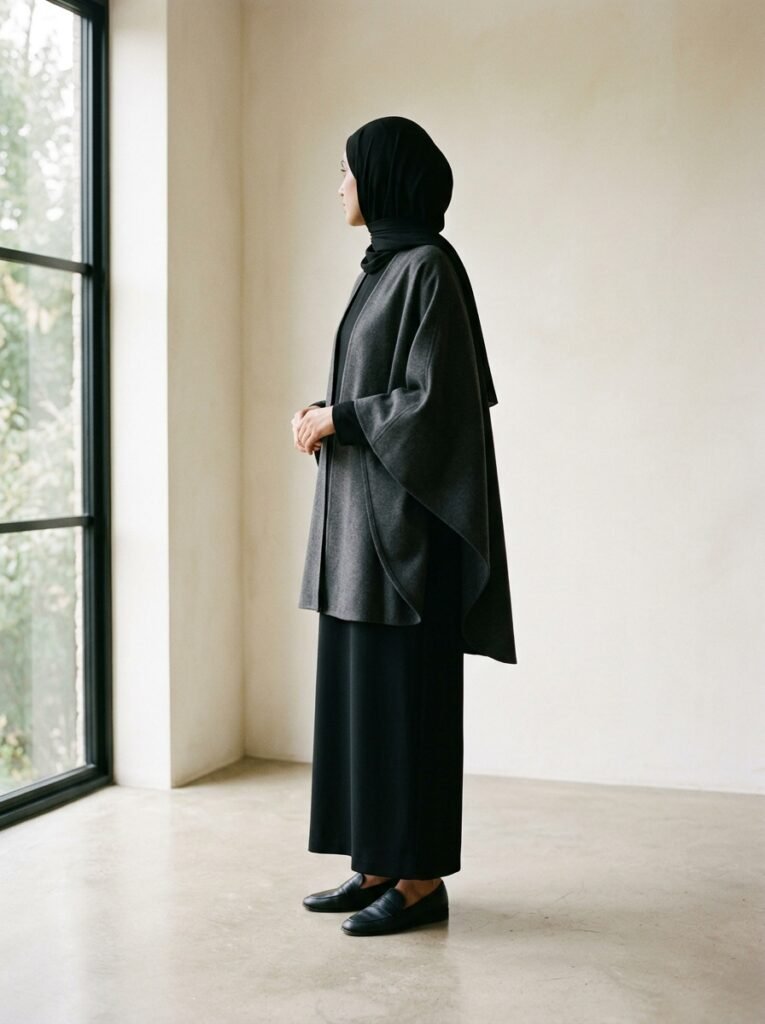
A cape adds width at the shoulder and volume through the torso. An abaya or maxi dress adds length and volume from the shoulder down. Put them together untreated and you get one continuous mass from ear to ankle. Nothing is technically wrong, and it still looks like you are wearing a tent.
Three fixes, in order of how much difference they make:
1. Never match the lengths. The single most common mistake. A cape ending within a few inches of the hem beneath it creates a visual double-hem that flattens everything. Go decisively short (capelet, hip-length) or decisively long — a cape that reads as the outer layer, with a visibly different hem beneath.
2. Narrow the base. A voluminous cape wants a slim column underneath. A straight-cut abaya, a narrow maxi skirt, or tailored wide-leg trousers with a fitted top. Save your fullest, most gathered dresses for days you wear a coat instead.
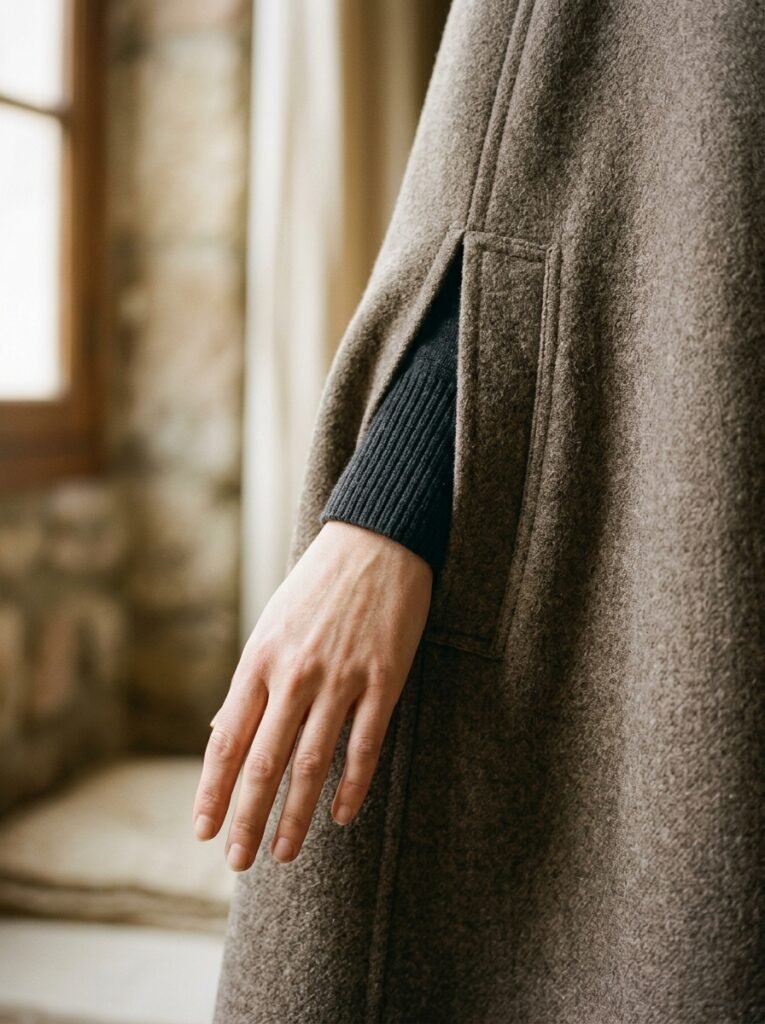
3. Show one point of the body. Not skin — a line. A defined wrist, an ankle above a shoe, a belted waist. One clear point stops the eye reading the whole thing as a block. This is why a cape over a narrow sleeve with the hands visible looks composed, while the same cape with hands tucked inside looks shapeless.
Sleeves: the thing nobody warns you about
Practical, unglamorous, and it will decide whether you actually wear the piece.
A closed cape or poncho has no armholes. That means every time you reach for your bag, pay for something, or hold a child’s hand, you are lifting fabric. By week two most people give up.
What to check before buying:
- Hand slits. Non-negotiable for daily wear. Many tailored cape coats have them; most ponchos don’t.
- An open front. A ruana or open cape solves the problem entirely because your arms are simply free.
- Sleeve bulk underneath. If your abaya or top has a full, gathered or balloon sleeve, it will compress oddly under a fitted cape shoulder. Narrow sleeves layer far better.
My honest recommendation: if this is your first piece from the trend and you need it for real days rather than photographs, buy the version with hand slits or an open front. The closed poncho is a weekend garment.
Hijab and a cape: three small adjustments
The collar is the friction point.
Fabric choice matters more than usual. A slippery satin or crepe hijab will slide steadily out from under a cape collar as you move. Cotton, jersey, or a lightly textured modal grips. If you love a satin finish, secure it properly rather than relying on drape.
Decide whether the hijab goes over or under. Over the cape gives a cleaner, more graphic line and keeps the fabric visible and controlled — usually the better choice with a structured cape coat. Under the collar looks softer and works with an open cape or ruana, but expect to adjust it.
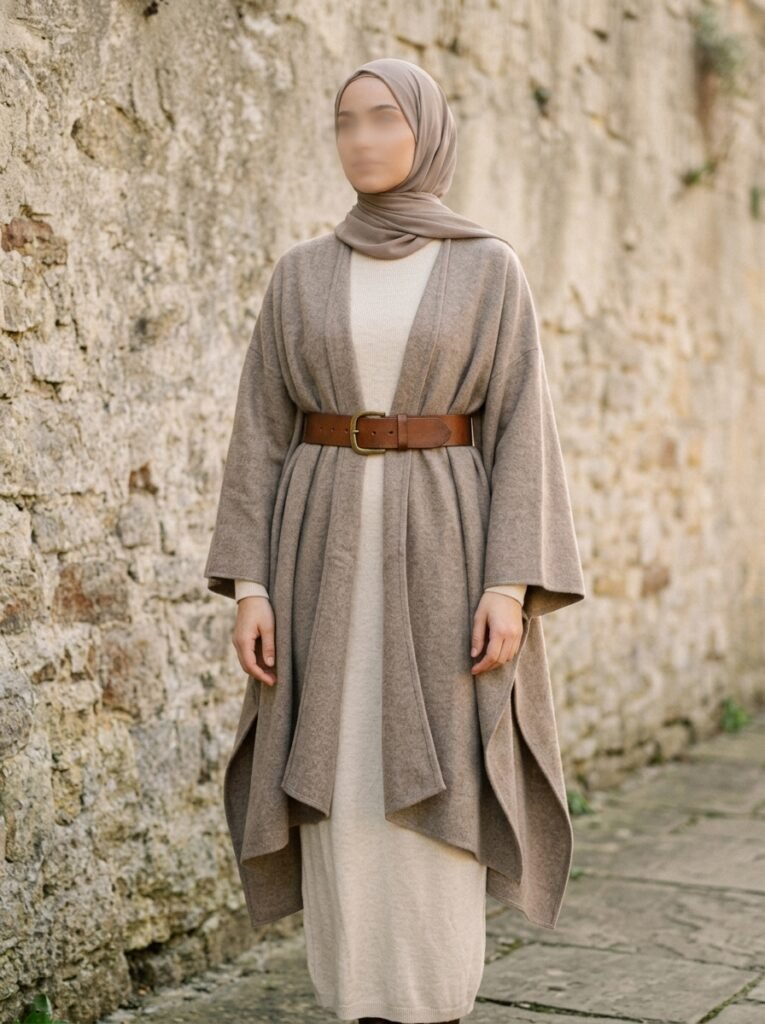
Watch the shoulder line. A cape widens your shoulders. A very voluminous hijab style on top of that can crowd the head-to-shoulder ratio. This season’s structure-led mood suits a neater wrap.
Belt it — the season gives you permission
Convenient timing. One of Fall 2026’s quieter runway trends was the “useless belt” — worn loosely at the hip, cinched at the waist, or layered over knits and outerwear purely for its own sake.
For modest dressing this is not decorative at all. A belt over a cape or ruana is the fastest way to convert volume into shape without changing coverage. You are not revealing anything; you are creating a line.
How to do it:
- Over an open cape or ruana, belt at the natural waist and let the panels fall either side. This is the single most flattering way to wear the trend over a long abaya.
- Over a closed cape, belt loosely at the hip rather than the waist — a tight waist on a closed cape creates a peplum flare you probably don’t want.
- Width: a wider belt reads more deliberate over heavy outerwear. A thin belt disappears into a thick wool cape and looks like an accident.
Eight modest cape outfit formulas for fall 2026
Copy these directly.
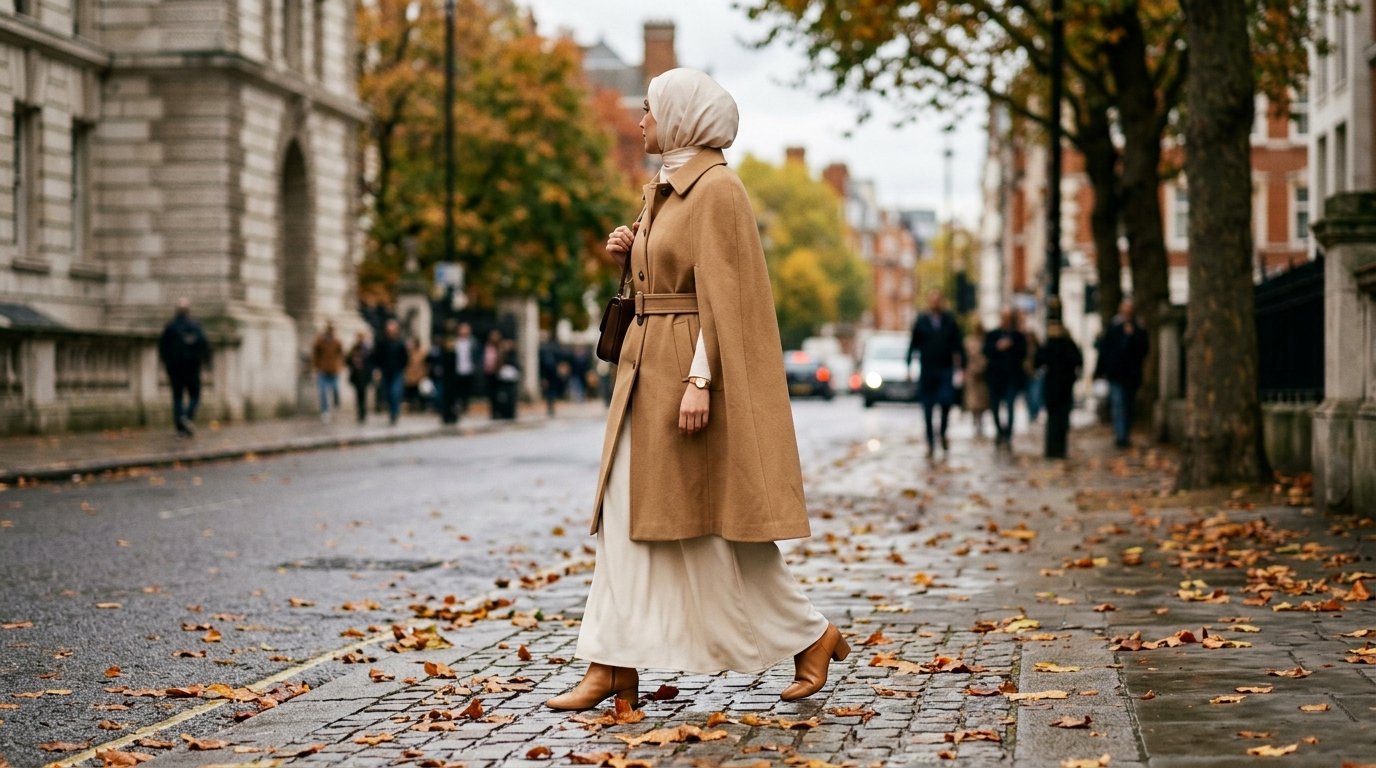
1. The tonal column. Camel cape coat, matching straight abaya, cream hijab, tan boots. Same family, three shades. Quietly expensive-looking and the least risky way to start.
2. Belted ruana over knitwear. Long open ruana, fine-knit maxi dress, wide belt at the waist, ankle boots. This is your everyday formula.
3. Capelet and tailoring. Short capelet, crisp shirt, wide-leg trousers, loafers. Reads office-appropriate without a blazer. Best option for anyone who finds full capes overwhelming.
4. Full black. Net-a-Porter noted that full-black looks re-emerged as a power statement for the season, dominating the Milan runways in particular. Black cape, black abaya, black hijab — but vary the textures: wool cape, crepe abaya, matte hijab. Texture is what stops all-black going flat.
5. Scarlet statement. Tomato red carried straight from Spring 2026 into Fall 2026, with designers embracing head-to-toe scarlet across outerwear and knitwear, and the shade reading especially rich against autumn’s usual blacks, browns and greys. One red cape over neutral everything. Highest-impact, lowest-effort look here.
6. Chartreuse accent. Chartreuse and purple appeared consistently as statement colours across the fall runways, styled through tonal clashes, bold colour blocking and saturated hues. Neutral cape, chartreuse hijab. Colour where it frames the face, neutrals everywhere else.
7. Evening-meets-everyday. Designers repeatedly mixed evening pieces with casual staples — Alaïa and Altuzarra paired evening gowns with peacoats. Borrow it: a satin or embellished maxi under a plain wool cape. Perfect for winter events and dinner invitations.
8. Print under plain. A leopard-print base under a solid cape. The cape frames the print instead of competing with it.
Fabric and weight: buy for your actual climate
Capes are sold as a single trend and worn in wildly different weather.
Wool or wool blend. Genuine cold. Heavy, holds structure, the most tailored look. Check the shoulder seams — cheap wool capes collapse there first.
Boiled wool or felted. Structure without much weight. The best value in this category.
Cashmere or fine knit ruana. Mild autumn, indoor layering, travel. Soft drape, needs belting.
Cotton or linen blend capelet. Warm climates. If you are in the Gulf or South Asia, this is the version of the trend that is actually wearable — a light capelet over a summer abaya, not a wool cape.
Faux leather or coated. Rain, and a sharper look. Zero breathability, so short trips only.
Skip anything unlined in a heavy fabric. Unlined wool catches on sleeves and rides up over an abaya continuously.
What to skip from this season
Trend honesty, since not everything translates.
Bustle’s fall 2026 round-up includes a low-rise revival, with Tom Ford and Gucci showing asymmetrical waistbands and hip-baring details — plainly not adaptable for a modest wardrobe, and no styling trick changes that. Ignore it without guilt. \
The season’s ornate direction — ruffles, lace, bows and elaborate draping at Valentino, Chanel, Givenchy and Dior — is adaptable but expensive to do well and easy to do badly. If you want in, take it in one small dose: a ruffled cuff or a bow detail, not a whole look.
And a cape is not a coat. It will not keep your arms warm in real cold. If you own one piece of outerwear this winter, buy the coat and add the cape second.
Key Takeaways
- Capes and ponchos are a confirmed Fall 2026 runway trend from New York, London, Milan and Paris — and one of the rare trends that suits modest dressing without adaptation.
- Never match hems. A cape ending near your abaya hem flattens the whole silhouette. Go clearly short or clearly long.
- Narrow the base layer. Volume on volume is the only real failure mode here.
- Buy hand slits or an open front if you want to wear it on ordinary days.
- Belt it — the season’s belted-outerwear mood is a gift for shaping a long silhouette.
- Choose a capelet if you’re unsure. It adds no length and is the most forgiving entry point.
- Match the fabric to your climate, not to the runway.
FAQ
How do you wear a cape over an abaya without looking bulky?
Keep the cape a clearly different length from the abaya hem, choose a narrow-cut abaya rather than a full gathered one, and define the waist or hip with a belt. Showing one clear line — a wrist, an ankle, a belted waist — stops the silhouette reading as a single block.
What is the difference between a cape and a poncho?
A cape is generally tailored with a collar and a closure, often with hand slits. A poncho is a softer, squarer single piece of fabric with a head opening and no fastening. Capes look more formal and are easier to style over long modest clothing; ponchos add more bulk.
Can you wear a hijab with a cape coat?
Yes. Wear the hijab over the cape collar for a cleaner line with structured cape coats, and choose a fabric with grip — cotton, jersey or modal — because satin and crepe slide out from under a collar as you move.