Royal Purple Just Became Fall 2026’s Defining Color — Here’s How to Wear It Modestly
Butter yellow had its year. Fashion month just crowned its replacement, and it’s not subtle: deep, rich purple — from soft lavender to near-black eggplant — dominated Fall 2026 runways at Balenciaga, Chloé, Mugler, Valentino, Gucci, and Carolina Herrera. When that many major houses land on the same color in the same season, it stops being a suggestion and becomes the story of the season.
Fall 2026’s It color in one paragraph: Royal purple — ranging from soft lavender to deep eggplant — is the defining color of the Fall 2026 runway season, confirmed across Balenciaga, Chloé, Mugler, Valentino, Gucci, and Carolina Herrera. It’s replacing the butter yellow and burgundy moments of recent seasons as fashion’s go-to signal for a rich, intentional outfit, and it happens to be one of the easiest trend colors to translate into modest dressing.
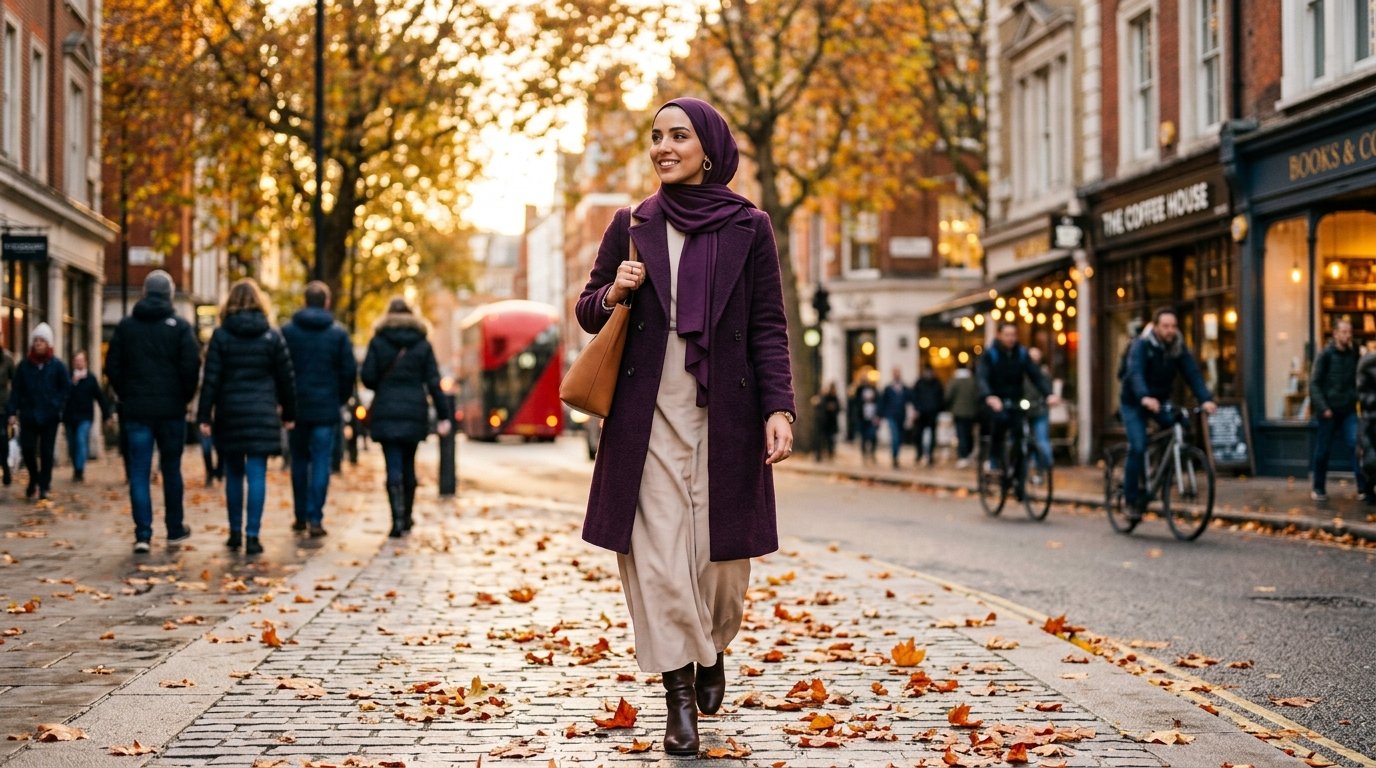
Here’s what makes this particularly good news if you dress modestly: purple isn’t a color that asks you to show more skin to look current. A purple coat over an abaya reads exactly as “on-trend” as a purple coat over a mini dress. This season’s biggest color story is, structurally, a modest-friendly one.
What’s Actually New: Purple Just Took Over Every Major Runway
This isn’t one editor’s pick — it’s a convergence. Fashion coverage from this season describes purple, in shades from soft lavender to rich eggplant, as “everywhere” on the runways, specifically naming Balenciaga, Chloé, and Mugler. Separate reporting on fashion month trends names Valentino, Gucci, and several Paris houses as leading the same shift, alongside Carolina Herrera and Kallmeyer highlighting purple and chartreuse as the season’s most talked-about new colors. One outlet went as far as calling it the color taking over the cultural role that burgundy and espresso played in recent seasons — a deep, rich shade meant to signal an intentional, expensive-looking outfit without shouting about it.
For Discover and trend-tracking purposes, that’s a rising-to-peak signal: multiple independent fashion authorities converging on the same color within the same few weeks of fashion month coverage.
Which Shade of Purple Should You Actually Wear
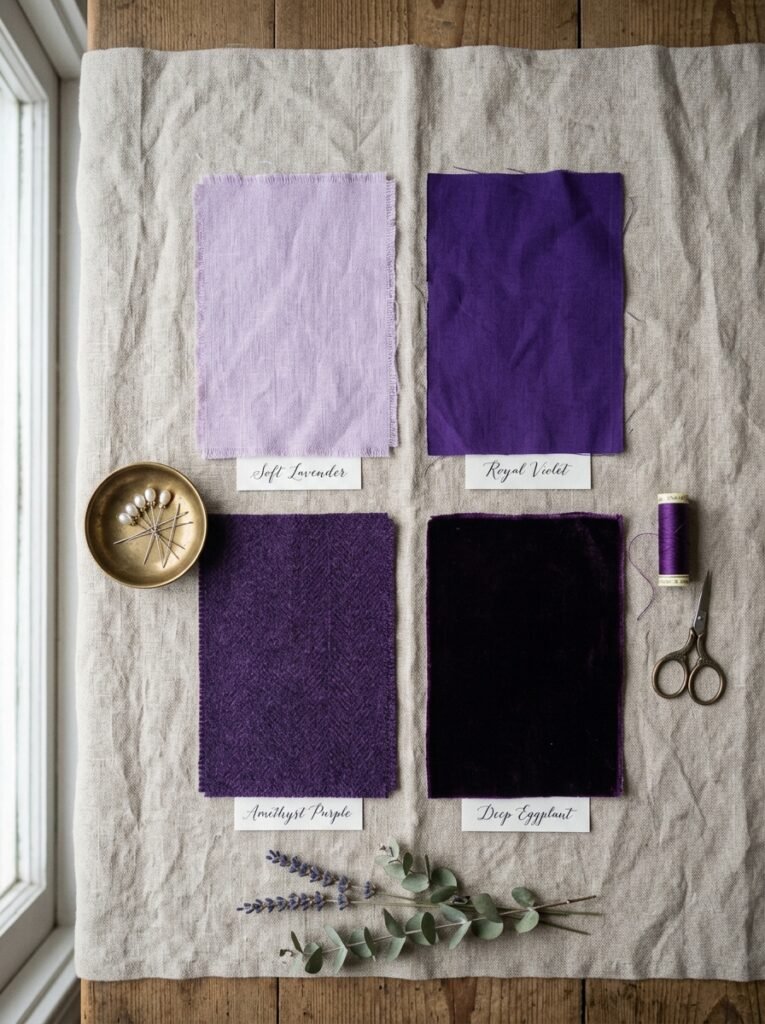
“Purple” is doing a lot of work as an umbrella term this season, and the shade you pick changes the whole mood of an outfit:
- Soft lavender — the gentlest entry point, close to a neutral, easiest to wear head-to-toe without it reading as a “statement”
- Royal/violet purple — the version most associated with this season’s runway moment; rich, saturated, and unmistakably purple
- Deep eggplant — the moodiest, closest to black, and the easiest to wear if you want the trend without the boldness — works beautifully in coats and outerwear
- Amethyst — a jewel-toned purple with more red undertone, often the choice for occasion and evening pieces
If you’re new to wearing purple, start at either end of that spectrum — lavender or eggplant — rather than the boldest royal-violet shade. Both read as sophisticated rather than costume-y, and both pair effortlessly with the neutrals already in a modest wardrobe.
How to Wear Purple Modestly: Three Ways to Start
You don’t need a purple wardrobe overhaul to be on-trend this season. Three approaches work at any comfort level:
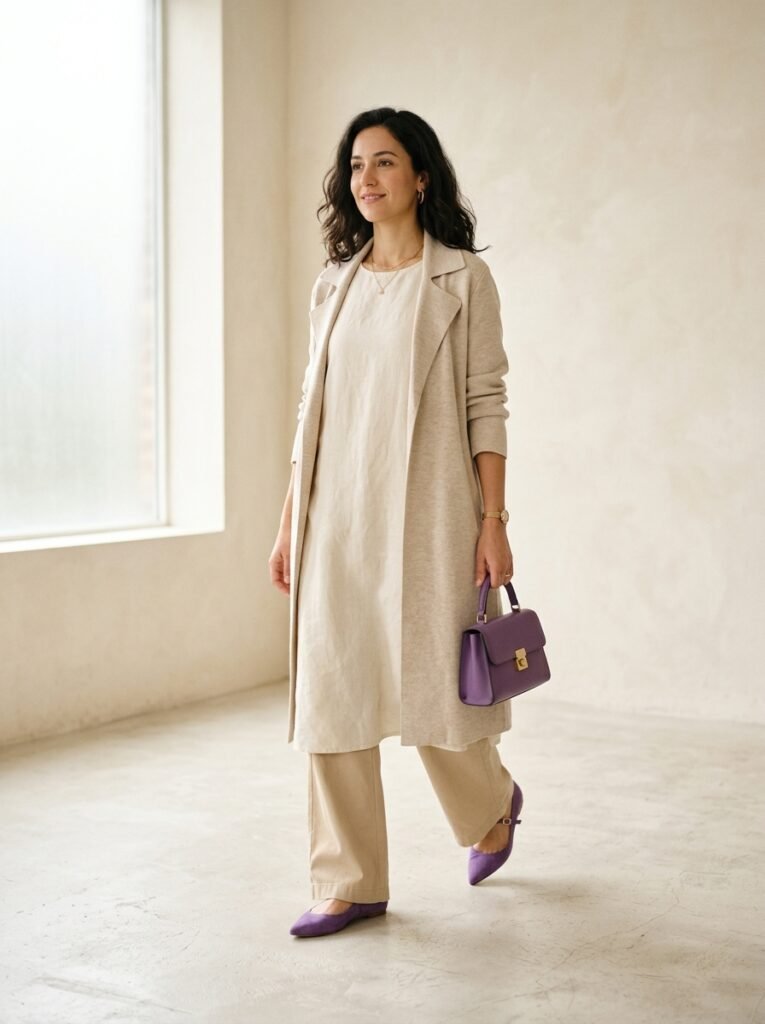
- Microdose it. A purple hijab, bag, or pair of shoes against an otherwise neutral outfit is the lowest-commitment way to participate in the trend, and it’s genuinely the most-recommended approach across fashion coverage this season.
- One statement piece. A purple coat, abaya, or blazer worn over neutrals — black, cream, camel, or grey — lets the color do the work while everything else stays simple.
- Go tonal. For those who want the full trend moment, a head-to-toe purple look in one consistent shade (say, all eggplant, or all lavender) reads as considered rather than mismatched — this is easier to pull off in darker purple tones than in bright ones.
Purple Abayas and Outer Layers
The outer layer is the easiest and highest-impact place to wear this trend modestly, because it’s also where mainstream fashion is putting it — as coats. An eggplant or deep-purple abaya, kimono-style duster, or wool coat worn over a neutral base (cream, black, camel) is essentially the exact styling formula fashion editors are recommending this season, just adapted to a longer, more covered silhouette. If you already own a well-cut neutral abaya, a purple statement coat layered on top achieves the same “one trend piece against neutrals” effect without needing a new base wardrobe at all.
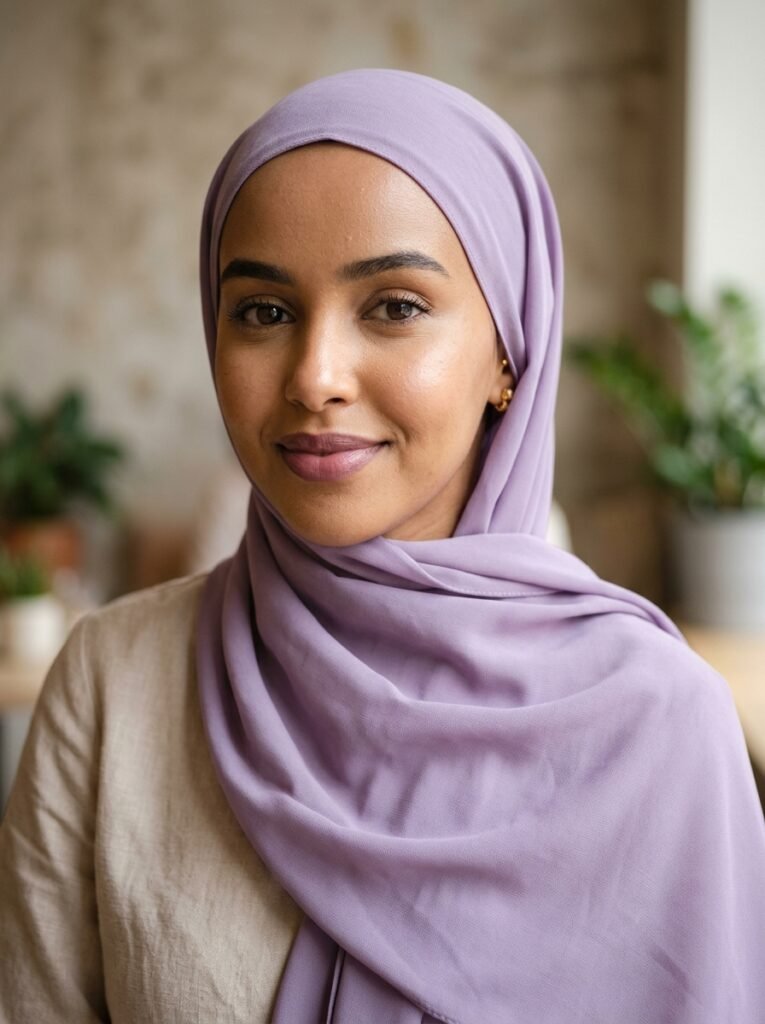
Purple Hijab Styling
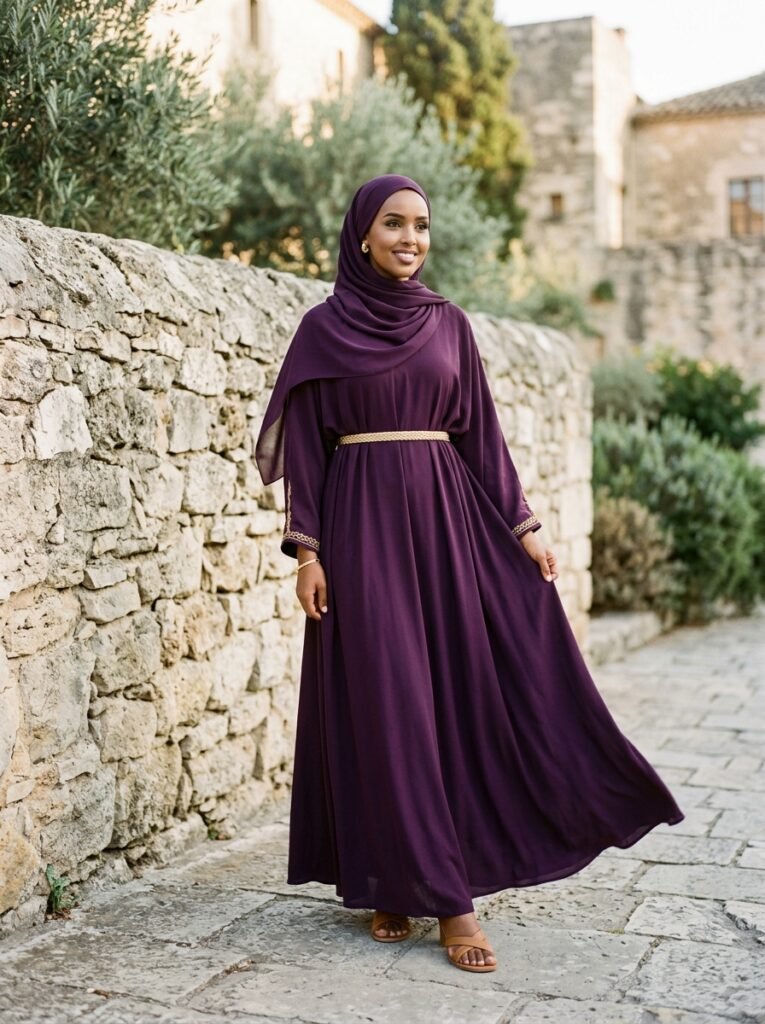
A purple hijab is one of the simplest ways to wear this trend daily, and it pairs cleanly with the same neutrals fashion coverage recommends for the color generally: white, beige, grey, black, and cream. Two styling notes matter here:
- Fabric affects the shade’s richness. Matte chiffon and jersey read the purple as softer and more everyday; satin or silk-finish fabrics intensify it and push it toward occasion-wear.
- Keep the rest of the look quiet. Because purple is already a statement, pairing it with a busy pattern or a second bold color competes for attention. Let the hijab be the color moment and keep everything else — abaya, accessories — in the neutral family.
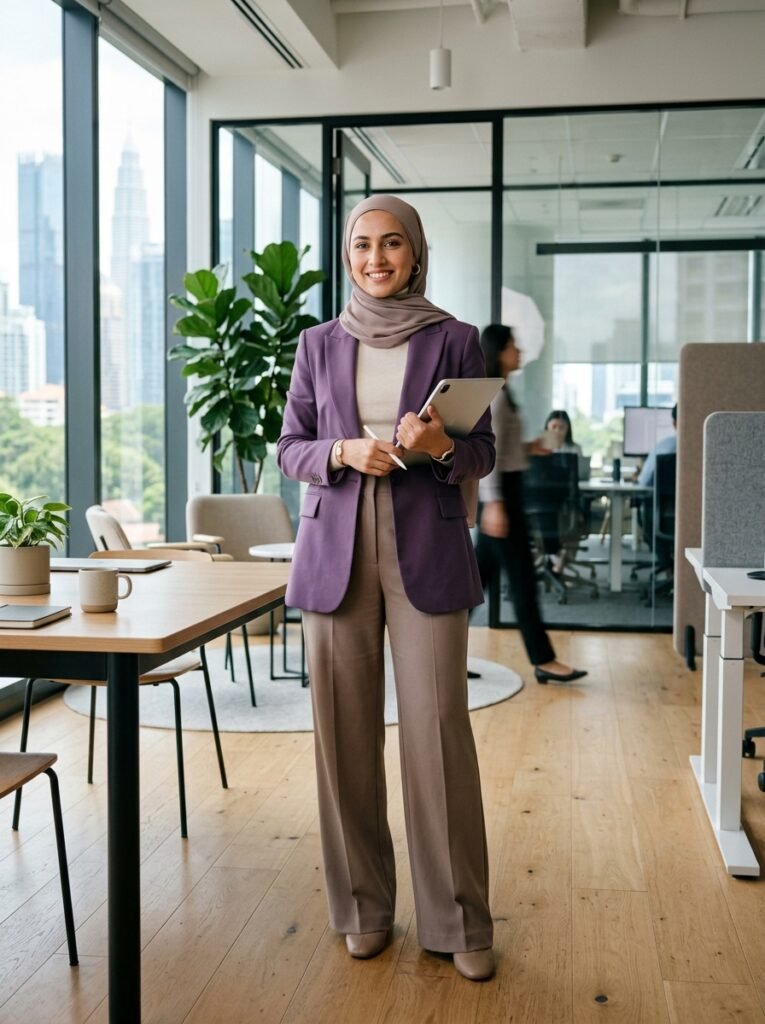
Purple for Work and University Modest Looks
For everyday, lower-commitment styling, purple works as an accent rather than a full outfit. A purple blazer or cardigan over a neutral shirt and trousers, or a purple hijab against an otherwise all-neutral outfit, brings in the trend without straying from a work-appropriate palette. This mirrors how mainstream fashion coverage recommends wearing it too: one purple piece, kept structured and simple, rather than multiple purple pieces competing with each other.
Purple for Evening and Wedding Guest Modest Looks
This is where the richer, more saturated shades — royal purple, amethyst, deep eggplant — genuinely shine. Velvet and satin both intensify purple’s depth, making a modest velvet abaya, satin-finish hijab, or draped evening dress in this color feel occasion-appropriate rather than everyday. For wedding guest dressing specifically, a deep eggplant or amethyst outfit reads as considered and current, without competing with typical bridal color palettes the way brighter jewel tones sometimes do.
Fabrics and Textures That Make Purple Look Expensive
The fabric you choose changes how “trend-right” a purple piece reads. Velvet has been called out repeatedly this season as the go-to textile for making jewel tones look intentional rather than costume-like — a velvet purple slip skirt, wrap, or abaya panel reads immediately as considered styling. Satin performs a similar function for evening pieces. For daytime and everyday modest wear, a good wool-blend coat or a soft knit in eggplant achieves the same “rich, not loud” effect without the formality of velvet or satin.
Which Purple Shade Suits Your Skin Tone
Not every purple flatters every skin tone the same way, and picking the right undertone makes the difference between a color looking expensive and looking washed-out:
- Warmer/olive skin tones tend to look best in eggplant, aubergine, and other purples with a slight brown or red undertone, since these sit closer to the warmth already in the skin
- Cooler/fair skin tones often suit brighter royal violet and true amethyst well, since the coolness of the color complements rather than fights the skin’s undertone
- Deeper skin tones can carry the most saturated, jewel-bright purples — think rich amethyst or true violet — beautifully, as the depth of the skin tone balances the intensity of the color
- If you’re unsure, lavender is the safest universal starting point, since its lightness reads as closer to a neutral than a bold statement color on almost any skin tone
A simple way to test before committing to a purchase: hold the fabric or hijab near your face in natural daylight. If it makes your complexion look brighter and more awake, that’s your shade. If it makes you look tired or flat, try a shade with slightly more warmth or slightly more depth.
Purple Accessories: The Lowest-Effort Way In
If a full purple garment feels like too big a commitment, accessories do almost all the same work. A purple bag swapped in for a black one, a pair of purple flats or heels, or a purple scarf layered over a neutral coat all read as current without touching your existing wardrobe’s color base. This is the approach fashion coverage repeatedly points to as the easiest entry point into any bold seasonal color, and it’s just as effective within a modest wardrobe — a neutral abaya and hijab with one purple accessory achieves the same “on-trend” signal as a full purple outfit, with far less risk of the color clashing with anything else you own.
How Purple Compares to Last Season’s Burgundy
If you’ve already built pieces around burgundy — a color this site has covered before — you’re closer to this trend than you might think. Both are deep, rich, “intentional” colors that fashion coverage treats as elevated alternatives to plain black or neutral outerwear. The difference is in mood: burgundy reads warm and grounded, while purple, especially in its brighter royal-violet form, reads cooler and more directional. Practically, this means a burgundy coat and a purple coat can sit in the same wardrobe role — a rich statement outer layer over neutrals — without competing, since you’d typically only reach for one or the other depending on the rest of the day’s palette. If you’re deciding which to invest in first, eggplant purple is the safer crossover choice, since its lower saturation pairs with the same neutrals burgundy already works with.
Building a Small Purple Capsule
You don’t need to buy a full new wardrobe to participate in this trend properly. A genuinely useful starting capsule looks like:
- One outer layer — a coat or abaya in eggplant or deep purple, worn over everything else
- One hijab — ideally in a matte fabric (chiffon or jersey) in a shade you can wear daily, like a softer lavender or muted violet
- One accessory — a bag or pair of shoes in a bolder purple tone, reserved for when you want a stronger pop without changing the rest of the outfit
- One occasion piece — a velvet or satin item in amethyst or royal purple, saved specifically for events, weddings, or evenings out
Four pieces, each doing a different job, is enough to wear this trend for the entire season without it ever feeling repetitive or over-invested.
Common Purple Styling Mistakes to Avoid
- Pairing bright royal-violet purple with another bold, competing color — let purple be the single statement in the outfit
- Choosing a shiny, cheap-feeling synthetic fabric in a bold shade, which reads costume-y rather than luxe
- Going head-to-toe in mismatched purple tones (a cool-toned lavender hijab with a warm-toned violet abaya, for example) instead of staying within one tonal family
- Treating purple as an occasion-only color — this season’s coverage frames it as an everyday neutral-replacement, not just for events
Why This Trend Has Staying Power
Unlike a lot of runway colors that fade after a single fashion month news cycle, purple has been building for longer than one season — earlier reporting on 2026’s color story already flagged royal purple as a rising favorite among fashion insiders months before this fall’s runway confirmation, describing it as taking over the cultural role burgundy and espresso played in prior seasons. That kind of build-up across multiple seasons, rather than a single sudden spike, is usually a sign a color is becoming a genuine wardrobe staple rather than a fast-fading trend — which makes it a safer investment than most seasonal colors, modest or otherwise.
Key Takeaways
- Royal purple, from soft lavender to deep eggplant, is Fall 2026’s runway-confirmed It color, seen at Balenciaga, Chloé, Mugler, Valentino, Gucci, and Carolina Herrera
- It’s replacing butter yellow and burgundy as fashion’s signal for a rich, intentional outfit
- The easiest modest entry points are a purple hijab, bag, or statement coat/abaya worn over neutrals
- Stay within one tonal family (all lavender, or all eggplant) rather than mixing warm and cool purples
- Velvet and satin make purple read as expensive for evening looks; wool and soft knits work it into daytime dressing
- This season’s biggest color story translates to modest dressing with almost no adaptation needed
FAQ
What is fashion’s new It color for Fall 2026? Royal purple — ranging from soft lavender to deep eggplant — is Fall 2026’s defining runway color, confirmed across Balenciaga, Chloé, Mugler, Valentino, Gucci, and Carolina Herrera, replacing butter yellow as the season’s signature shade.
How do you style purple modestly? Start with one purple piece — a hijab, bag, or statement coat/abaya — worn over neutral colors like black, cream, camel, or grey. For a bolder look, wear one consistent purple tone head-to-toe rather than mixing different purple shades.
What colors pair well with purple? Neutrals work best: white, beige, grey, black, and cream all let a purple piece stand out as the outfit’s statement color without competing with it.